
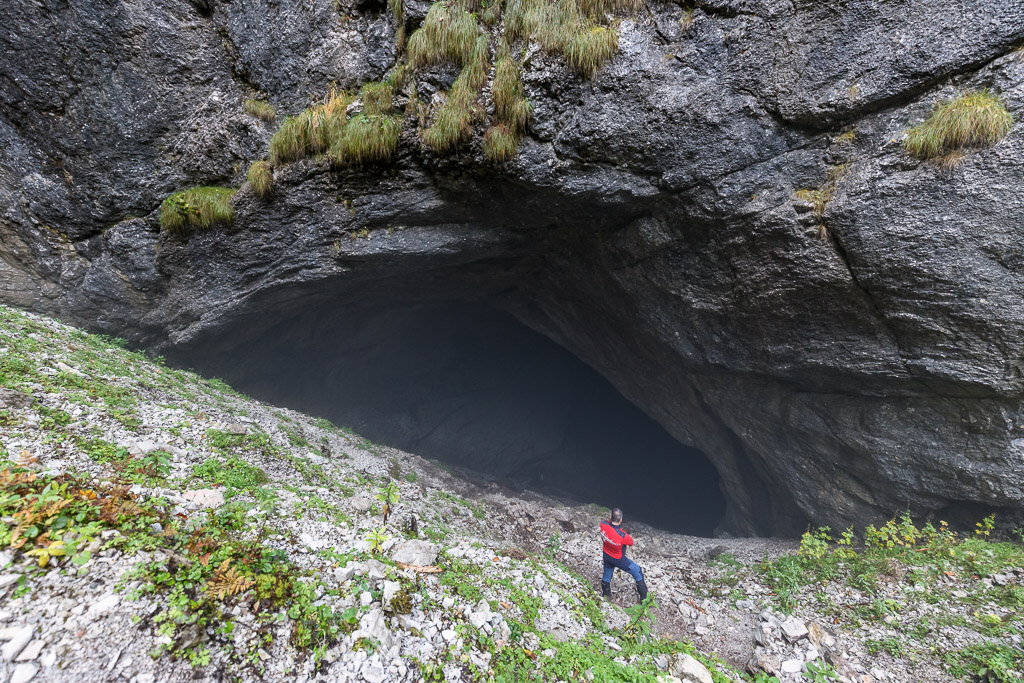
Hike the Apuseni National Park and discover a world of steep forested mountains and extraordinary glacier caves. We managed six of the wonders of the park in an 18km one day hike.
Limestone is the backbone of the park’s mountains. The karst has evolved and eroded to create some impressive landforms. Sculptured mountain ridges and deep valleys with mysterious underground rivers. The glacier caves are a wonder into themselves. Tens of thousands of tonnes of ice in caves that are kept cool by the sink-hole structure of the cave. With a dense layer of cool air sitting above year-round sitting above the ice insulating it from melt.
Hiking Apuseni Park – 6 Wonders in a One-Day Hike
Having read various guides about the hikes in the area we combined various routes to take in as much as we could in one day. As we were debating our route in front of the map by the Salvatores hut, one of the Park Salvatore came over to give us some advice. First, he told us he couldn’t see the map as he wasn’t wearing his reading glasses! His next advice was that after each sight, we were to walk the route back to camp and then start out on the new trail! Most visitors do seem to stay for several days in the area and do a different circular loop each day. We decided to combine our must-sees and nail it all in one hike. This circular hike is 18.6km and took us 8 hours including 1.5 hours of breaks. We did this in September with mild yet wet conditions.
The six wonders of the hike:
- Lost World Sinkholes, vast sinkholes in the forest
- Cetatile Ponorului Cave, also known as the fortress of Ponor
- The Balconies, viewpoints over Cetatile Ponorului and the citadel valley
- Bortig Pit, glacier cave entrance
- Piatra Galbenei, the stone of Galbena (1237m), a peak with panoramic views
- Focul Viu Glacier Cave, 25,000 cubic metres of ice
Hike Overview
Walking Time: 6.5 Hours
Distance: 18.6Km with 812m elevation gain
Rating: Difficult – due to the challenging descent into and ascent out of the Citadel Valley to the Cetatile Ponorului
1. Lost World Sinkholes
Take the trail that goes up behind the Salvatore’s hut and points towards the whirlpools. The Salvatore had warned us to watch out for the sheepdogs and carry a stick. The sheepdogs will go for you if they think you are a threat to their sheep. As you reach the top of the hill it opens up into a grassy valley with a river running through. There is a sign board detailing the whirlpools, we didn’t stop and look. We crossed the river (feet will get wet without proper waterproof shoes/boots) then headed up the hill on the other side. The sheep dogs were there, but so were there shepherds who kept them in check. The path then leads into the forest and starts to descend. You have to keep your eyes peeled for signs pointing to the sinkholes as its easy to miss them. Even though they are pretty huge holes in the ground.
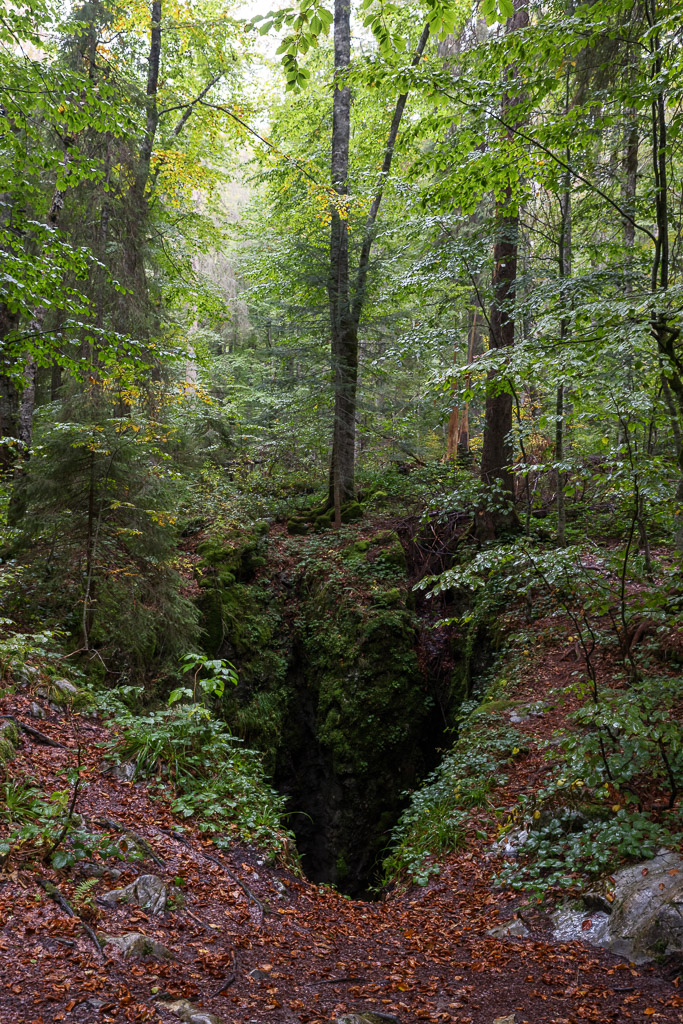
After the sinkholes, you continue down the path through the forest until it joins the forestry road and you turn right along the road. Shortly after passing a refuge hut there is a sign to the left pointing you towards the Cetatile Portaruile Cave. Alternatively the forestry track will take you back to Galvoi.
2. Cetatile Ponorului Cave
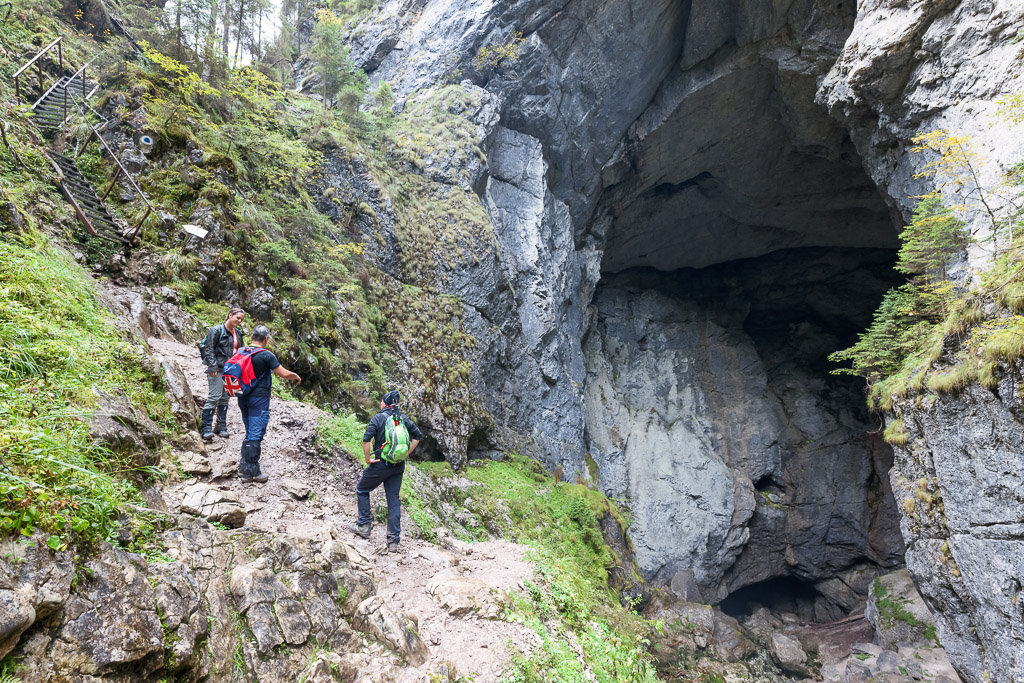
The track through the woods towards the cave gets steeper and steeper. We had had light rain all morning and it was wet and slippy. As you get close to the cave there is a wire in the rocks that you can hold onto to help your self down or up if you are coming the other way. At this point I was starting to wonder, what the route back up would be like. I do not have the best head for heights when going up steep slopes!
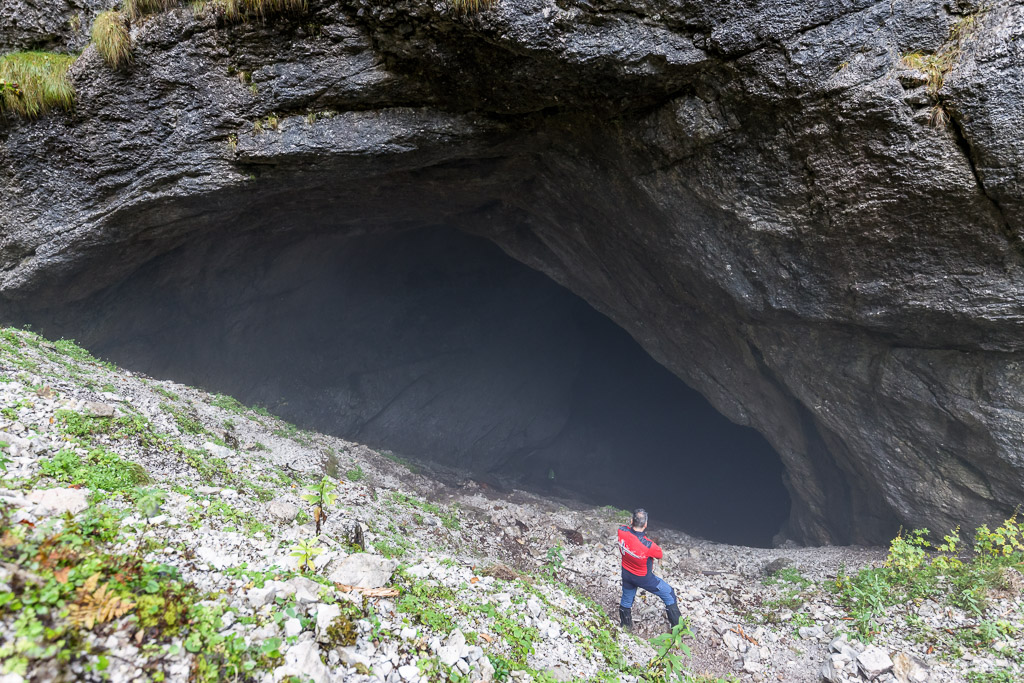
As you approach the gaping mouth of the cave you can feel the cool mist coming out of the entrance. The cave has two entrances, with a guide, you can enter one side and go through the cave and out the other end. It is quite remarkable even from outside
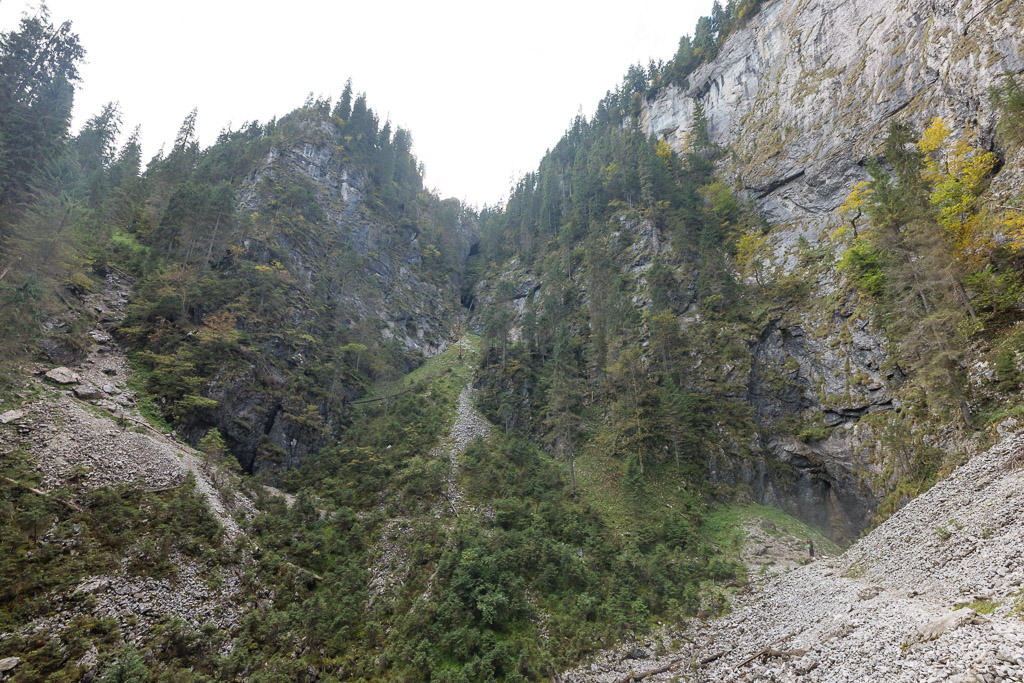
After the first cave entrance, there were some very steep steel steps. Then up and over some rocks, not too bad so far. Over a scree slope to the second cave entrance. The next part which takes you up to the balconies was rather treacherous. It was steep with light gravel or embedded smooth rocks and very slippery because of the light rain. A slight slip of the foot and you could end up sliding down a long way. Not for the faint of heart or those without decent walking shoes!
3. The Balconies
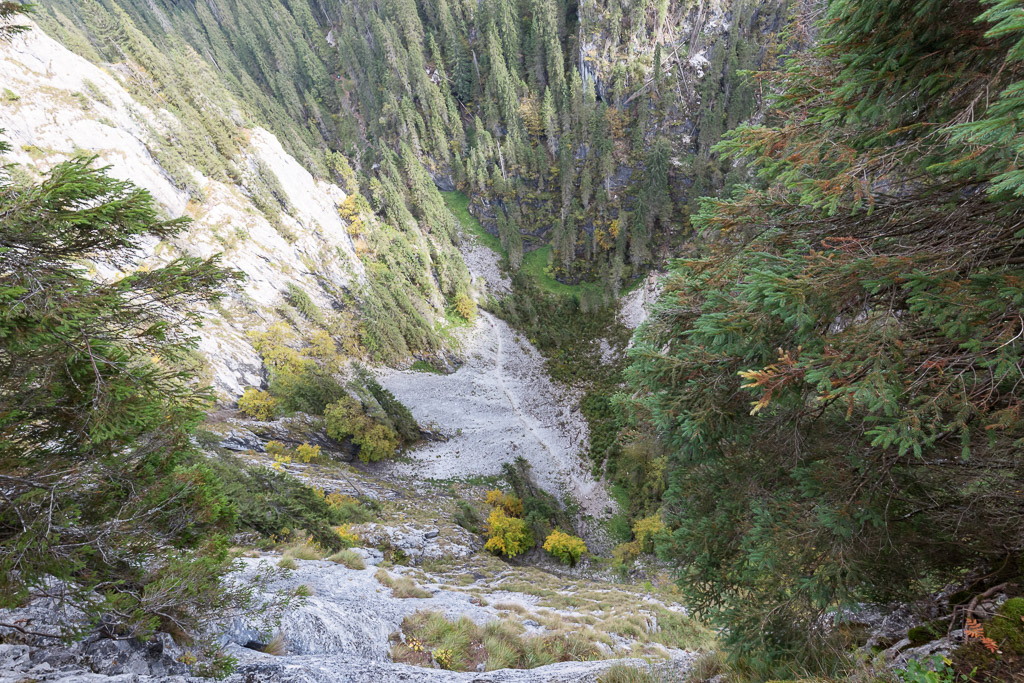
At the top of the climb from Cetatile Ponoruile. We turned right and headed towards the balconies. We stopped at the second balcony and inched ourselves forward on our hands and knees (the wooden platforms are no longer there due to weather damage). Looking down on to where we had just been at the scree slope and the Cetatile Ponoruile Cave.
4. Bortig Pit
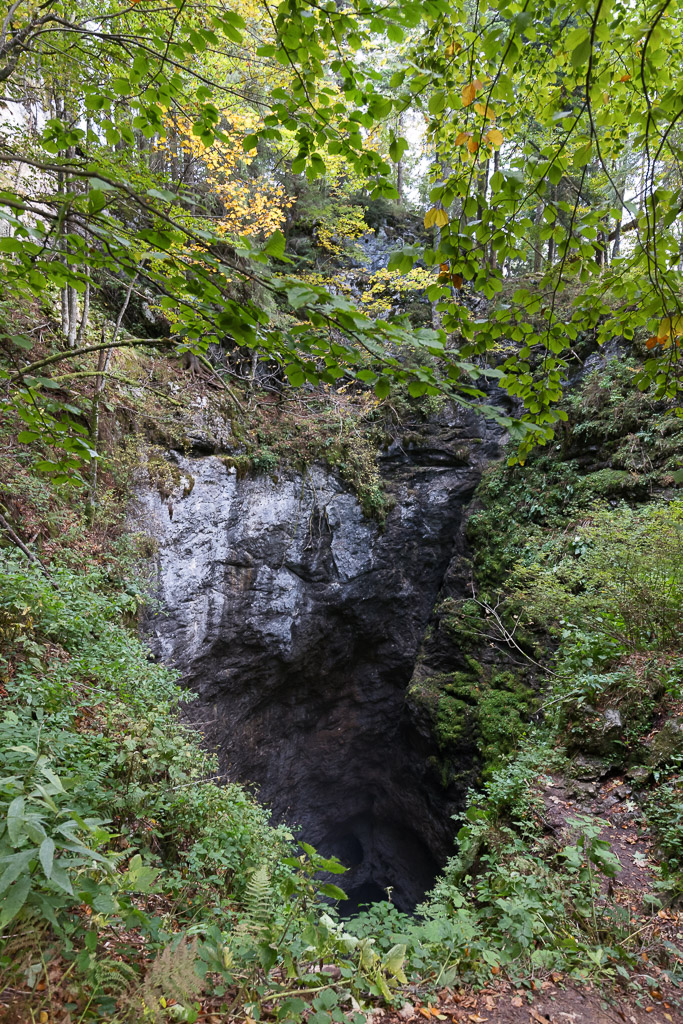
The climb up to Bortig pit from the Balconies is a moderately steep 200m ascent up through the forest. It was a relief to reach the pit just to catch our breath. The pit itself is an impressive sinkhole, with a 30,000 cubic metre glacier inside. You can only enter the cave with a guide and with proper caving equipment. We just peered over the edge and then continued on to our next stop the lookout point Piatra Galbenei.
5. Piatra Galbenei; the Stone of Galbena
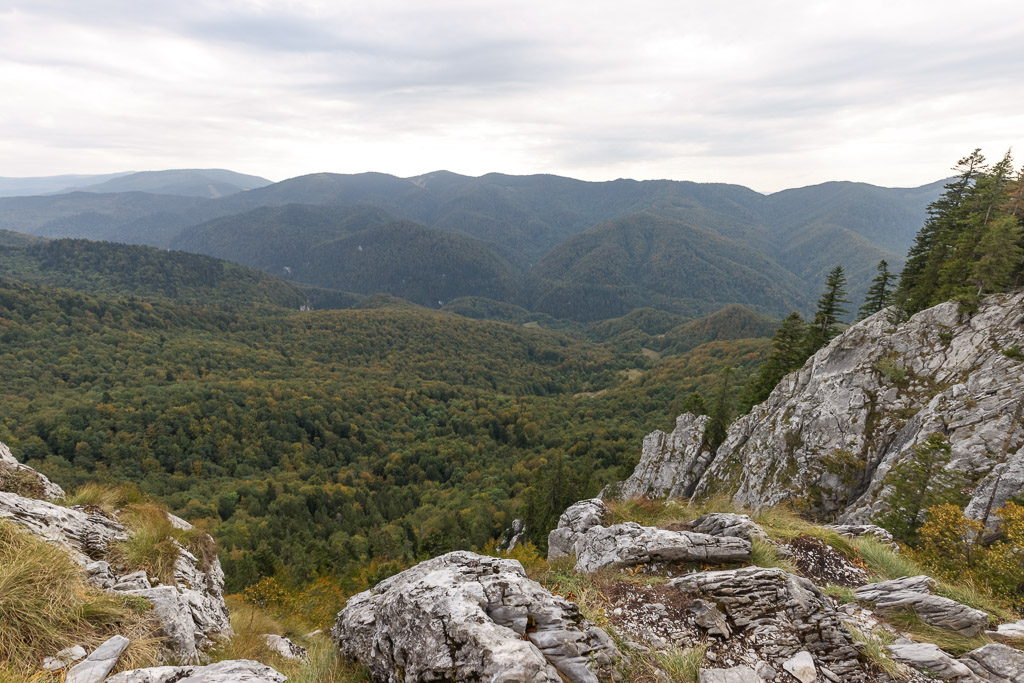
The walk to Piatra Galbena from the Bortig pit was mainly along the forested ridgeline with lovely views down through the trees. It took us just under an hour, but we were going at a fair pace as we wanted to reach Focul Vui while the sun was still reasonably high. The view from the stone of Galbena is a wonderful panorama of the surrounding mountains of the Apuseni Park. You can even see the ski lifts of Vartop in the distance.
6. Focul Vui; the Cave of the Living Fire
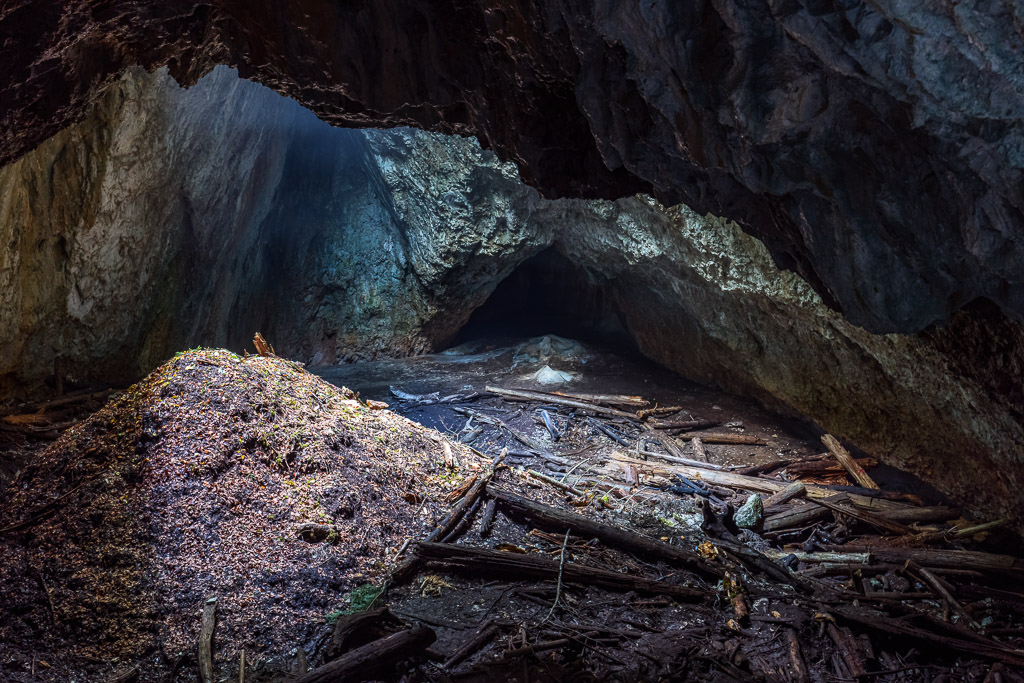
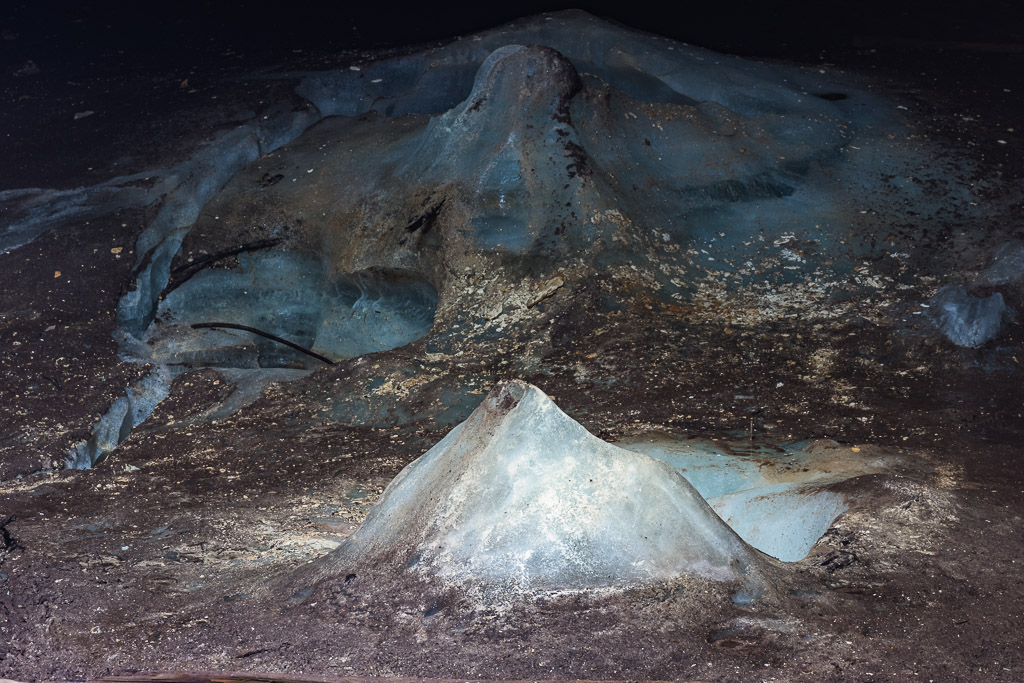
The cave of the living fire; named as at certain times of the day shafts of sunlight come through a hole in the roof of the cave and lights up the top of the glacier. The glacier itself is 25,000 cubic metres of ice inside the cave. Looking into the cave you’ll see a mound of logs and branches that have fallen into the cave and have embedded into the surface of the ice. Beyond that, a small pyramid of ice shines brightly at the back of the cave. The cool air at the entrance is quite extraordinary almost like you are standing in a giant fridge.
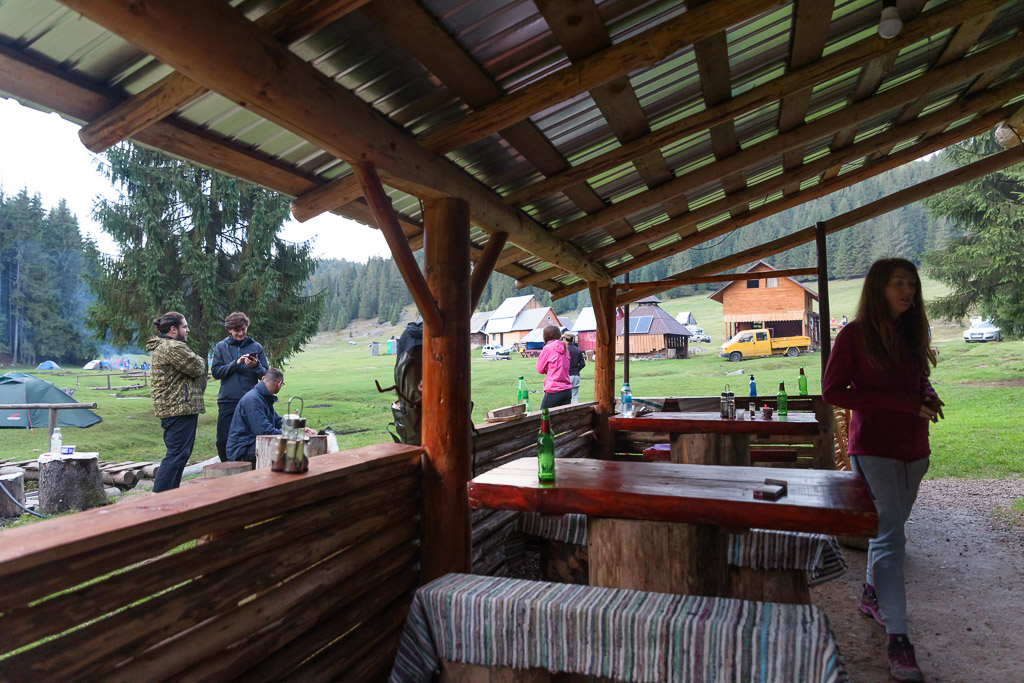
From Focul Vui, we followed the well tramped path back to Galvoi camping area. It took us 1Hr and 15 minutes of gentle descent. We reached the camping area and went straight to Michaela’s for a refreshing beer and double helpings of dinner! NB: Best mushroom soup I have ever had. Some local forest mushrooms that are mainly exported to Italy.
Glavoi Practical Notes
Getting There By Road: We arrived into the park by the 763 from the West. Once you pass Pietroasa, the road becomes smaller (single lane in places). It follows the river along a gorge, before turning up into the mountains becoming steep and winding. The last 2km towards Galvoi are on a rocky forestry road. It is slow going and very bumpy but the road is wide enough to pass another car. We had read mixed reviews about this part of the road. But we had no problems in our motorhome, it would however be harder in a small car with low ground clearance.
Camping: Glavoi is a lovely spot for camping, open meadow surrounded by forested hills and with a small river running through. gets very busy in the summer and on the weekends. When we were there on a weekend in mid-September there was plenty of space, however, apparently it gets very busy in the summer. Light rain was forecast so we were recommended to park on the side of the road in. There are tents all along the river.
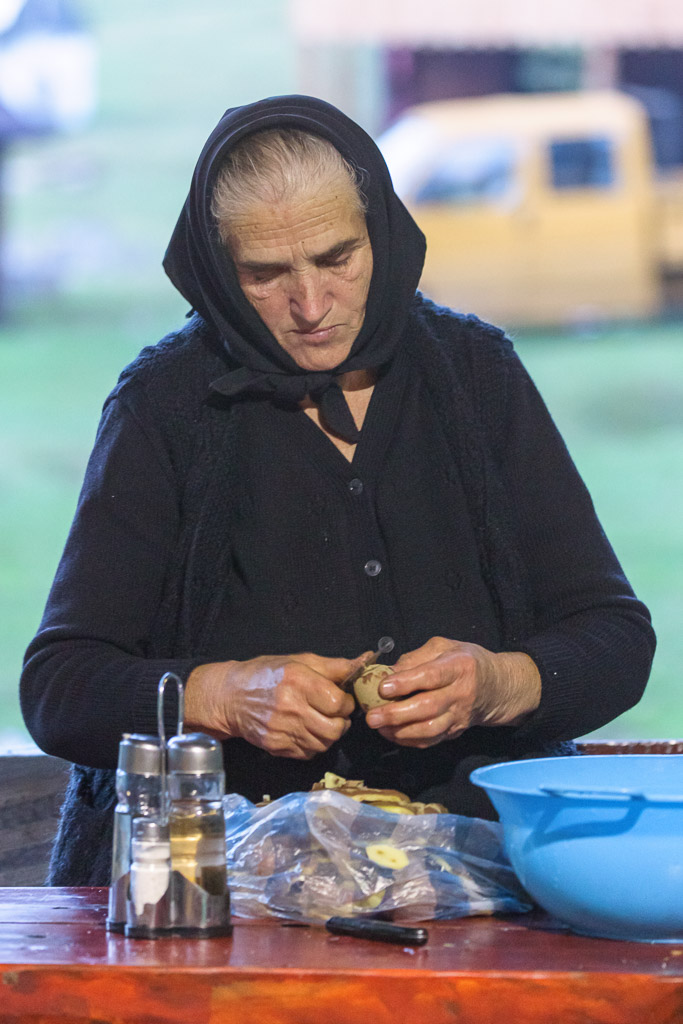
Food and Drink: There are about six food huts in Glavoi, serving fresh grill, soup and various accompaniments. We chose the one at the far end as it had the best view of the area. The owner Michaela spoke Spanish and German so we chatted happily in a mix of about 4 languages. If you go there, make sure you try the mushroom soup if its on the menu, incredible!
Water: There is fresh drinking water coming out of taps by the river to fill your water bottles and do any washing.
Amenities: Be warned there are no public toilet facilities. As in much of Romania, you will see white tissue in amongst the forest.