
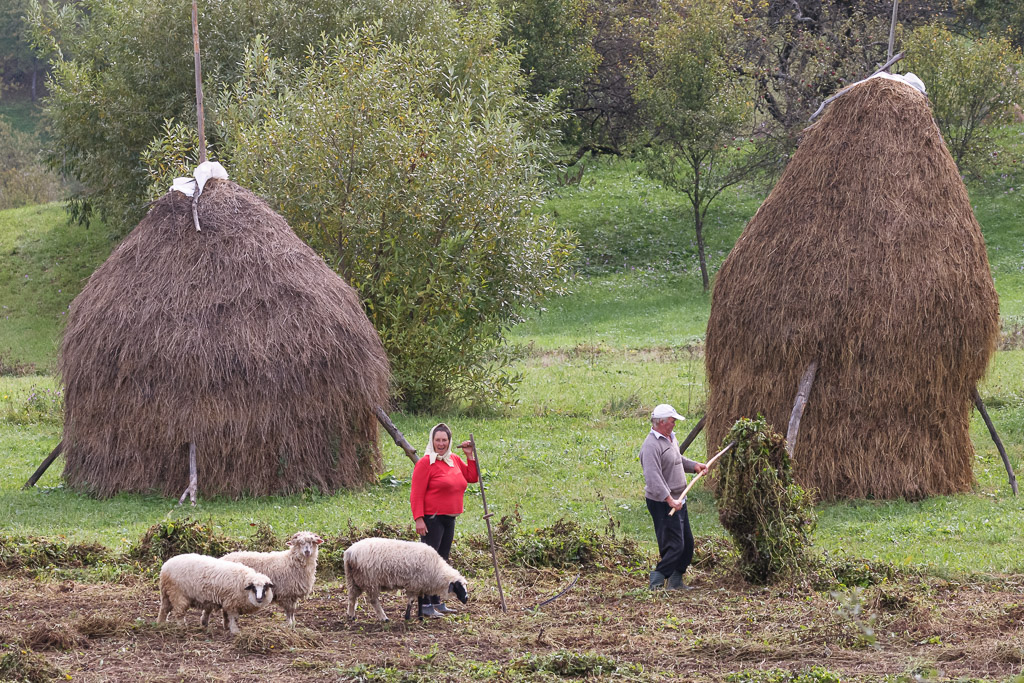
The countryside and villages of Maramures are best explored slowly on foot. We did this Maramures walking tour in the Autumn, with lovely colours and the harvest in full swing. Taking time to talk with the villagers who we met and wanted to know where we were from. Enjoying glimpses of their traditional rural lifestyles. The Autumn harvest was in full swing and everyone busy getting their homesteads ready for the winter.
An Introduction to Maramures, the Land of Wood
Visiting Maramures, the ‘land of wood’ was one of the highlights of our Romanian road trip. It is so remote that it has maintained its own traditions and way of life. A visit to the Iza Valley is like stepping back in time. To an era that you thought Europe had long forgotten. It’s like waking up in a Grimm Brothers fairytale. Beautiful wooden houses with intricately carved gates. Brightly coloured pots and pans displayed on a tree outside the home. Alongside racks of garlic, beans and peppers being dried for the storeroom. Crops being harvested with scythes and fields ploughed by hand. Haystacks in meadows surrounded by orchards. Apple trees dripping with shiny red apples. Can you picture it yet?!
Once upon a time, in a land not that far away, we woke up at dawn. To walk through the woods and fields and discover four magical villages:
- Ocna Sugatag – our start and finish, a good place to stay and enjoy the thermal baths after a long walk.
- Hoteni – a mix of traditional and modern homesteads with a lovely old wooden church.
- Breb – beautiful wooden houses, and some small restaurants & guesthouses where you can find a good lunch.
- Sarbi – take time to visit the working watermills and see the cloth being made from sheep wool.
“Only here had I found the sort of Eastern Europe which I had imagined from reading Old Peter’s Russian Tales when I was young; the Eastern Europe of wooden peasant cottages on the edge of forests inhabited by wolves and bears, of snow and sledges and sheepskin coats, and of country people in embroidered smocks and headscarves. Here was a remnant of an old, almost medieval world, cut off by the mountains and forests I had just crossed” William Blacker, Along the Enchanted Way
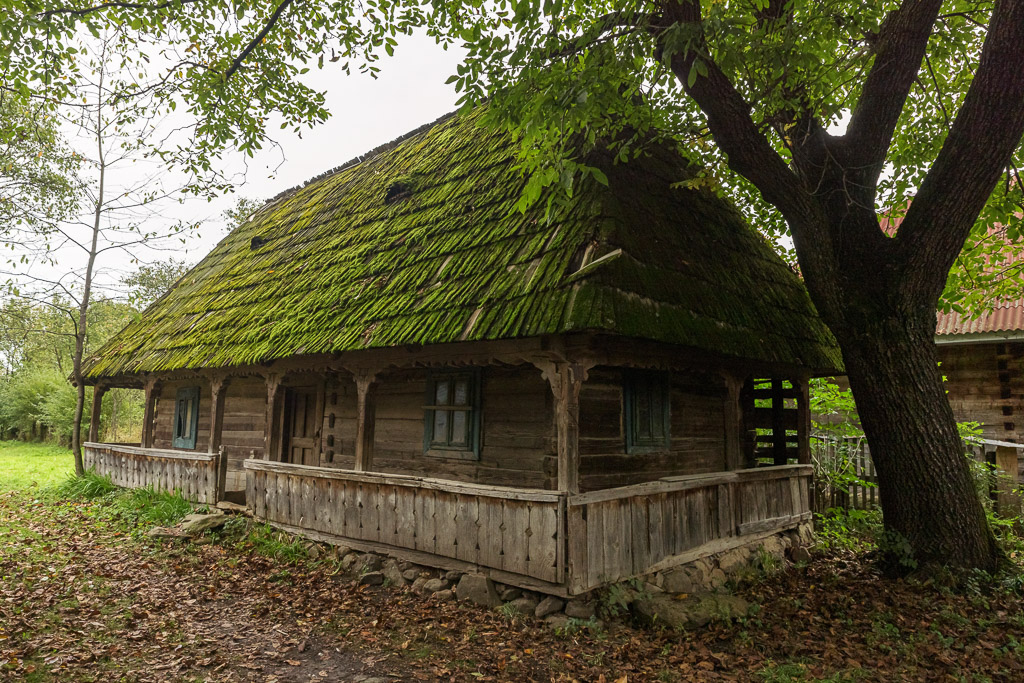
Traditional Wooden Houses Maramures
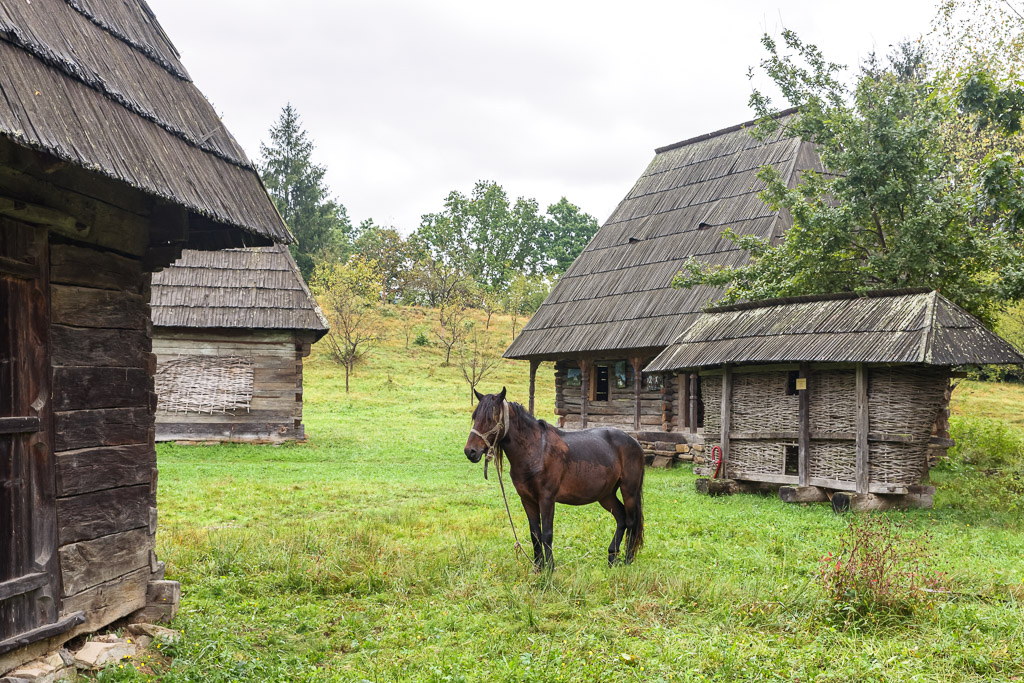
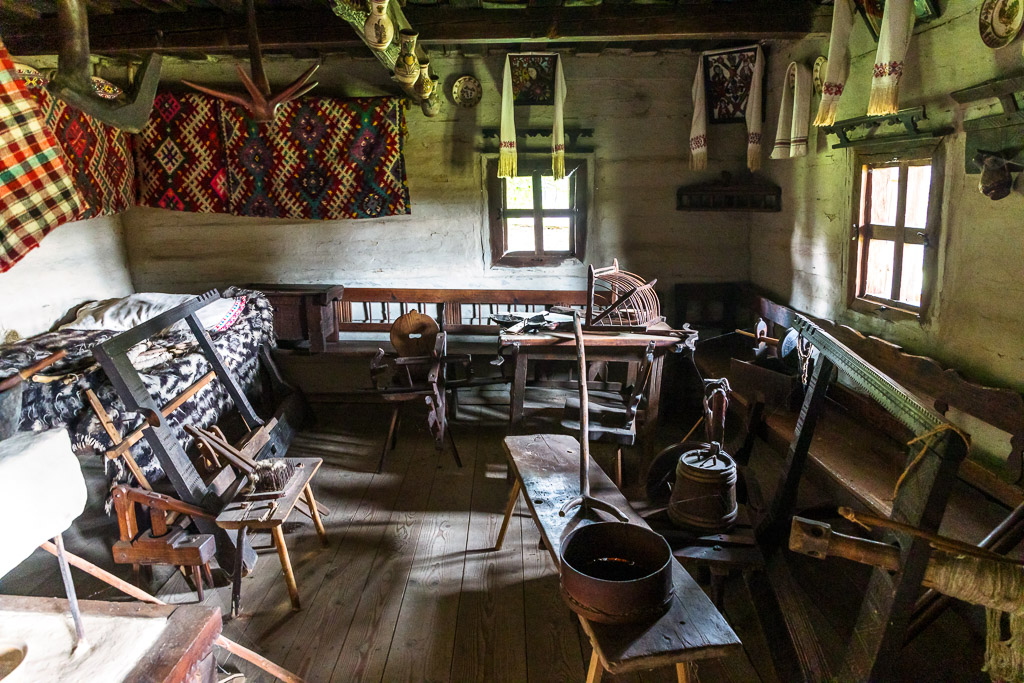
We had been to visit the Maramures museum of Sighetul the day before. So had leant a lot about the wooden villages over the years and their interior. We also knew what the different wooden structures all were from the grain store to the barn.
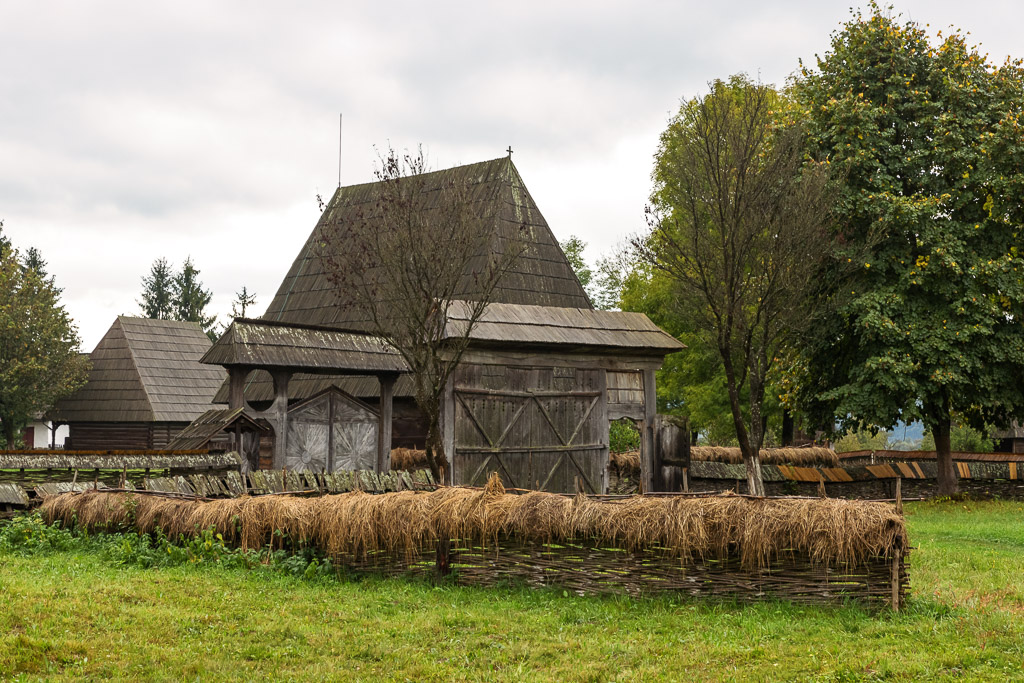
- Traditional Wooden House with Tall Gate
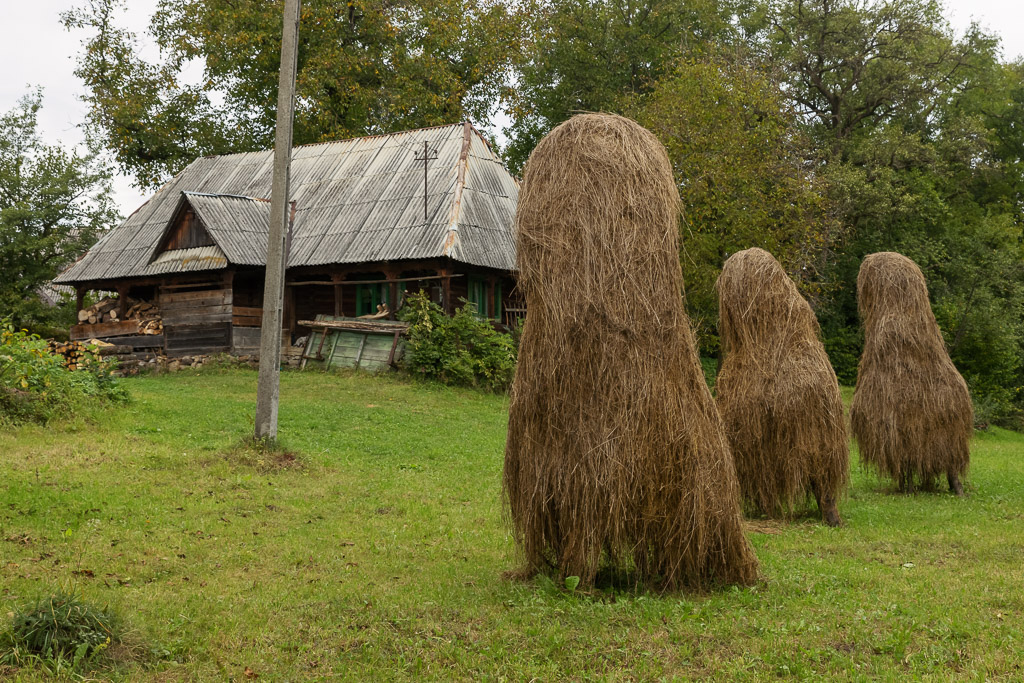
- Collection of barn, house, grain store (left to right)
- Traditional furnishings and layout of a house in Maramures
A Walking Tour of Wooden Villages in the Iza Valley, Maramures
We chose to stay in Ocna Sugateg as its proximity to the other villages in the Iza Valley would allow us to explore on foot. Our planned walk was a mix of road, farm tracks and muddy paths. Some of which are not obvious. But the villagers we met went out of their way to point us in the right direction when we couldn’t spot a path. We started bright and early so that we could take our time on the 19Km walking loop.
The start of the walk was along the road that connects Ocna Sugateg and Horteni (4.5Km). The road winds through rolling hills and meadows. The road is quiet apart from the occasional horse and cart. Lots of birdlife in the trees and wagtails bouncing across the road.
Horteni is an interesting mix of homesteads with large new houses being built alongside traditional wooden ones. The route turns off to the left in the middle of Horteni to take on the road to Breb. Shortly after the turning, you will pass the Greek Catholic Church.
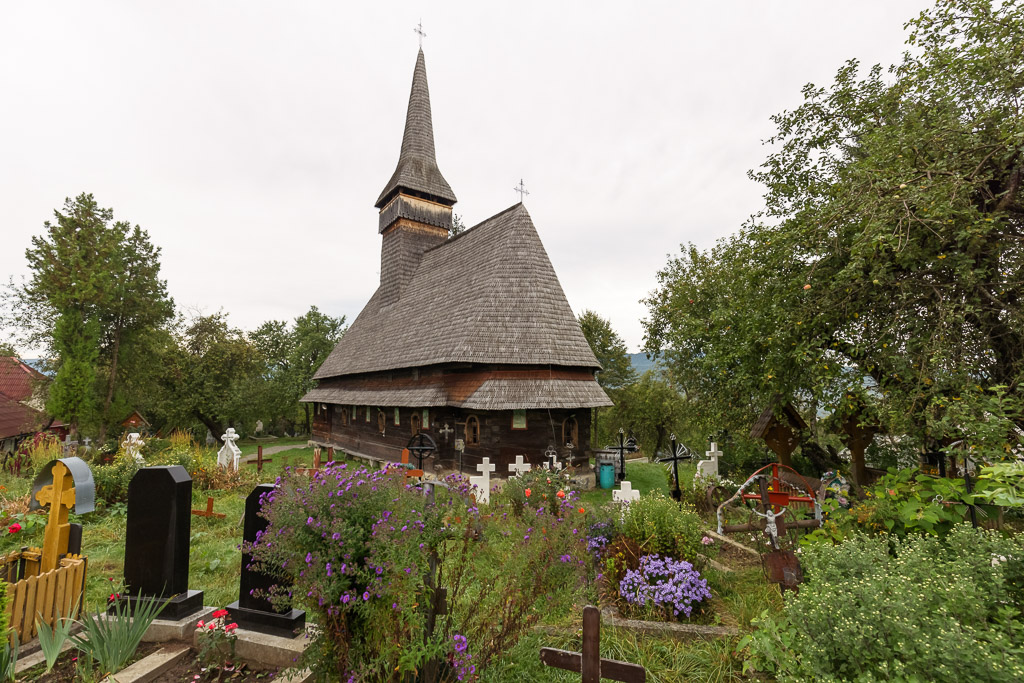
Greek Catholic Church of the Holy Archangels Michael and Gabriel
Once you pass the Church you walk past a few houses to the edge of the village. We were keen to check out the peat lakes. But could not spot the turn off.
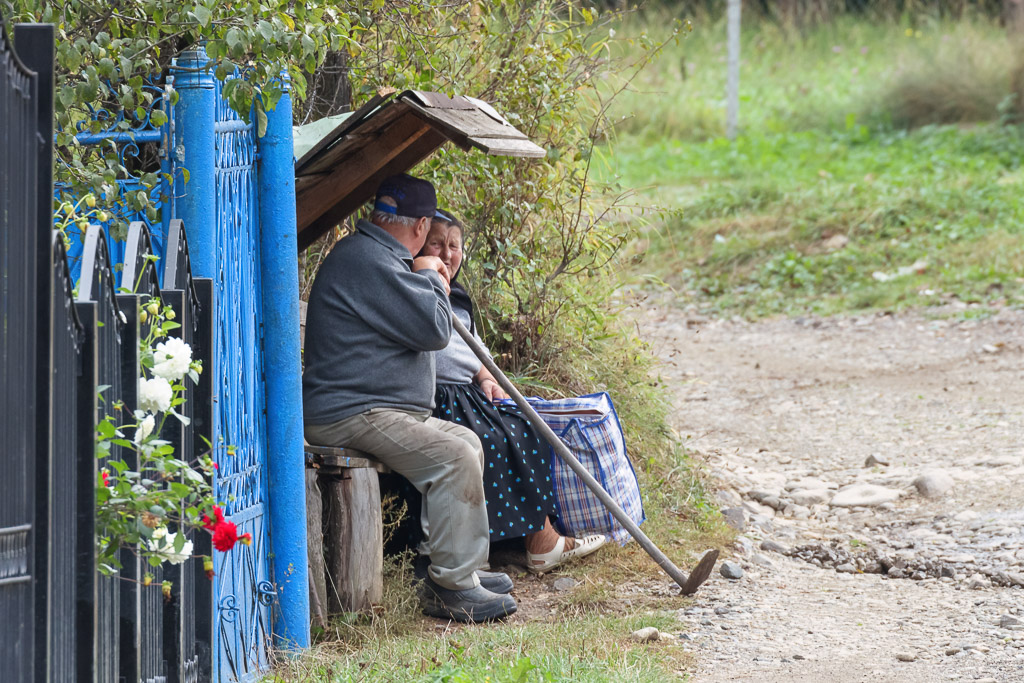
We turned back and asked some neighbouring villagers we had passed who were having a chat. They were very friendly asking where we were from and how long we were in Romania. We managed to explain what we were looking for with the help of my Spanish inspired Romanian and Google translate. One of the ladies waved her husband over. Who walked us up through his field of pumpkins to the wood where the lakes and the peat bog are. Look out for carnivorous plants and turtles if you visit the peat bogs. From here we headed in the direction the route sign was pointing but there isn’t much of a path. You are walking through gorgeous woodland and following the edge of fields until you meet the road to Breb once more.
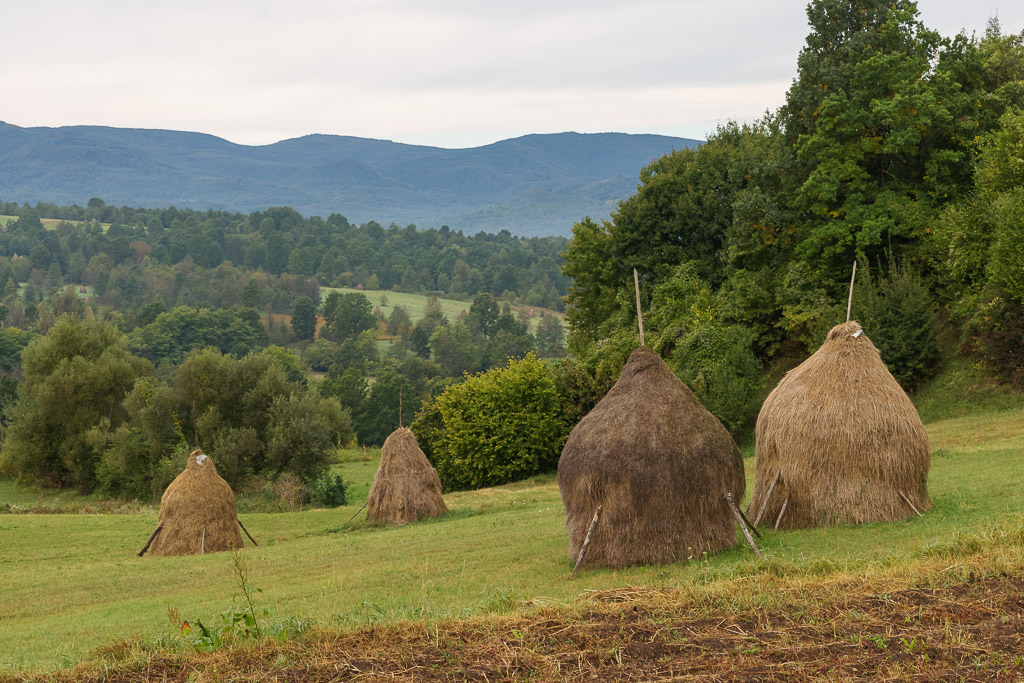
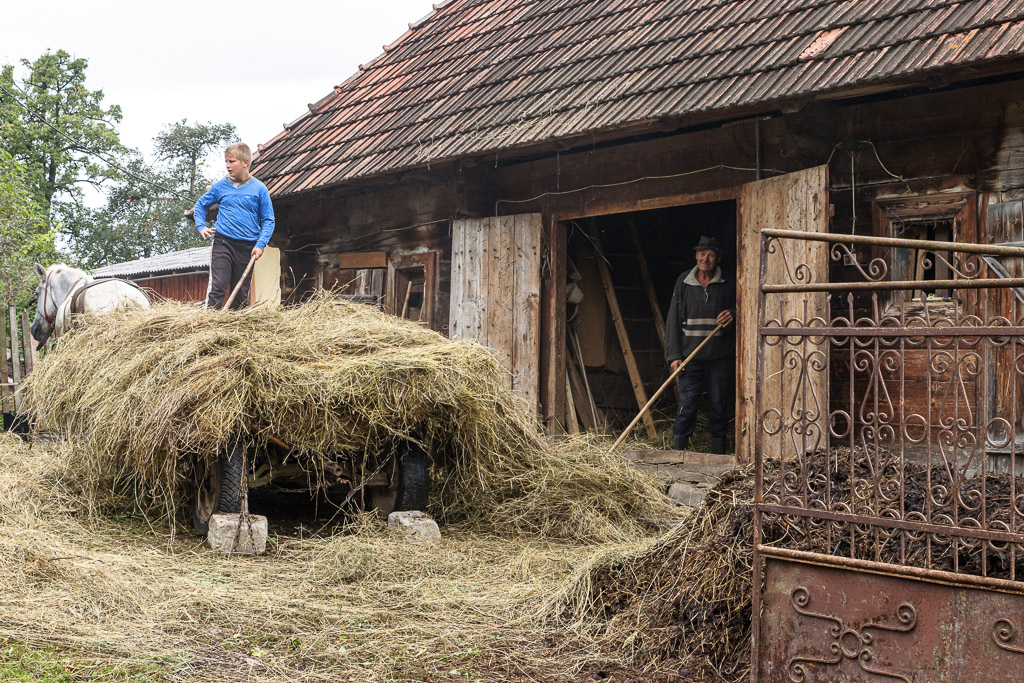
Suddenly the road turns a corner and the view opens up to the classic Maramures vista. Fields dotted with rounded haystacks. Men gathering the hay with wooden forks. The wooden houses of Breb nestled in the valley.
The Village of Breb
Arriving in Breb, you reach the river and there are a couple of tourists signs pointing you either straight on to Busteni or right to do the loop of the village. We went right!
The loop of the village is great, you will pass many beautiful old wooden homesteads and working farms. The road is a dirt track. If it has rained you will struggle on this on bikes and might want to leave them and do the loop on foot. Breb definitely caters to more tourists than the other villages with several signs for homestays and local restaurants. There are also signs for local woodcarving and other crafts. We were there towards the end of September 2020, more places were closed due to a lack of tourism caused by COVID-19. We did find one restaurant open and had a lovely lunch of peasant soup and bread.
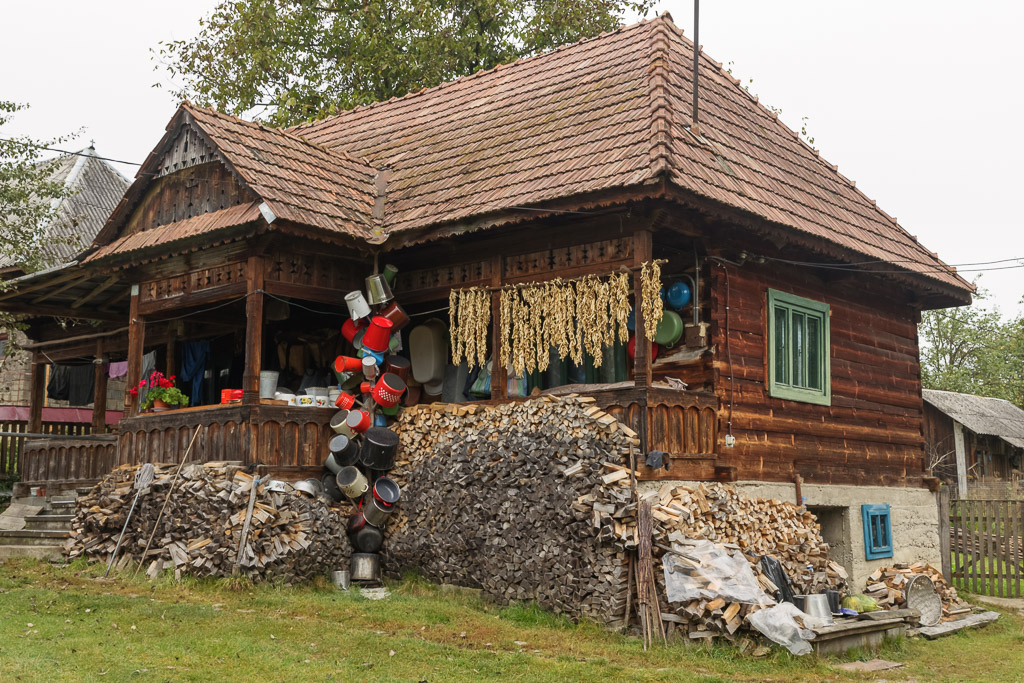
The Significance of the Pot Tree’s, Maramures
Our host had told us about the pot tree’s which you will see all over Maramures. Traditionally the pots would be hung outside the houses on a tree to dry. With time it became a sign of wealth if you had lots of bright, shiny pots and pans on display outside your house. Then a new message emerged, if you had a red pan on the top of your pot tree, that signalled that there was a girl in the house of marriable age.
After lunch our next place of call was Sarbi. The route to Sarbi is part road part off-road short cuts on farm tracks through the fields, which we had found marked on All Trails.
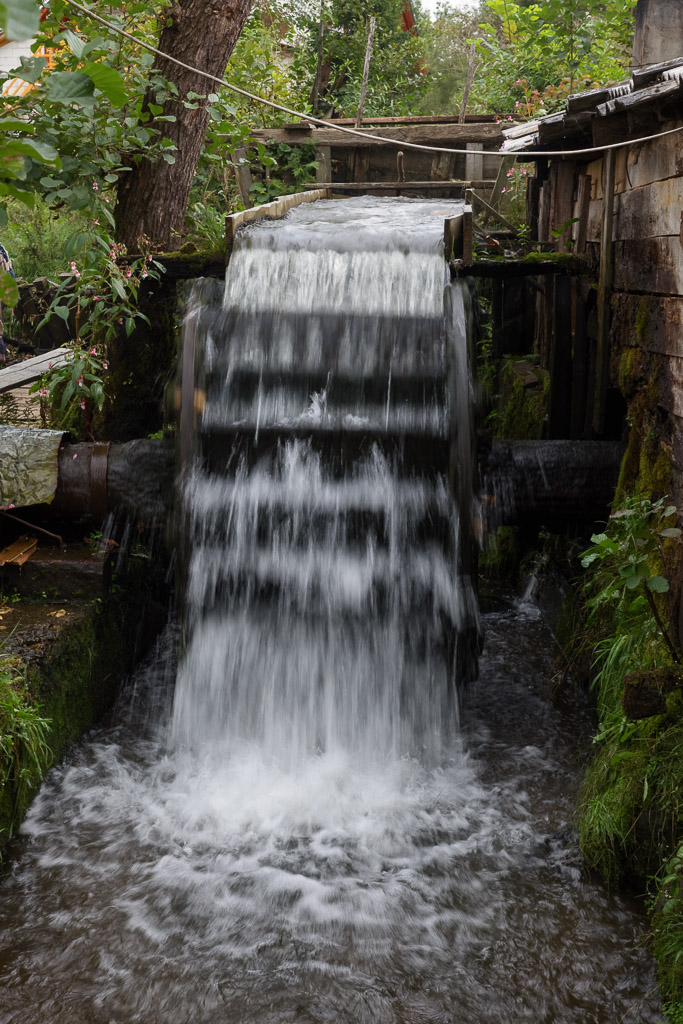
Working Watermill Sarbi
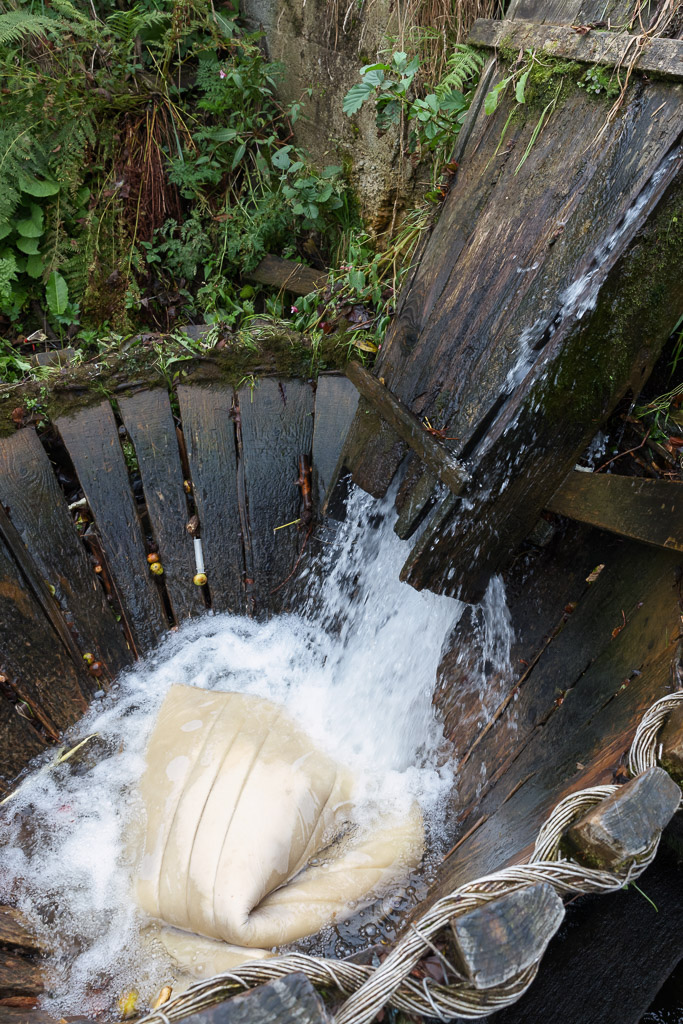
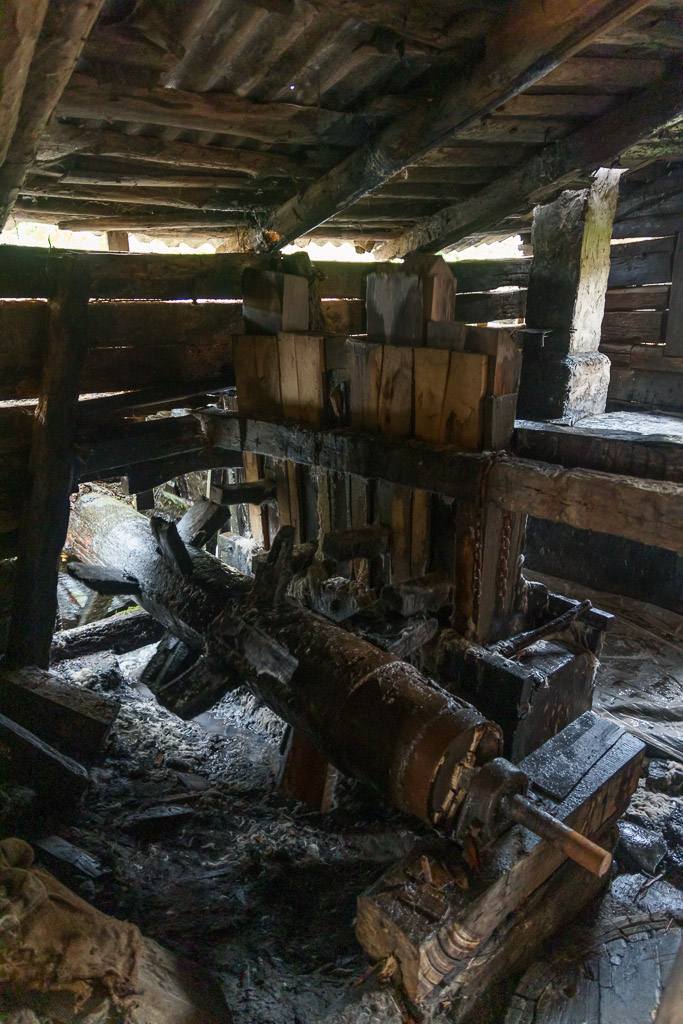
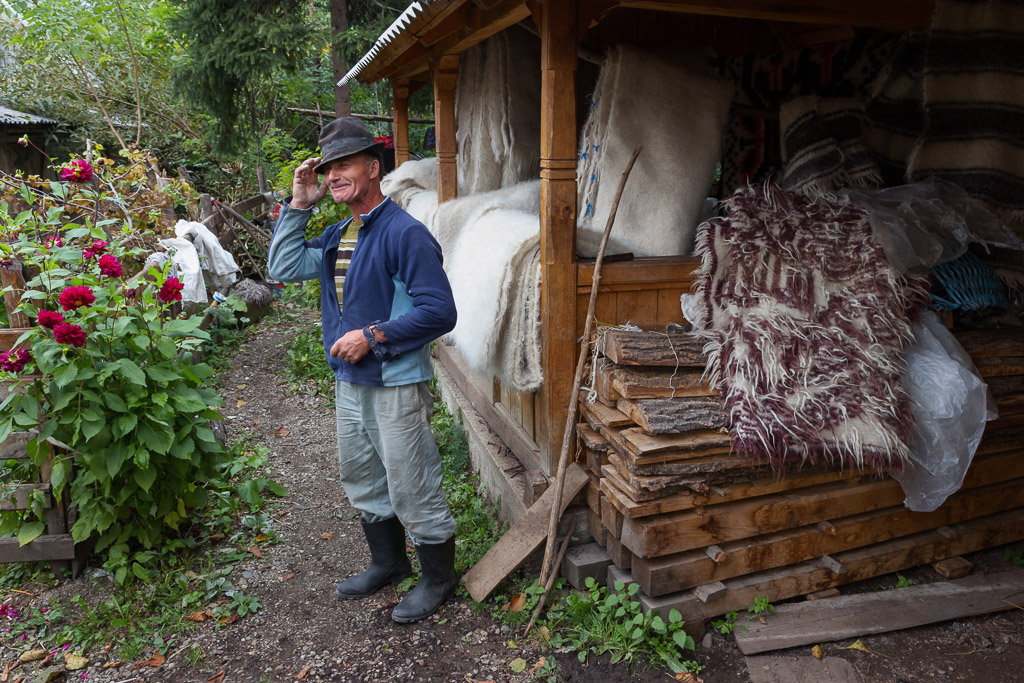
Walking through Sarbi you cannot miss the watermills alongside the river. We knocked on the gate of one and were shown around. Quite amazing, the small river powers the mills which beat the wool so it can be spun into yarn. The yarn is then woven into fabrics or different thickness for different items of clothing or rugs. Which are then washed in the natural washing machine (pictured) and beaten again. We walked away with a small mat for 20lei that was perfect for the doorway of our campervan and it really was quite tough and easy to clean!
Practical Notes
Where to Stay – We stayed with our campervan at Camping Green Place, Ocna Sugateg. When researching the area the other campings were in Breb and had many comments about bad roads to get to them. The road to Green Camping was still pretty potholed, but not as bad as the ones in Breb. Which were along muddy potholed roads which we would never have made it up. Green Camping has a number of small cabins to rent as well as space for vans and tents. Breb has several homestays and would be a better option if you are not camping or in a campervan
Where to Eat – We had a hearty lunch at Casa Lu Dochia in the middle of Breb. There are not many options in the other villages unless you can arrange something with a homestead.