
Heading east away from the mountains and towards the coast. We drive south down the coast from Moeraki Boulders Beach to the southern tip of the South Island. We hugged the coast for a week, enjoying the stunning views of wild beaches and colourful headlands. Seeking out yellow-eyed penguins, one of the largest and rarest penguins in the world, whose numbers are sadly in a catastrophic decline.
Shag Point & The Katiki Boulders
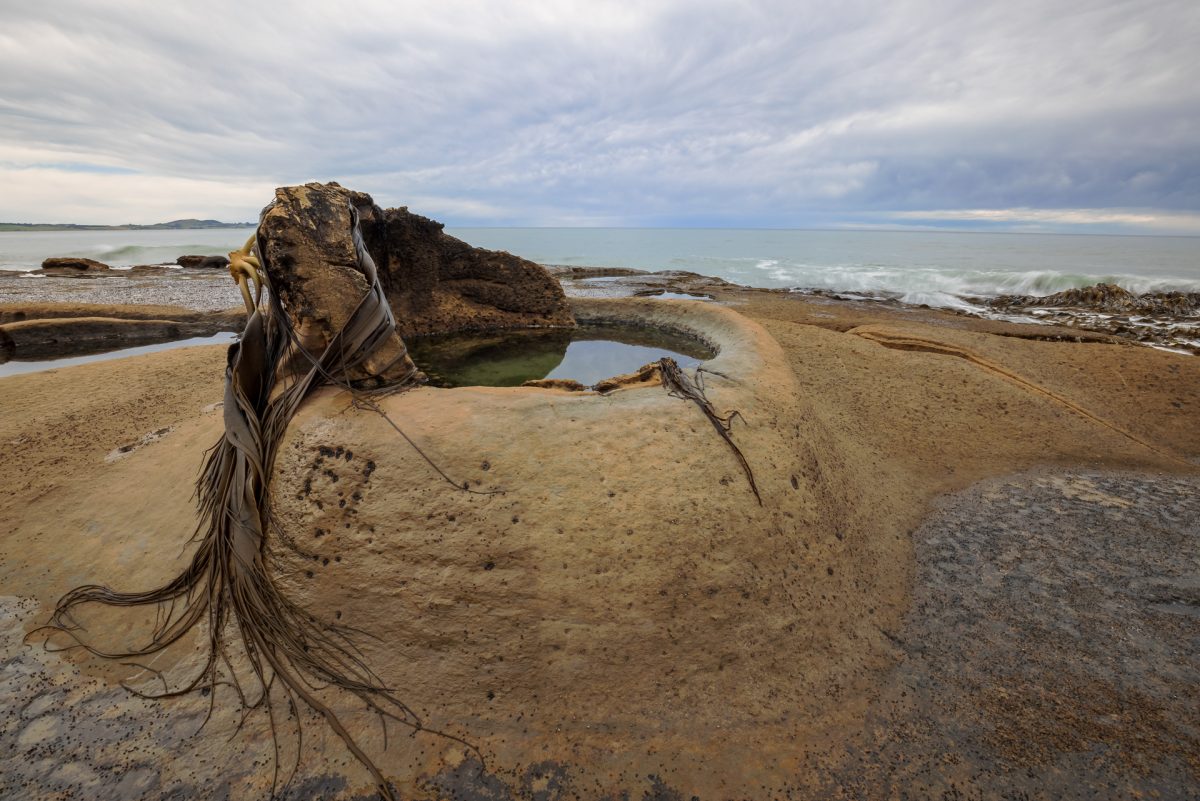
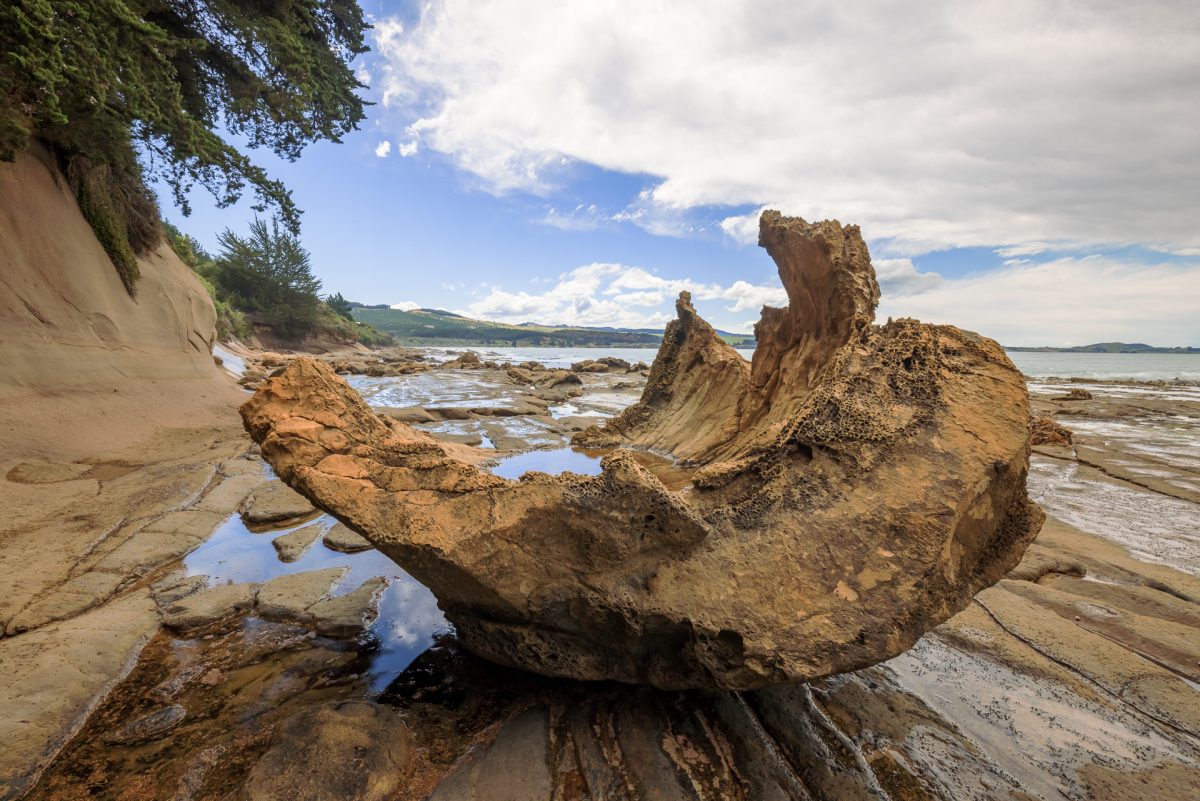
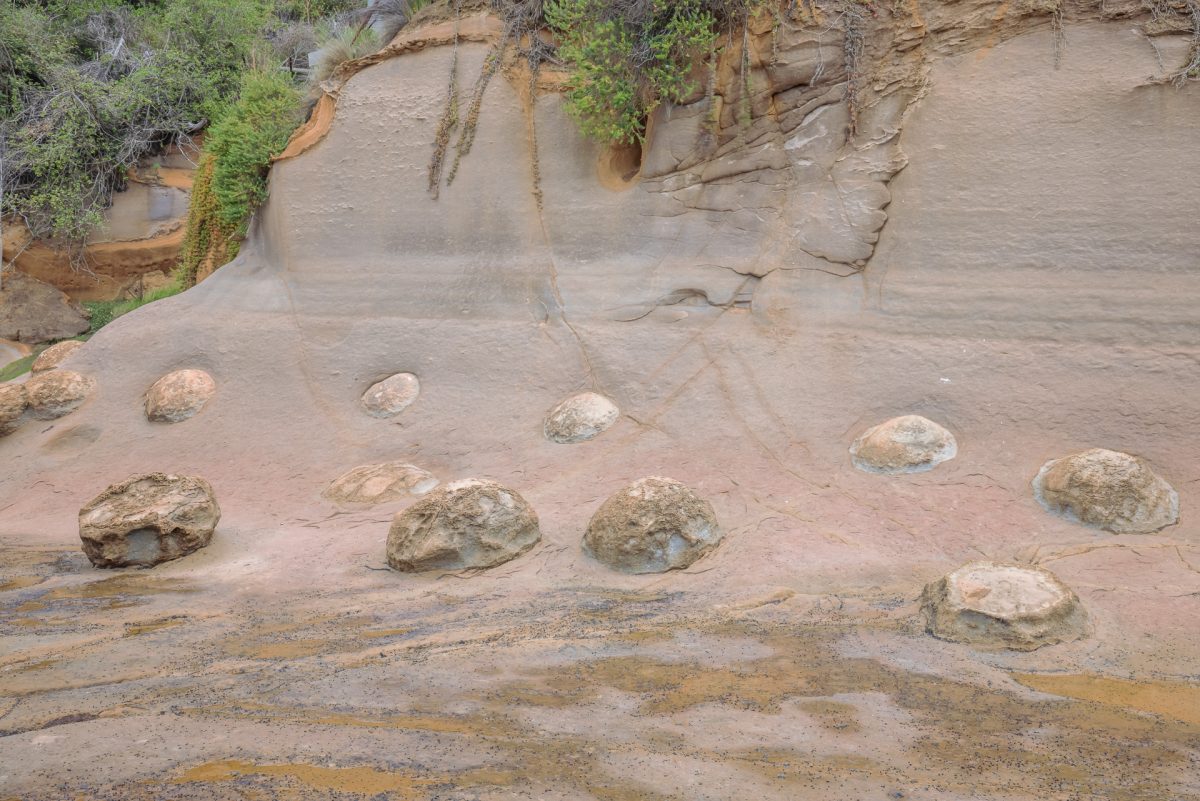
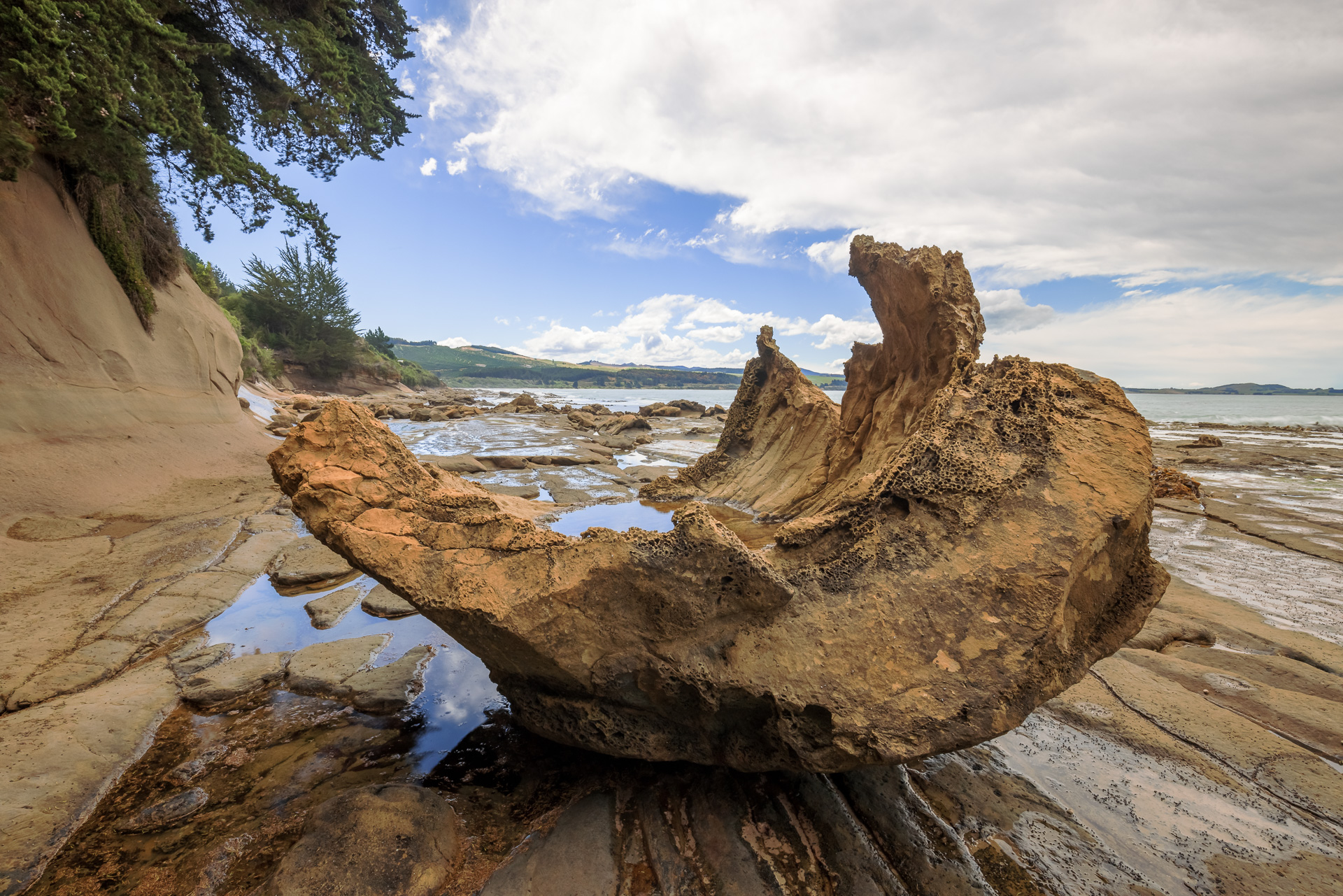
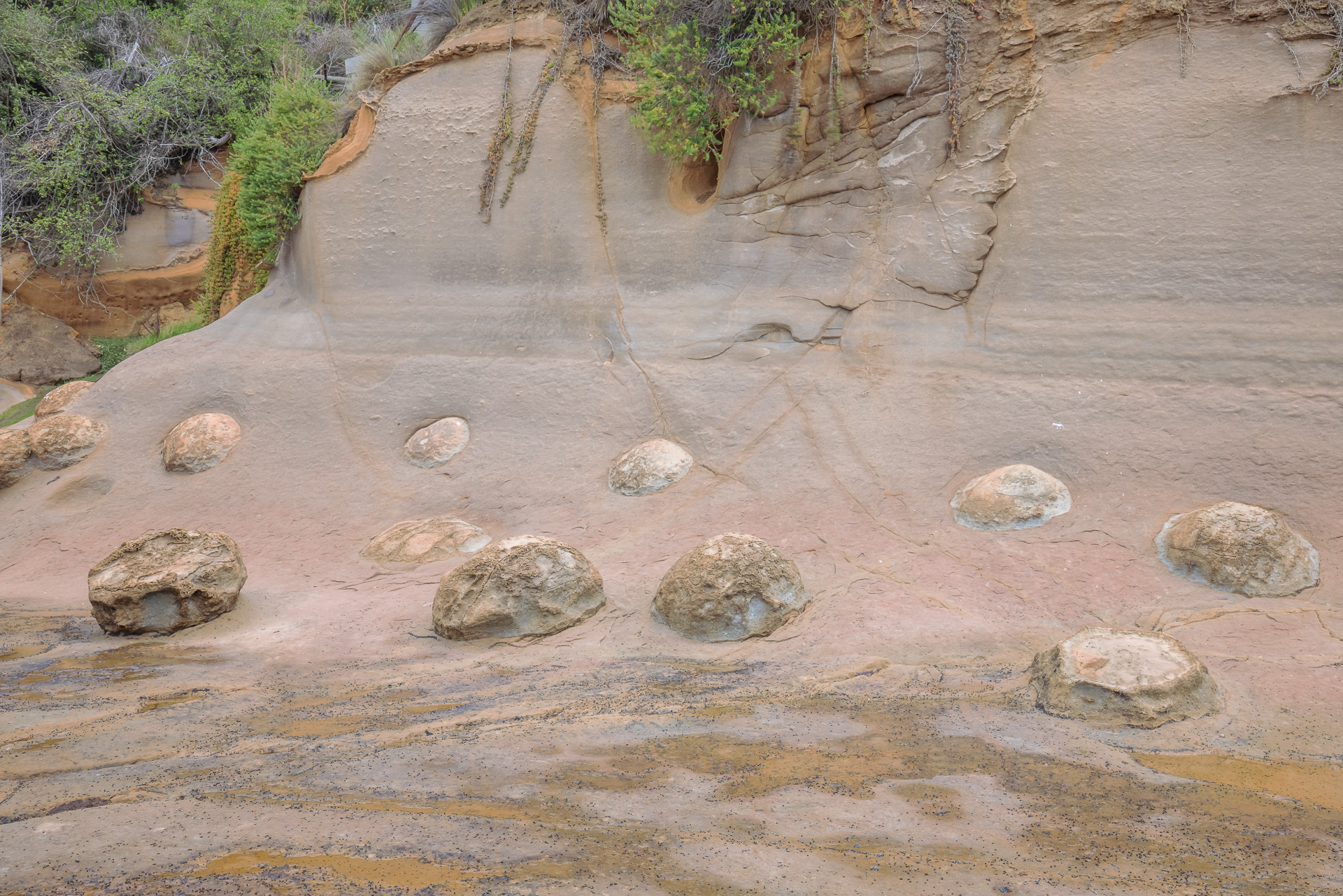
We reach the coast at Shag Point, parking up we descend a small sandy path down to the sea to walk on the tidal shelf and seek out its mysterious concretions. Balls of sandstone and mudstone that have formed like pearls on the ancient seabed over 65million years ago. These pearls of nature’s concrete have formed around fossils of sea creatures from the Cretaceous era. One by one they are now hatching from the eroding mudstone cliffs onto the tidal shelf. The balls erode from the inside and open revealing ancient creatures that have been buried within. The most significant being a 7m long Elasmosaur discovered in the ’80s.
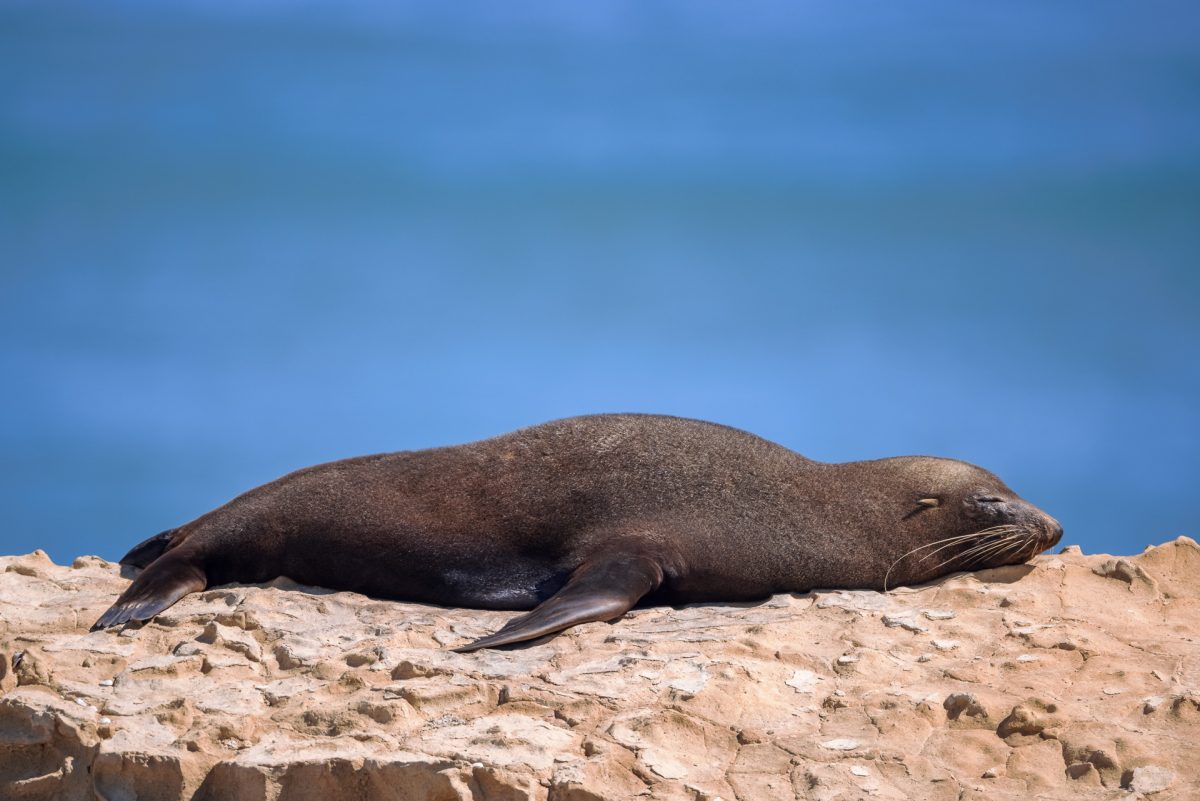
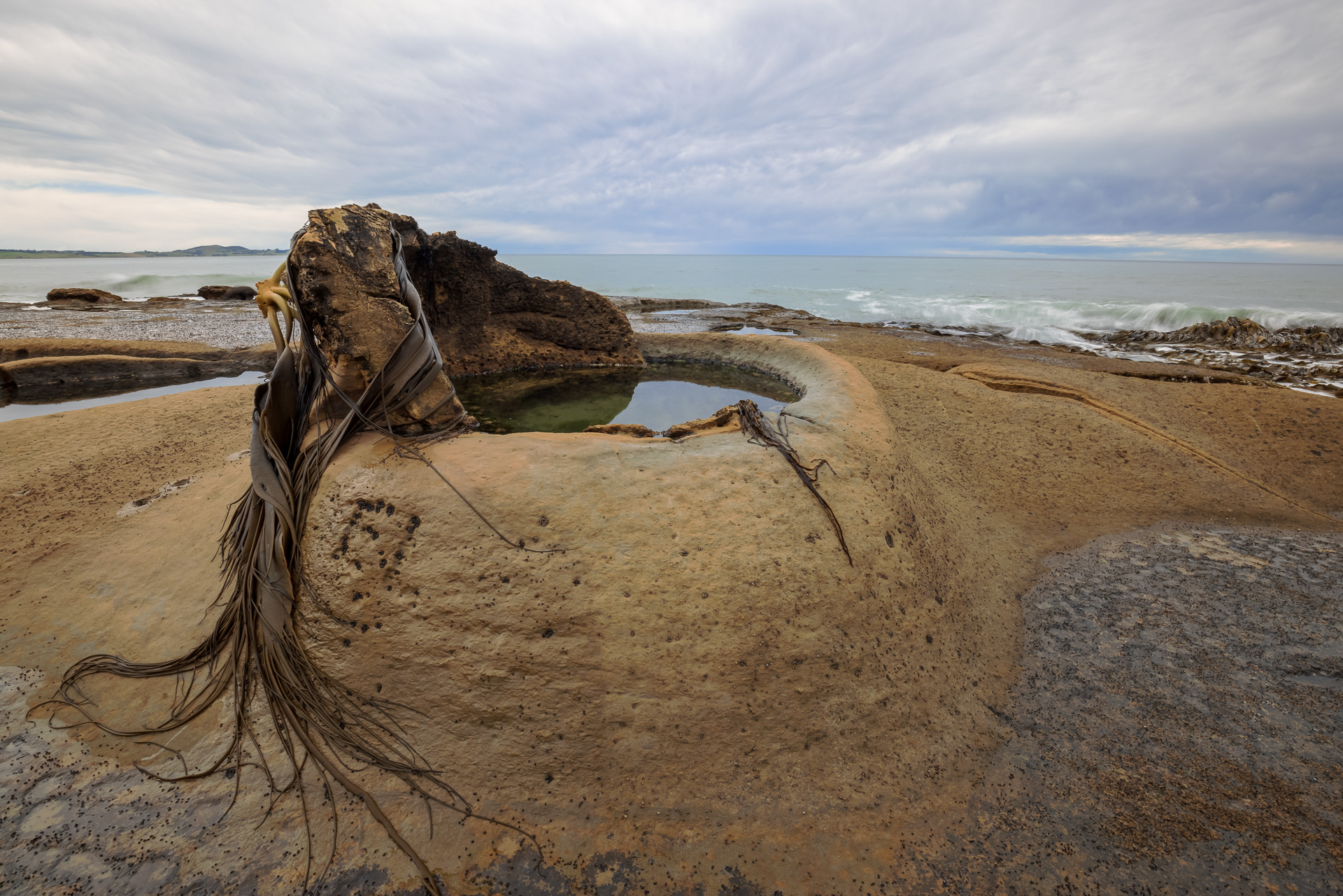
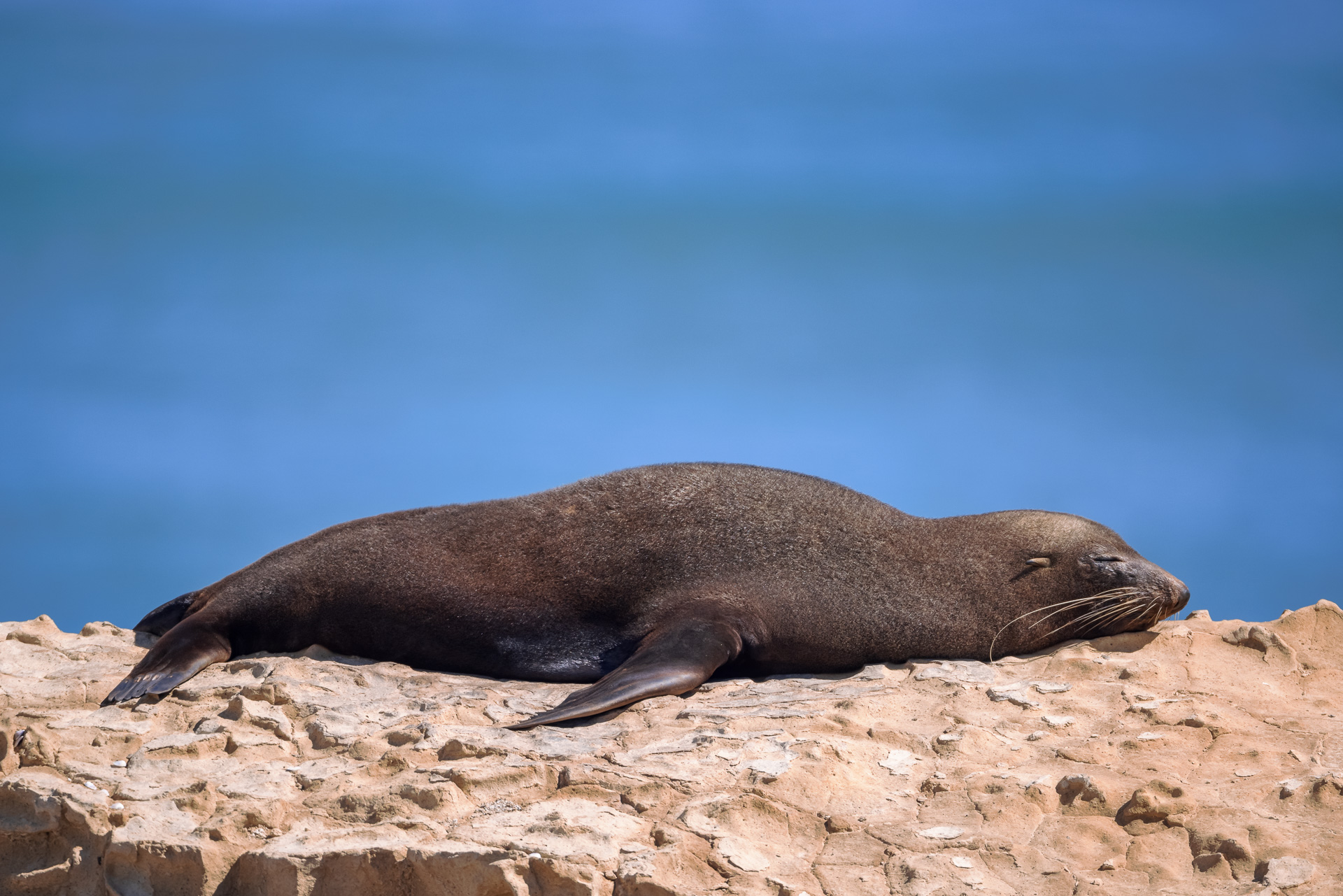
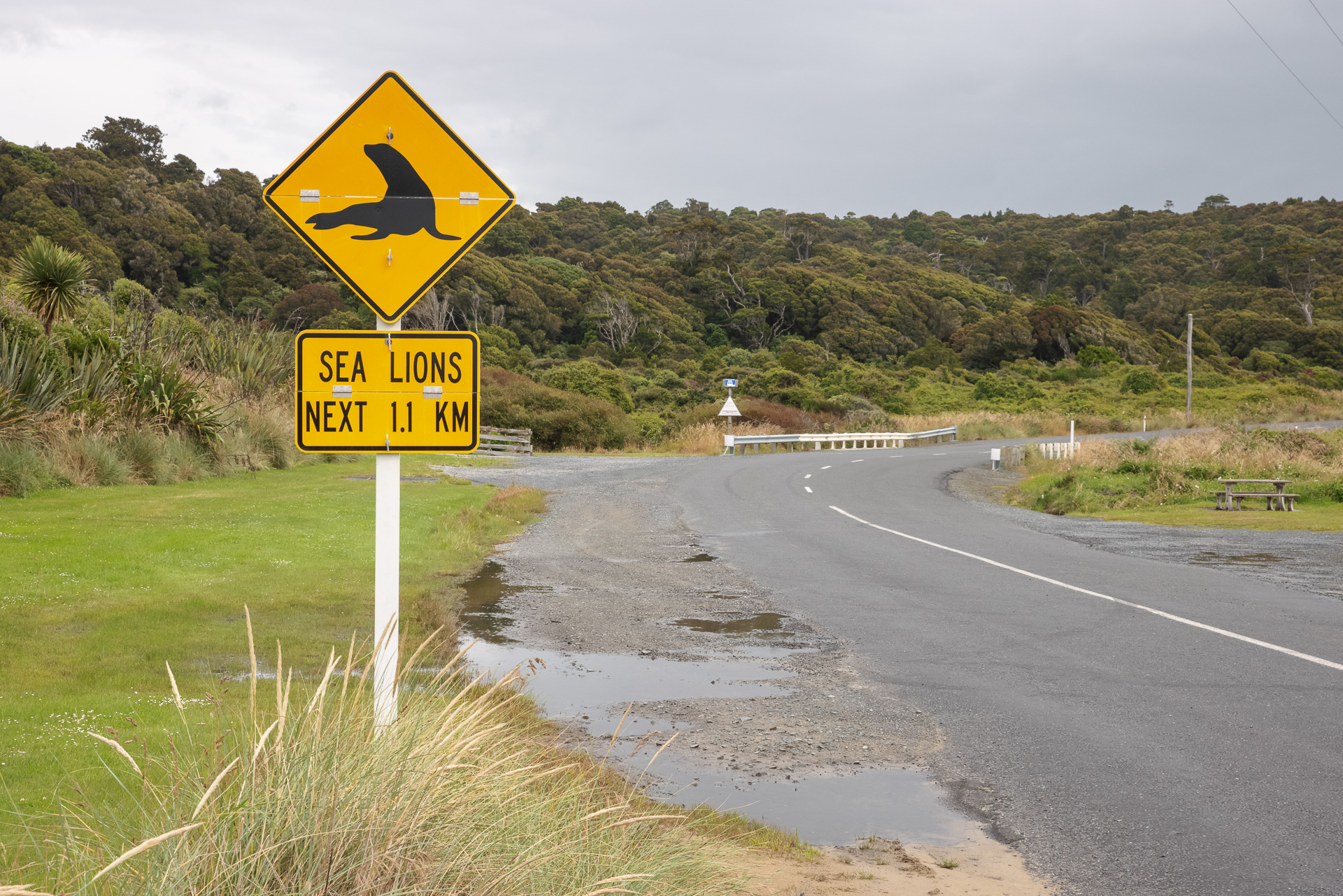
The open concretions that we found are draped stylishly with kelp frond and have beautiful rockpools inside them. We had to watch out for the fur seals, dotted asleep all over the tidal shelf, winding our way through them at a safe distance to avoid an unnecessary fright. The younger pups were quite timid, but their parent would keep one upside-down eye on us, checking we weren’t a menace.
Moeraki, Boulders Beach & Seafood
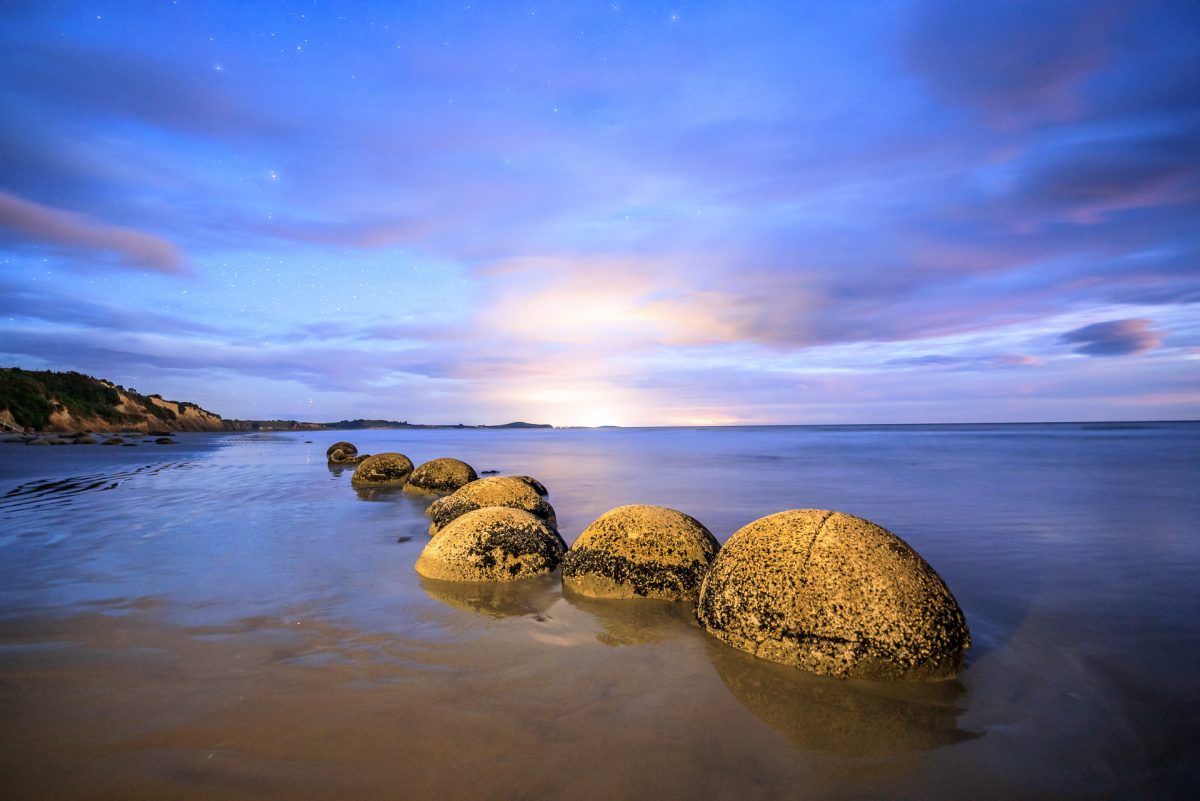
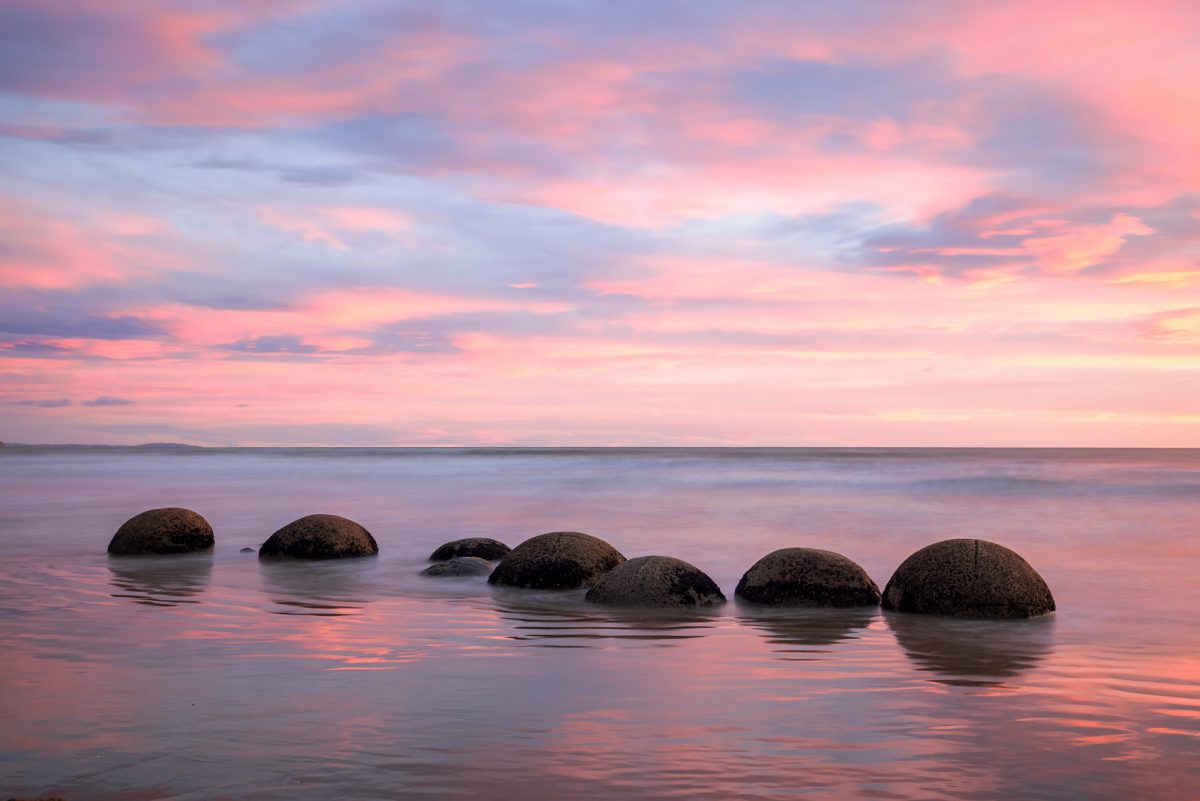
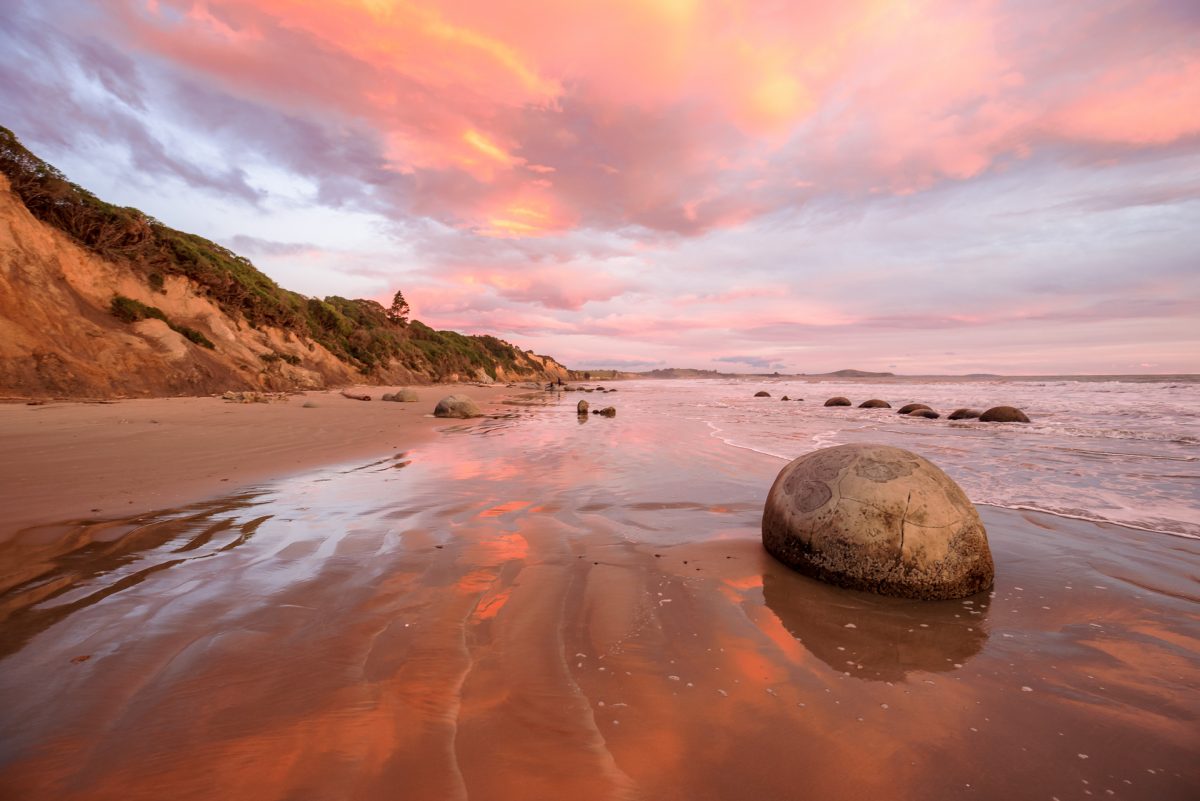
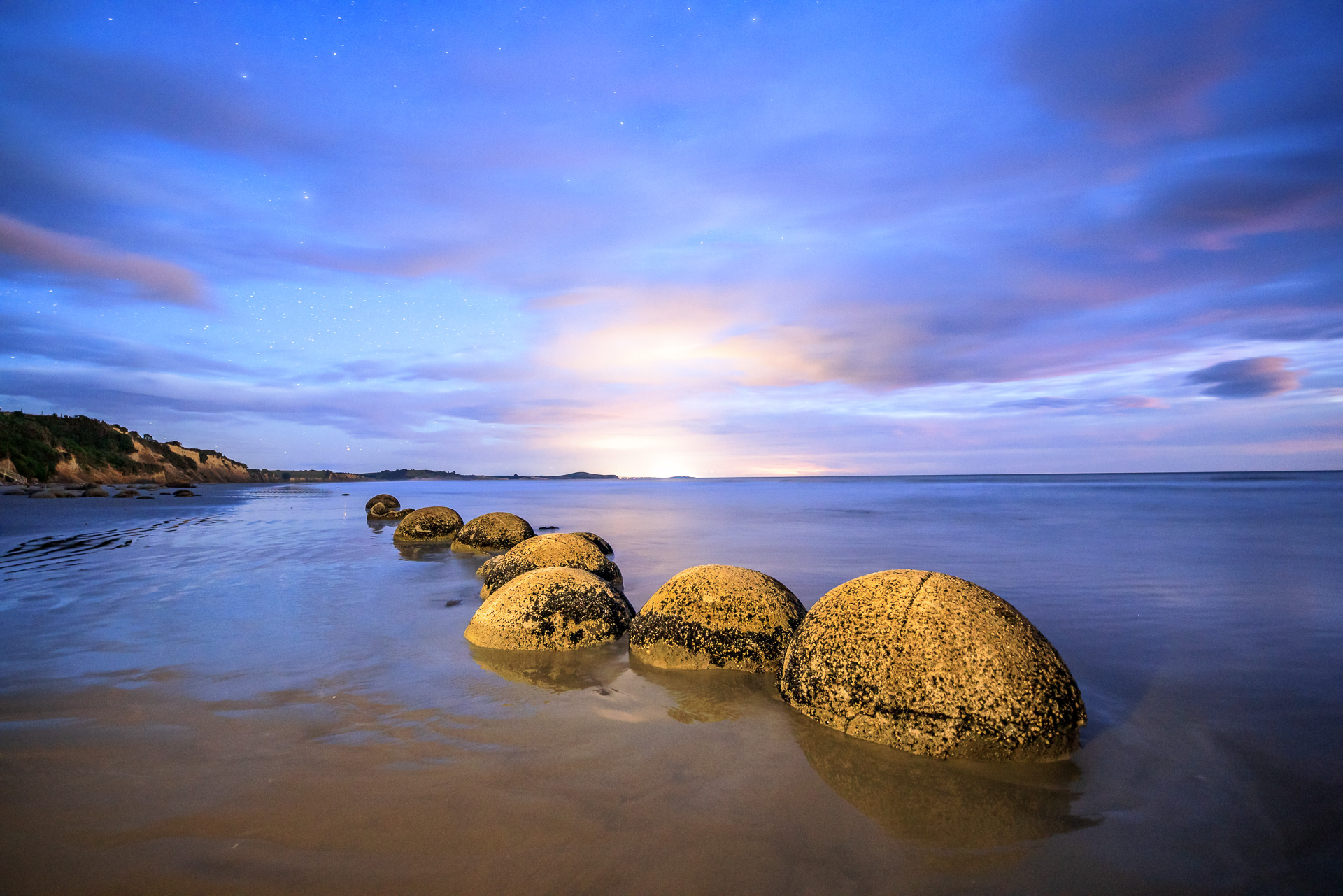
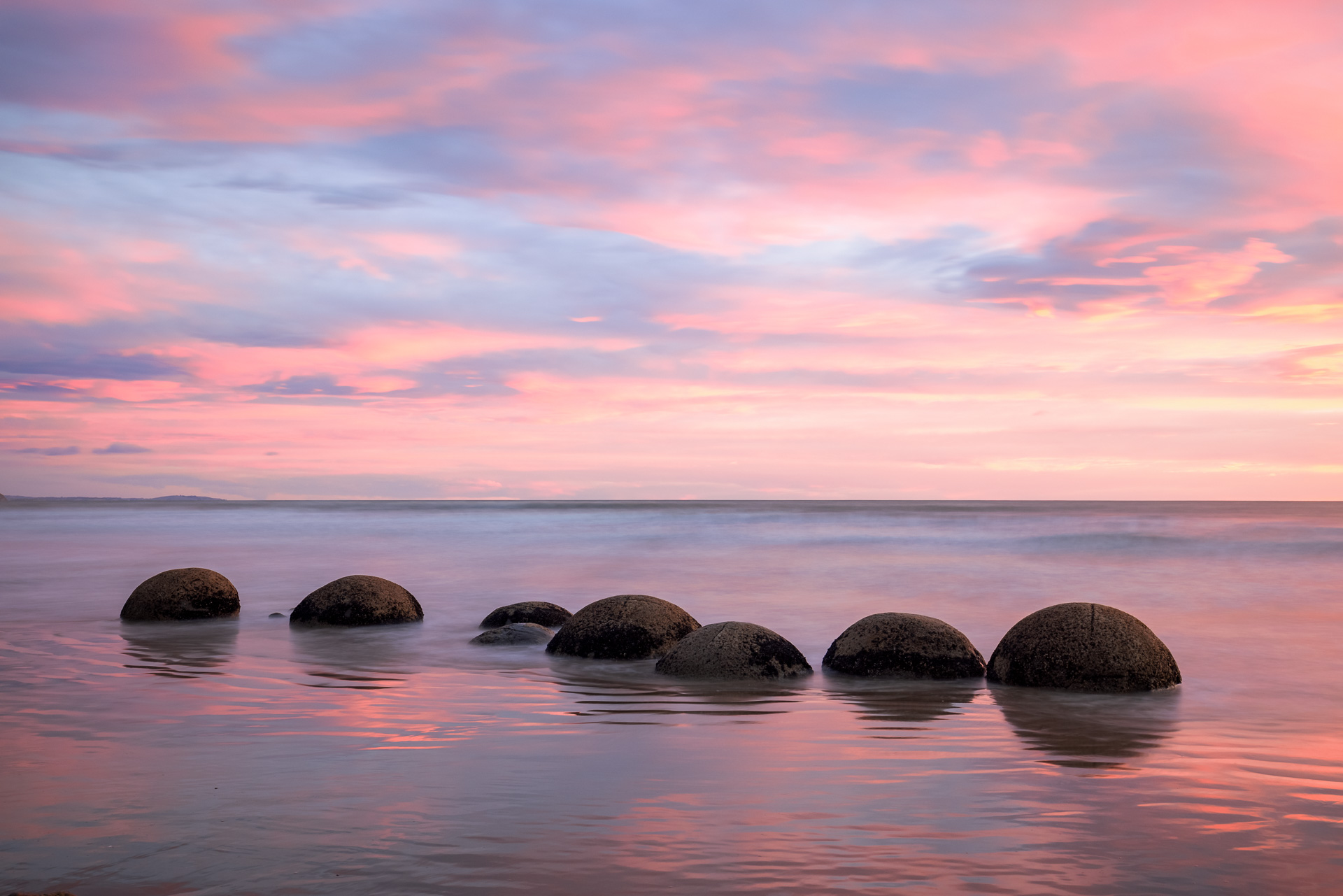
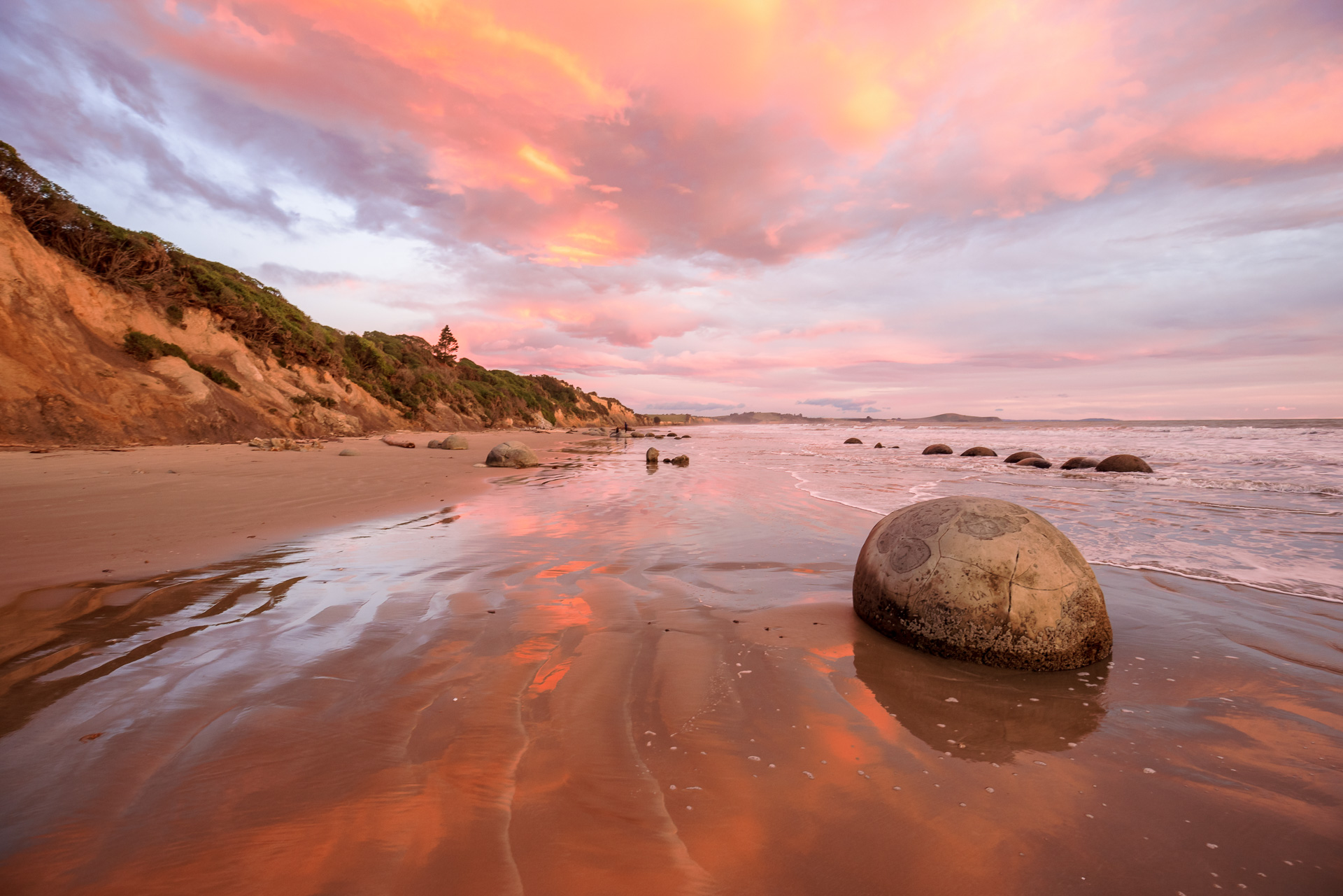
Moeraki Boulders, the more well-known of the cementoid sites with spherical boulders artfully laid out on a beautiful yellow sand beach. We parked up in the official car park, café and gift shop clearly closed and a whole row of empty parking spaces marked ‘bus’. This is normally one of the most visited spots on this coastline, but with a closed border and no foreign tourists, it is empty but for our little campervan. Chris, of course, took advantage of this and we were back pre-dawn to an empty beach for a spectacular sunrise.
We went straight from sunrise at the boulders to the Moeraki lighthouse with the hope of spotting some yellow-eyed penguins which have a nesting colony there. We were in luck as we spotted four, three young and one adult sheltering in the vegetation.
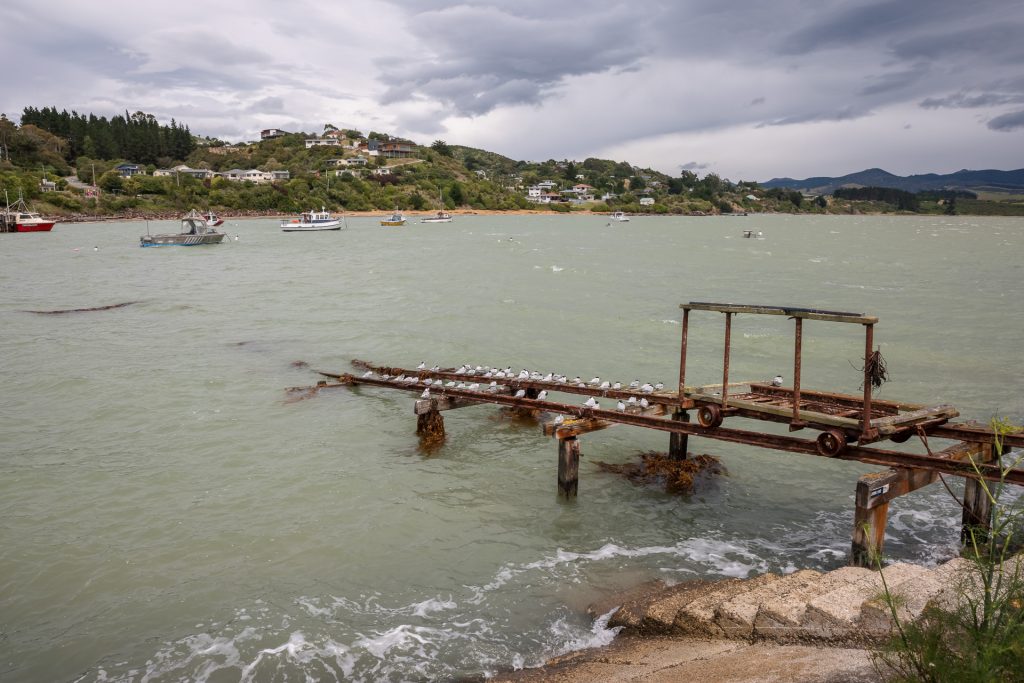
Moeraki itself was once an important fishing village, serviced by a train line taking the fresh fish catch up to Christchurch. We had been given one restaurant recommendation for our entire trip that we were under strict instructions not to miss; Fleur’s Place. A beloved institution where the catch of the day menu is an entire A4 page of mouth-watering seafood choices, all caught by the local fishermen. The restaurant owns its own fish quota, it sits at the top of the slipway at the entrance to the natural harbour, kitchen door ajar for daily fish deliveries. Fantastic views of the bay if you can snag a window table. Fleur, the owner, and a renowned seafood chef welcomed us as we walked through the door.
We could not resist the tasting platter of 5 pan-fried and grilled fish fillets; sole, gurnard, tarakihi, orange roughy, and grouper served on a dish of steamed vegetables. They went particularly well with the lime caper sauce, a memorable take on traditional tartare sauce. Utterly delicious and well worth a detour, or in our case a lot of schedule juggling to make sure we were there for Thursday lunch!
Dunedin & The World’s Steepest Street
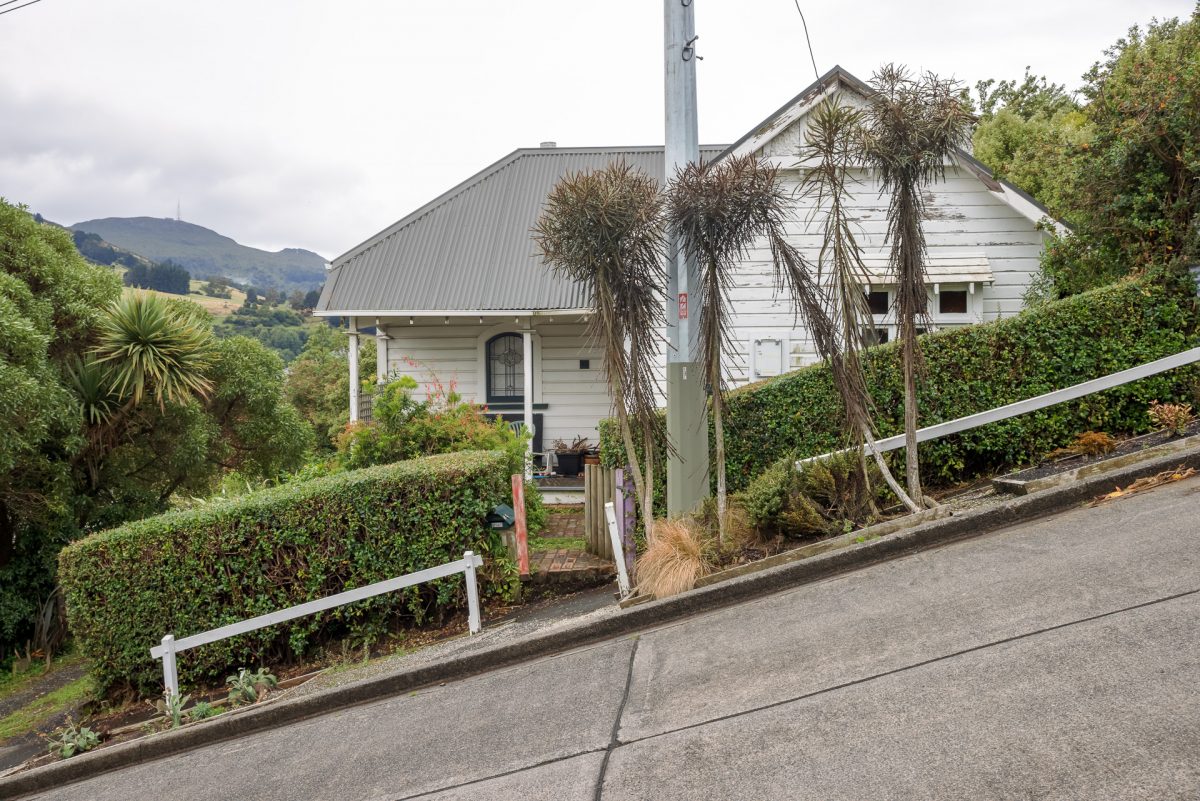
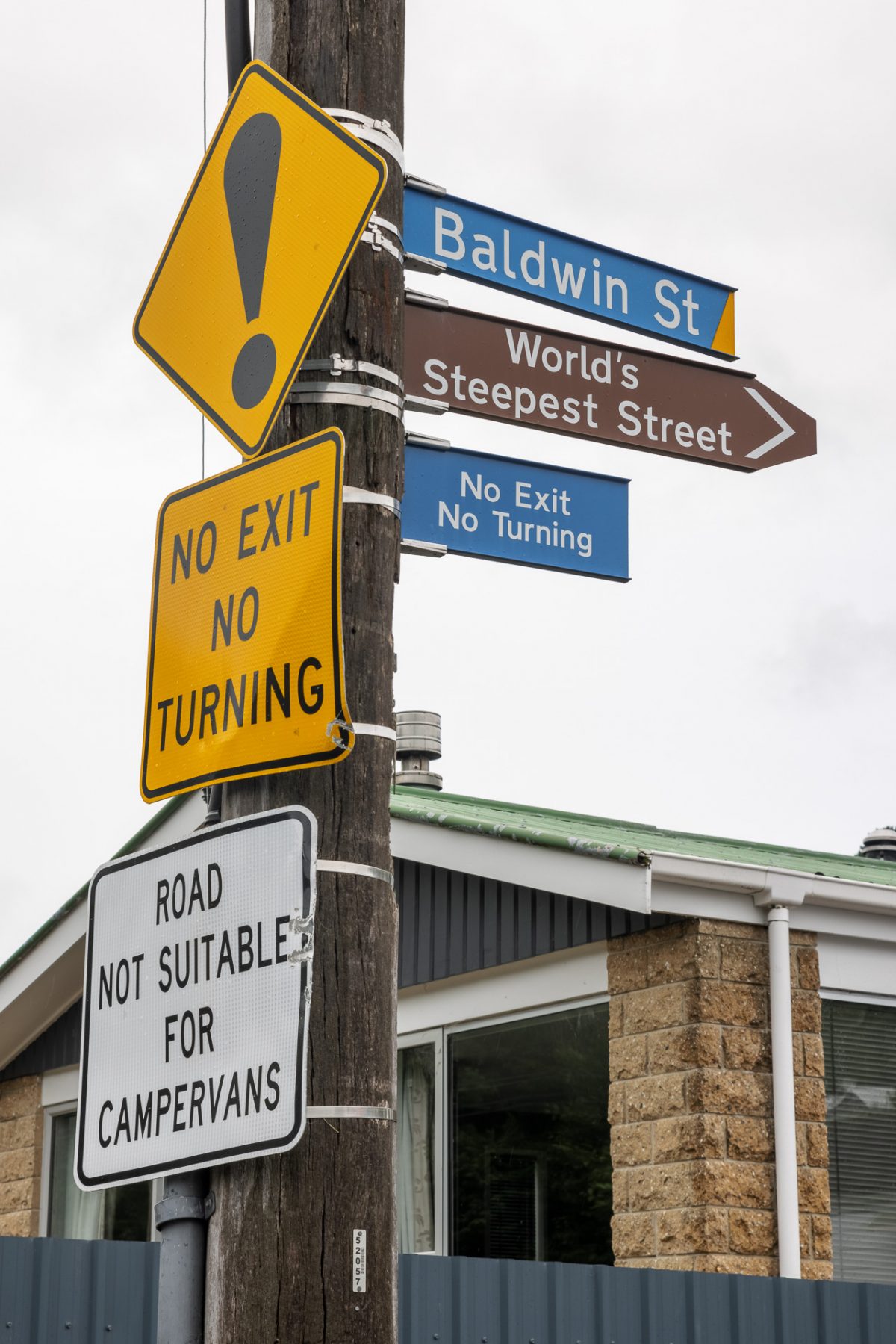
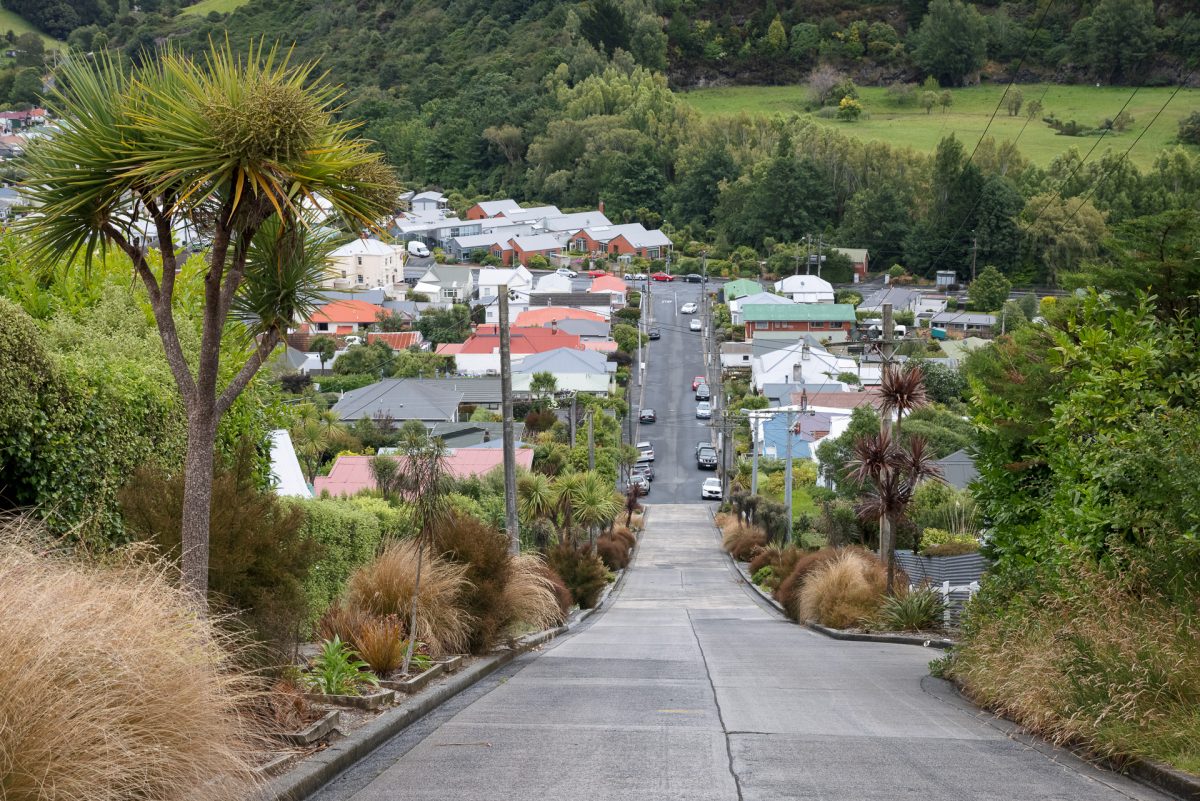
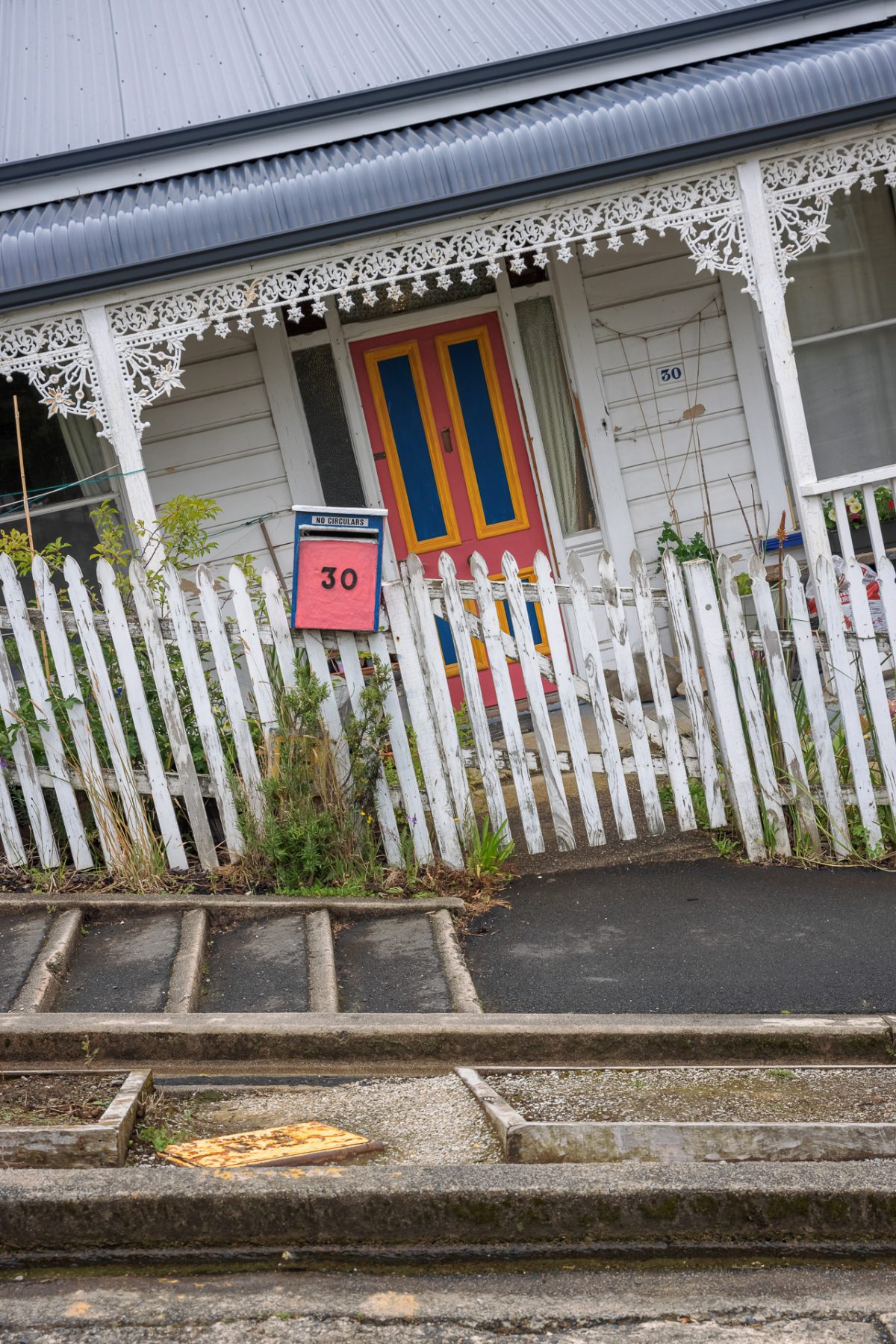
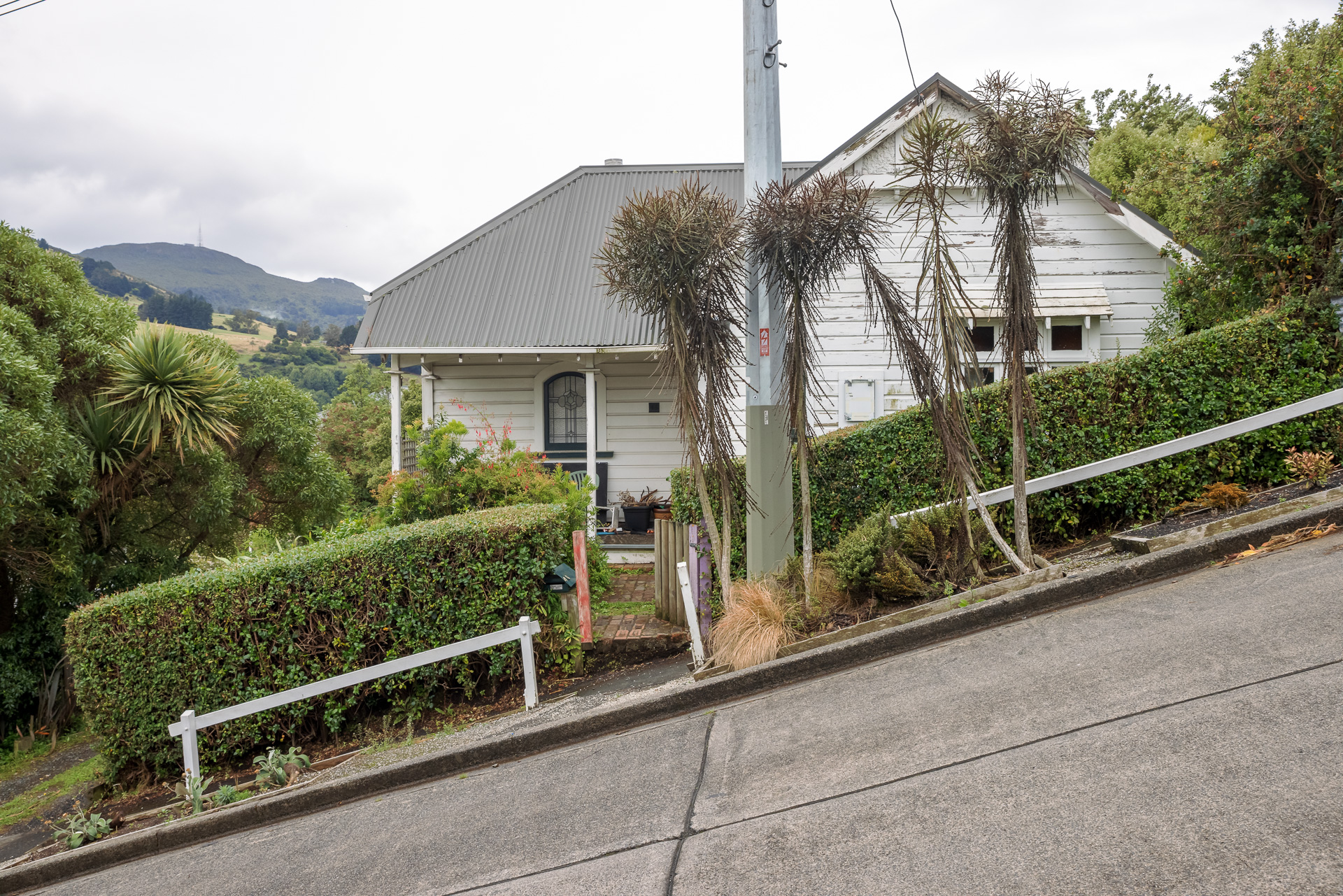
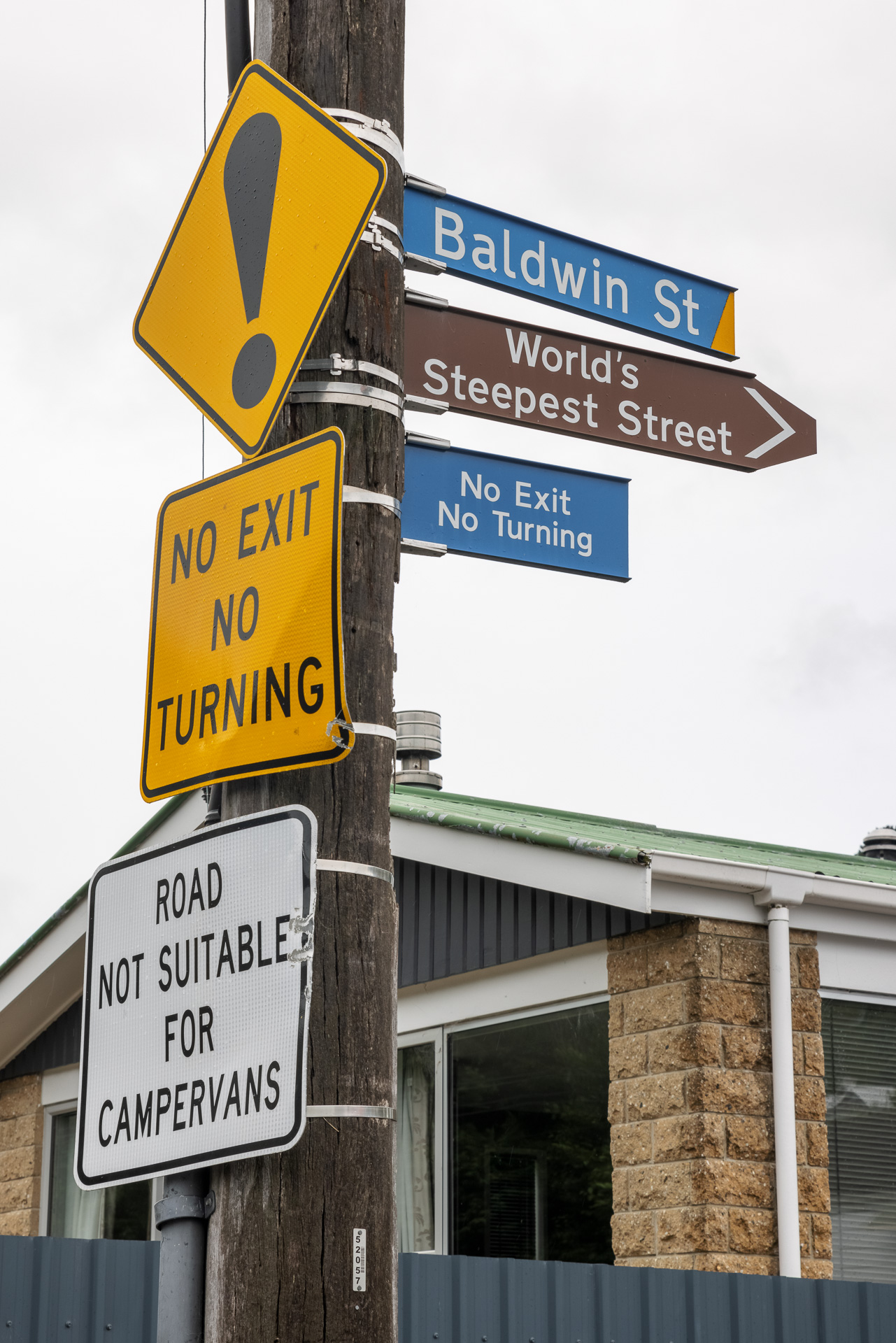
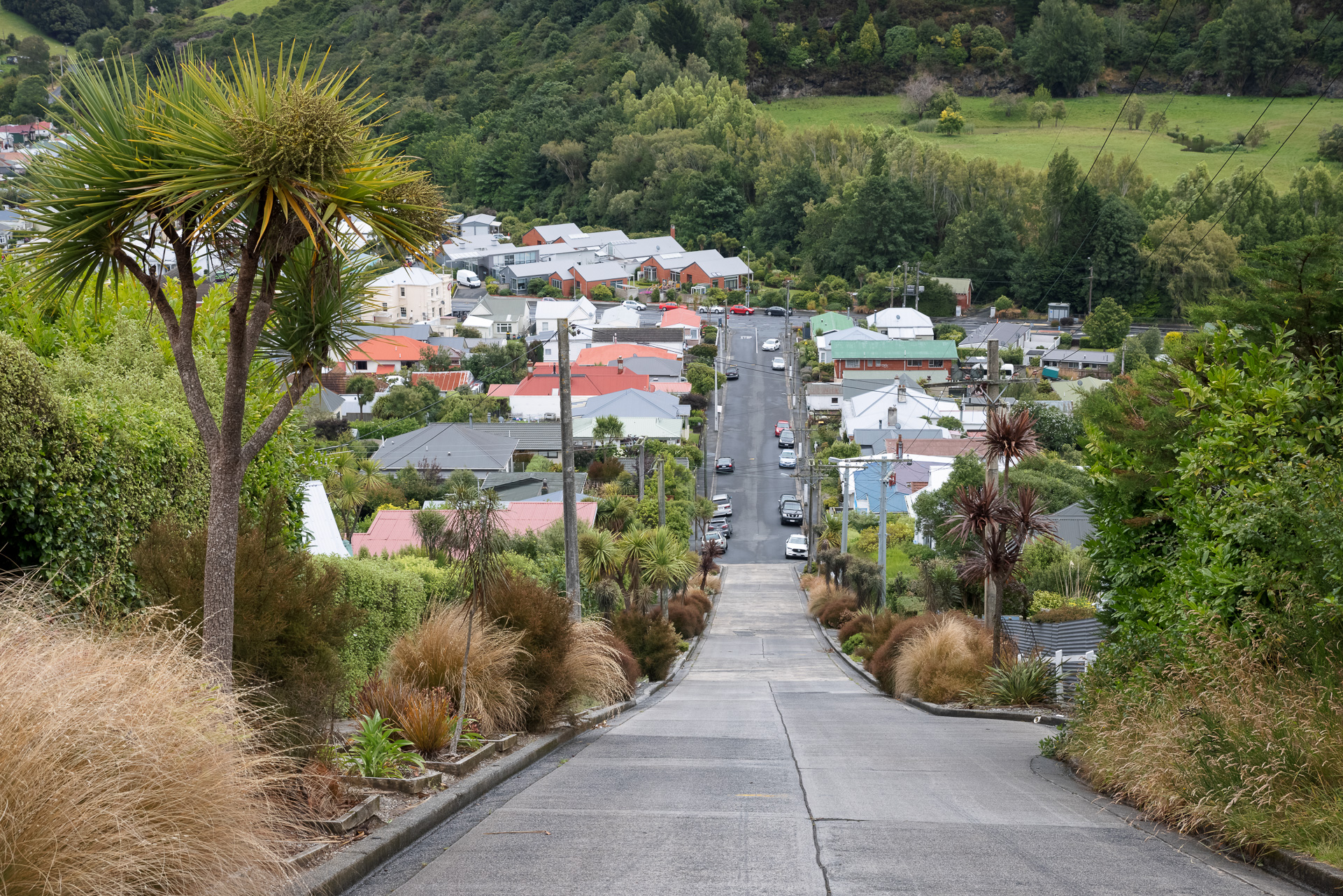
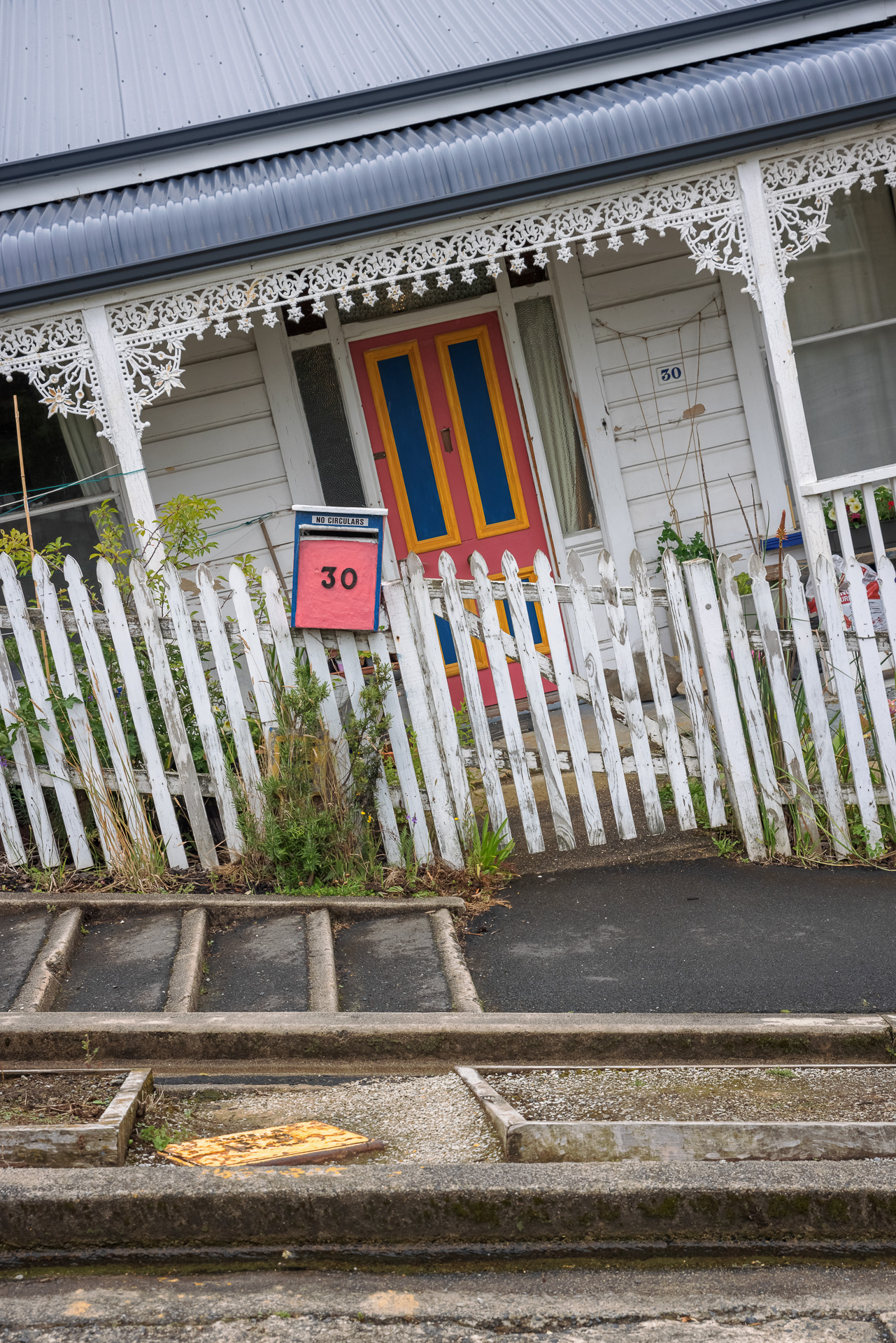
We took the scenic route from Moeraki towards Sandfly Bay. Stopping in Dunedin at Baldwin Street the worlds steepest street with a gradient of a whopping 35%. A title that was taken from them in 2019 and awarded to Ffordd Pen Llech in Harlech, Wales by the Guinness Book of World Records. However, an outraged Dunedin surveyor travelled to Wales to measure this usurper properly and discovered “a bit of a cock-up”. The gradient had been measured on the inside of a curve on the street. The correct measurement should be on the central axis, where, said surveyor found that the gradient is in fact a paltry 28.6%. To much relief in 2020 the title of the world’s steepest street was returned to Dunedin!
Sandfly Bay & Yellow-Eyed Penguins
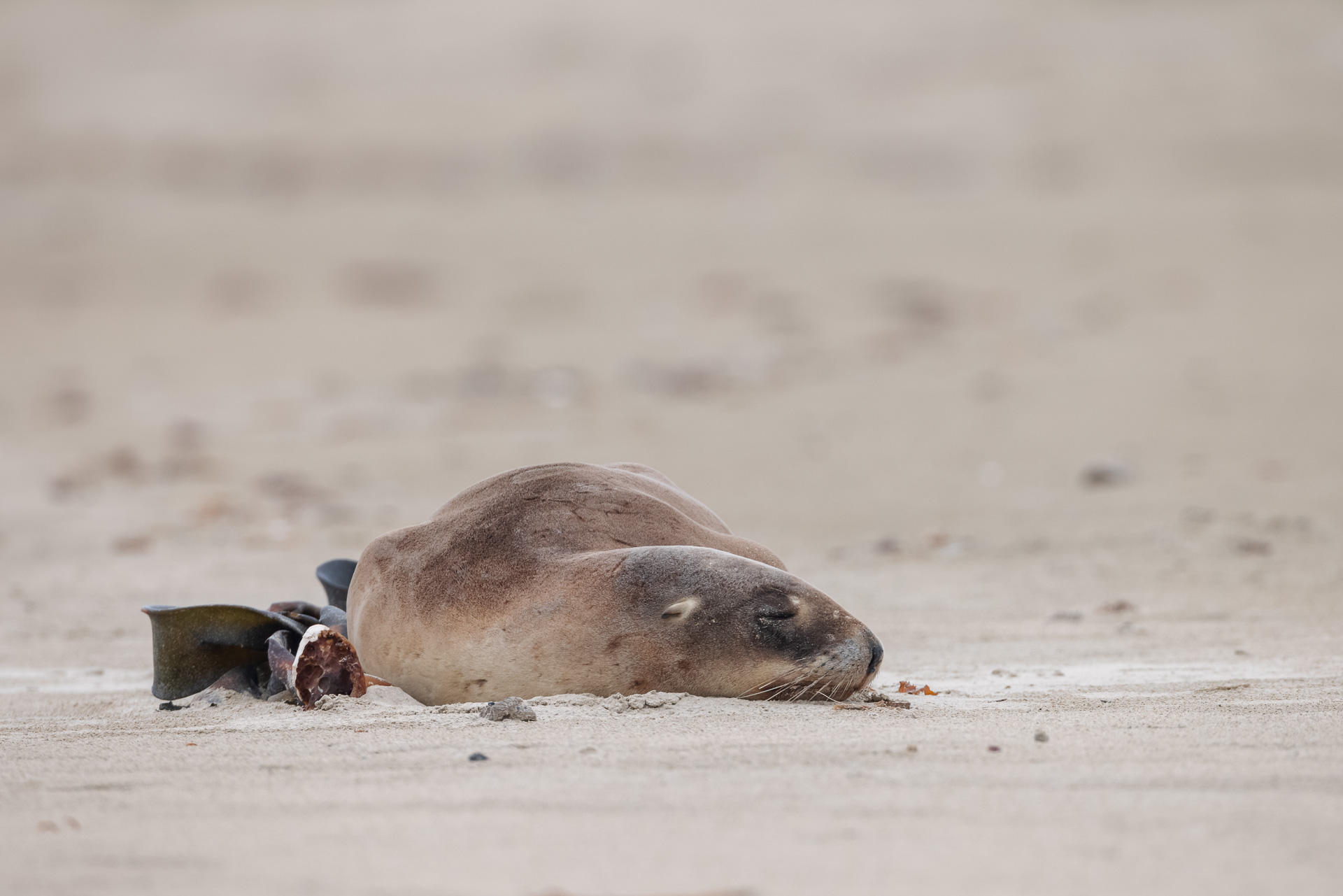
Next stop Sandfly Bay where we hope we will have a chance of spotting some more yellow-eyed penguins. By the time we arrived at Sandfly Bay trail parking, it was blowing a hooley. It is a short walk down a gravel path to the beach, the last part descending through some sand dunes. We reach the beach, in its wild windy glory. A pile of kelp at a closer view turns out to be a sleeping sea lion.
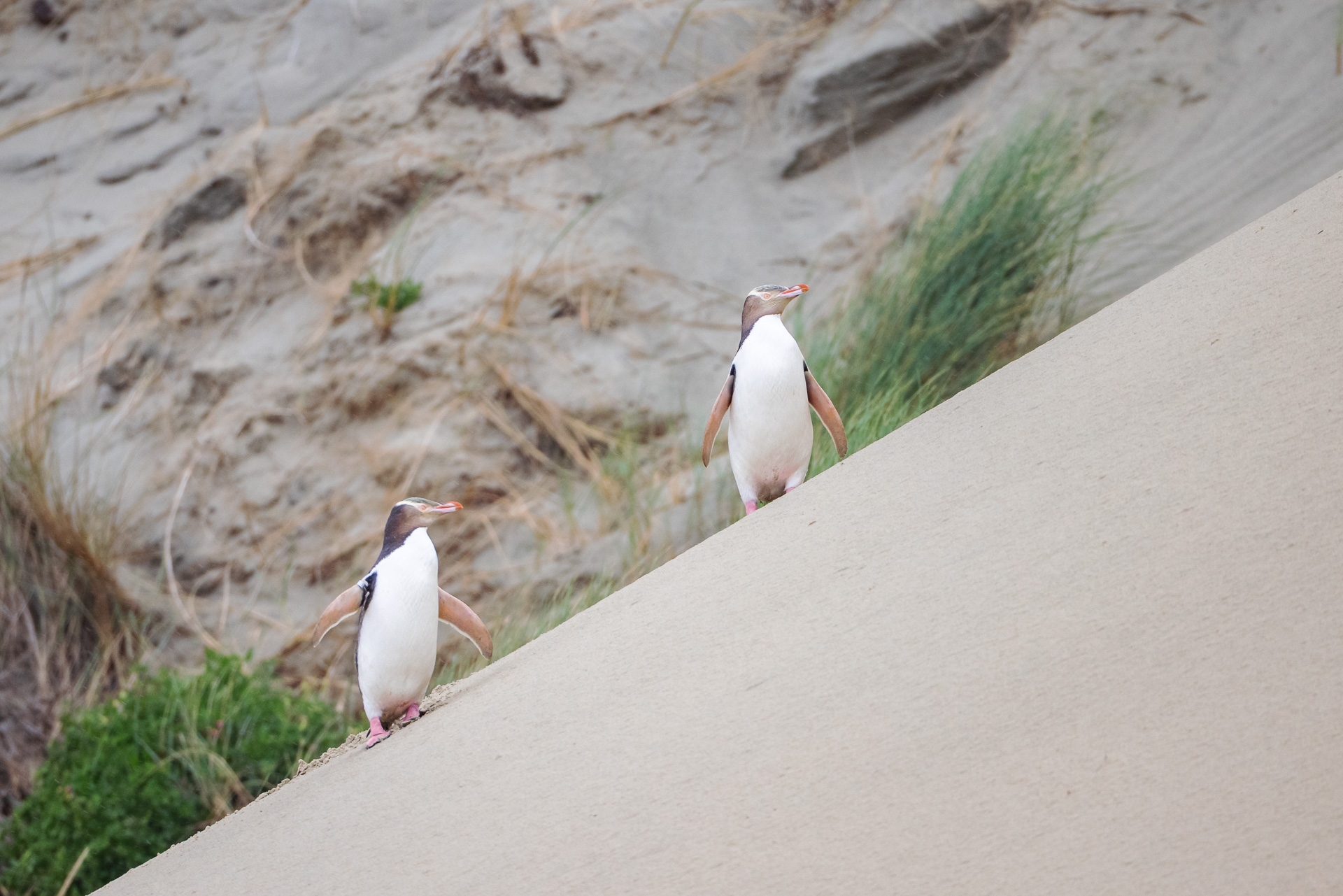
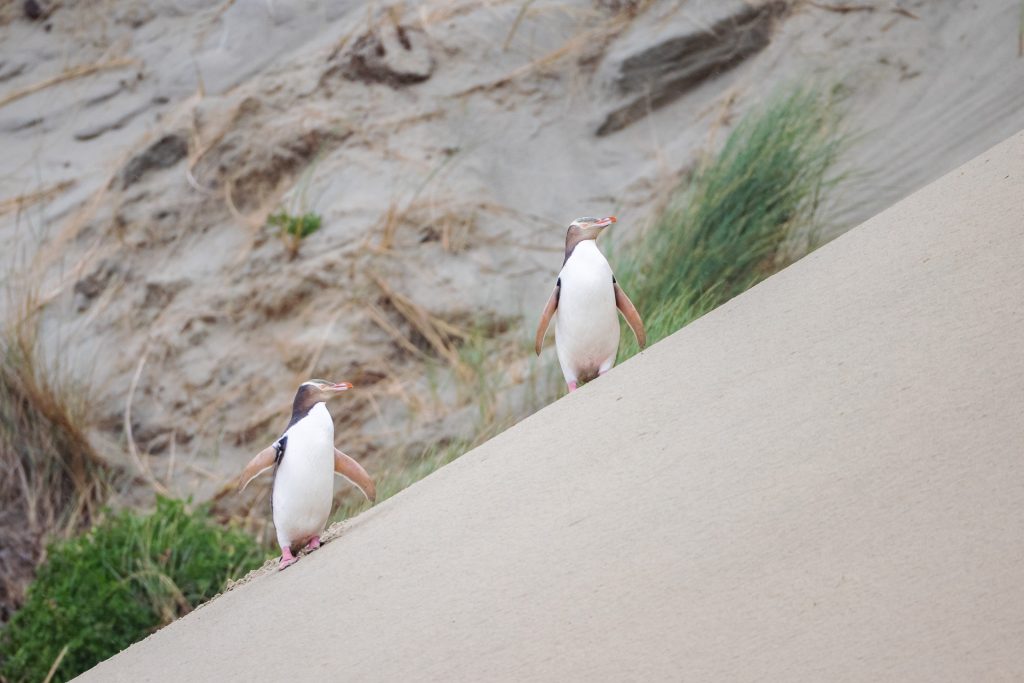
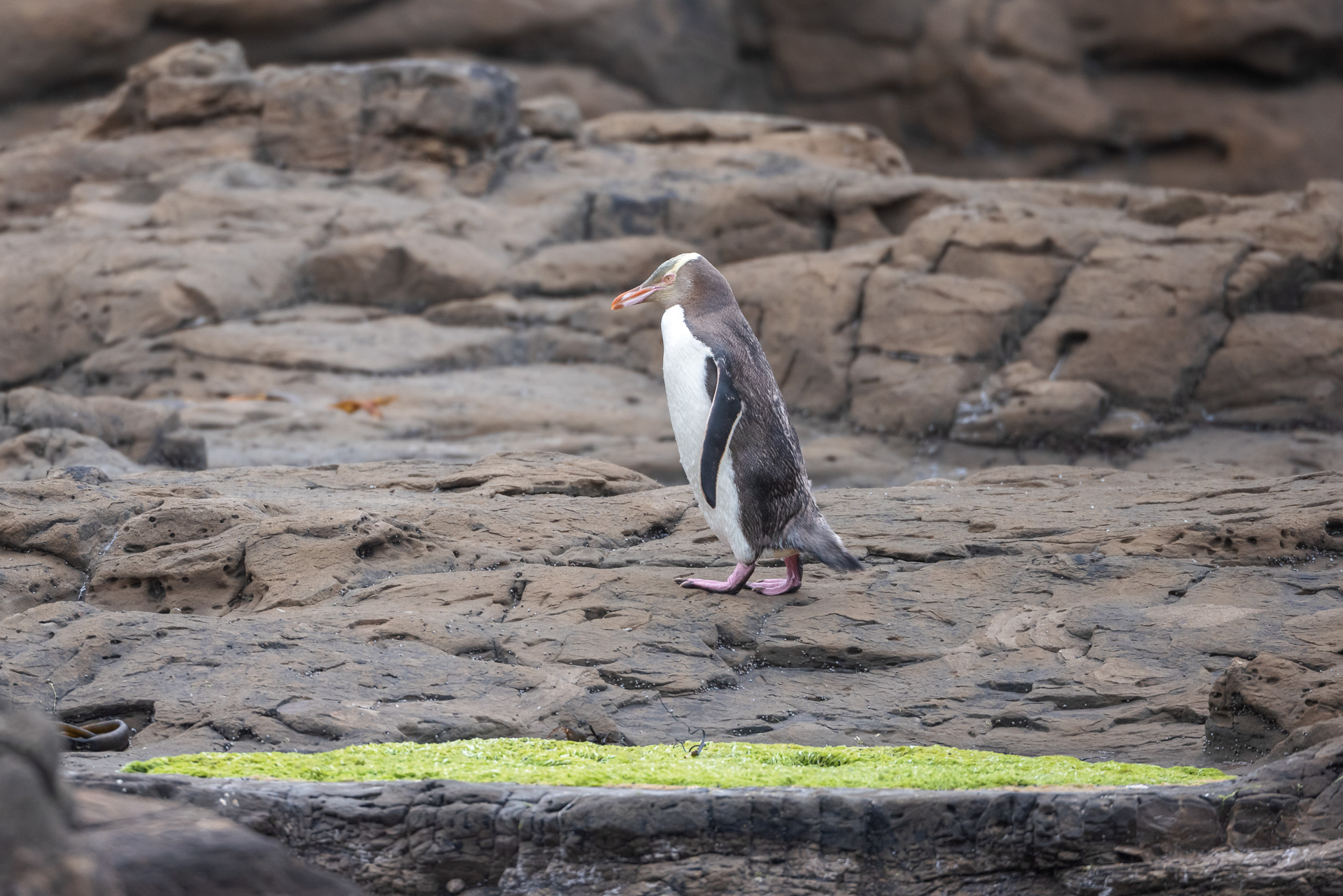
Chris spots pair of yellow-eyed penguins walking halfway up the sand dune. They paused, flippers outstretched to hang out here for a while. I later found out from one of the penguin conservation volunteers that when they come in from a day’s fishing they’ll hang around for a while in the open, airing themselves to warm up and preening. Smoothing and reoiling their fathers from an oil gland on their rump. We watch them for a while buffeted by the sand and wind.
Tunnel Beach
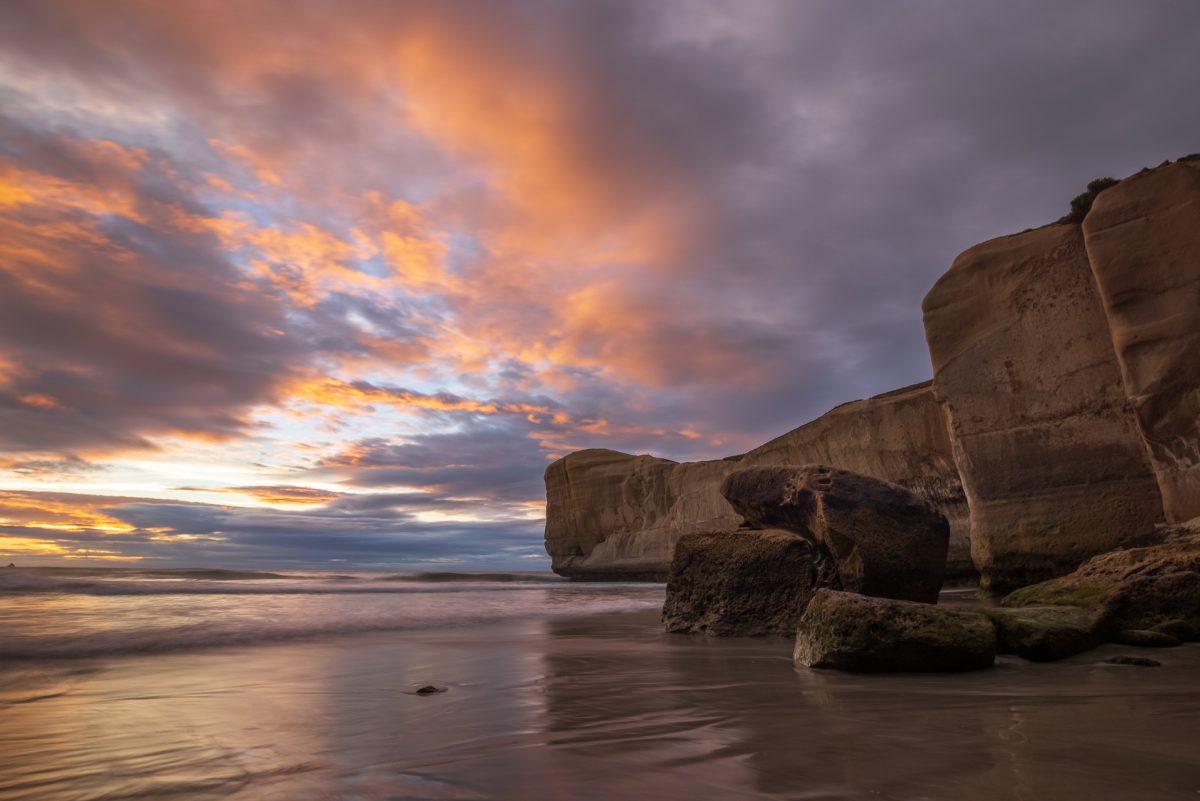
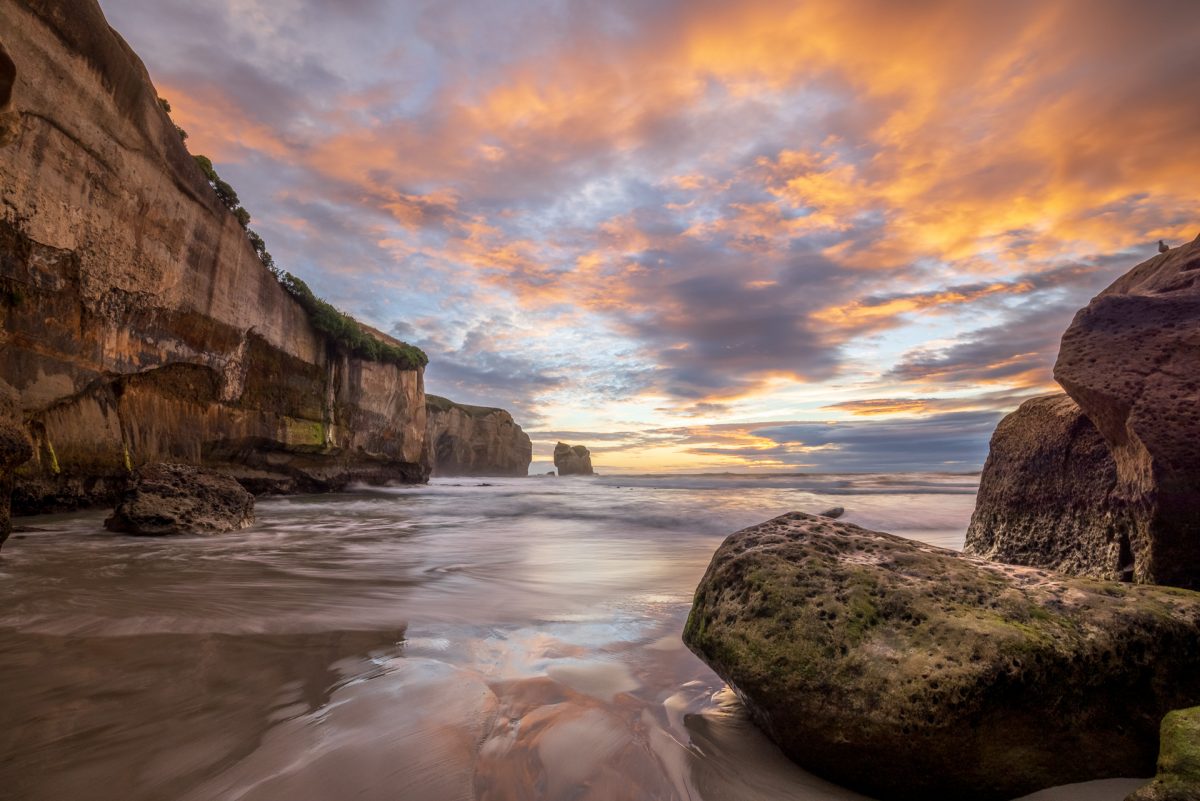
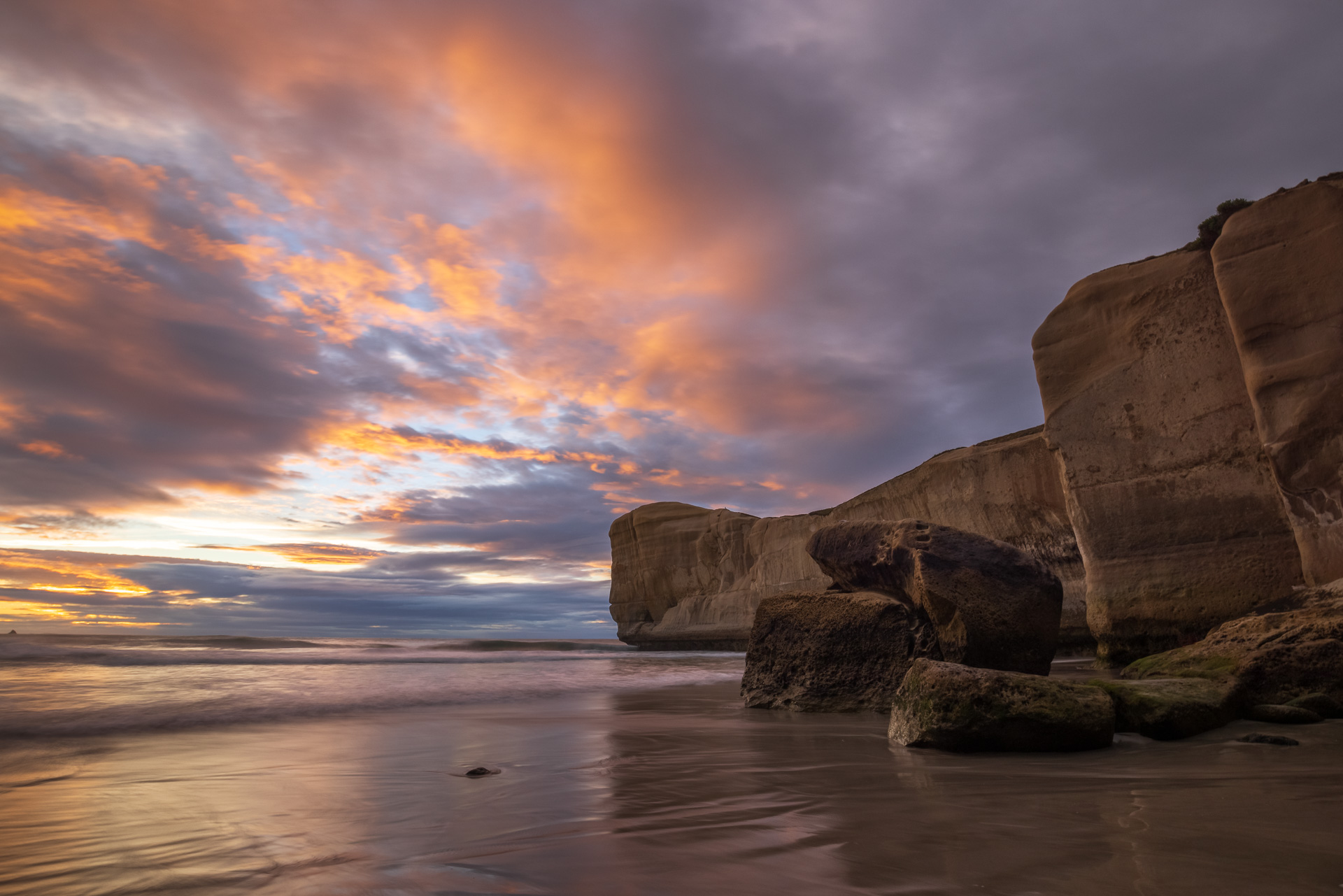
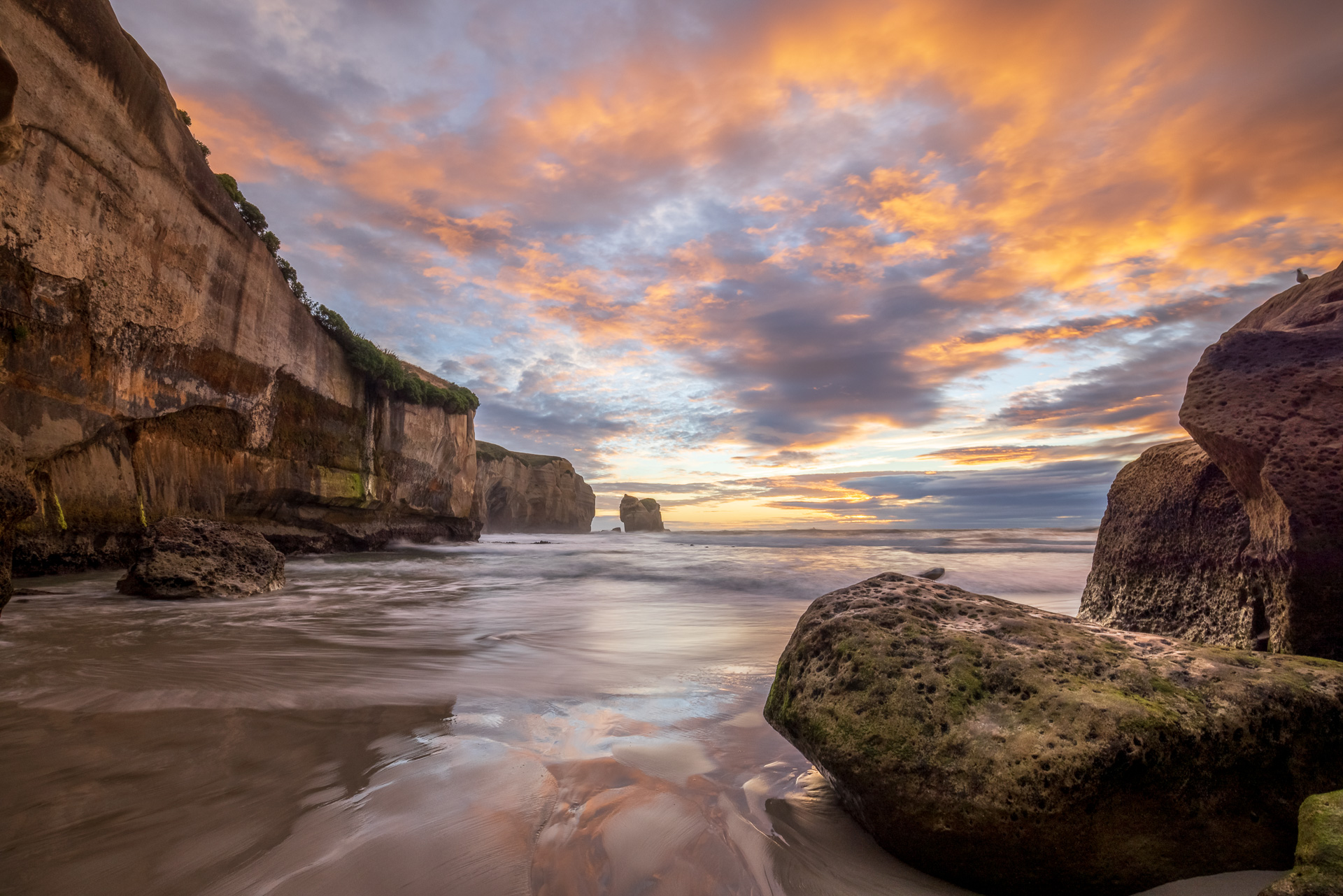
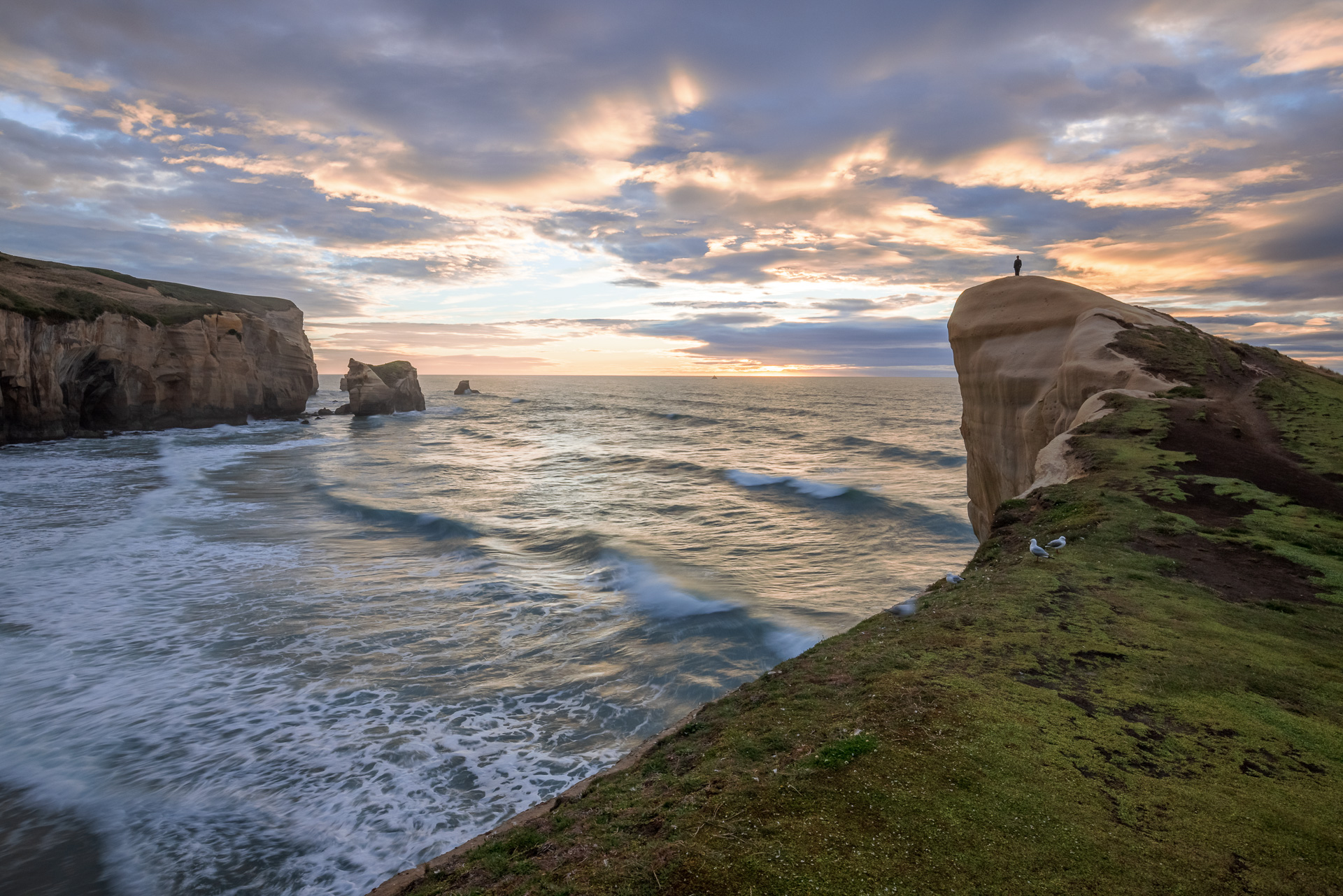
We park up for the night at a beach near Dunedin, Dunedin is one of the few areas where you can free camp almost anywhere if you are self-contained. Next morning, we are up at dawn to explore Tunnel Beach. A small beach tucked away between sea-carved towering cliffs and a colourful sandstone headland with an arch. In 1870, a wealthy landowner had a tunnel hand built down to the beach as a gift for his daughters. The remarkable hand-carved tunnel and its 72 steps descend through the headland down to the beach. You can only access the beach a few hours either side of low tide. Time it right and you can get down through the tunnel and explore the tiny sandy beach and the caves along its shoreline. The spot is lovely, we enjoyed the yellow hues on the striking headland lit up by the early morning sun.


The Catlins, Waterfalls & Sea Caves
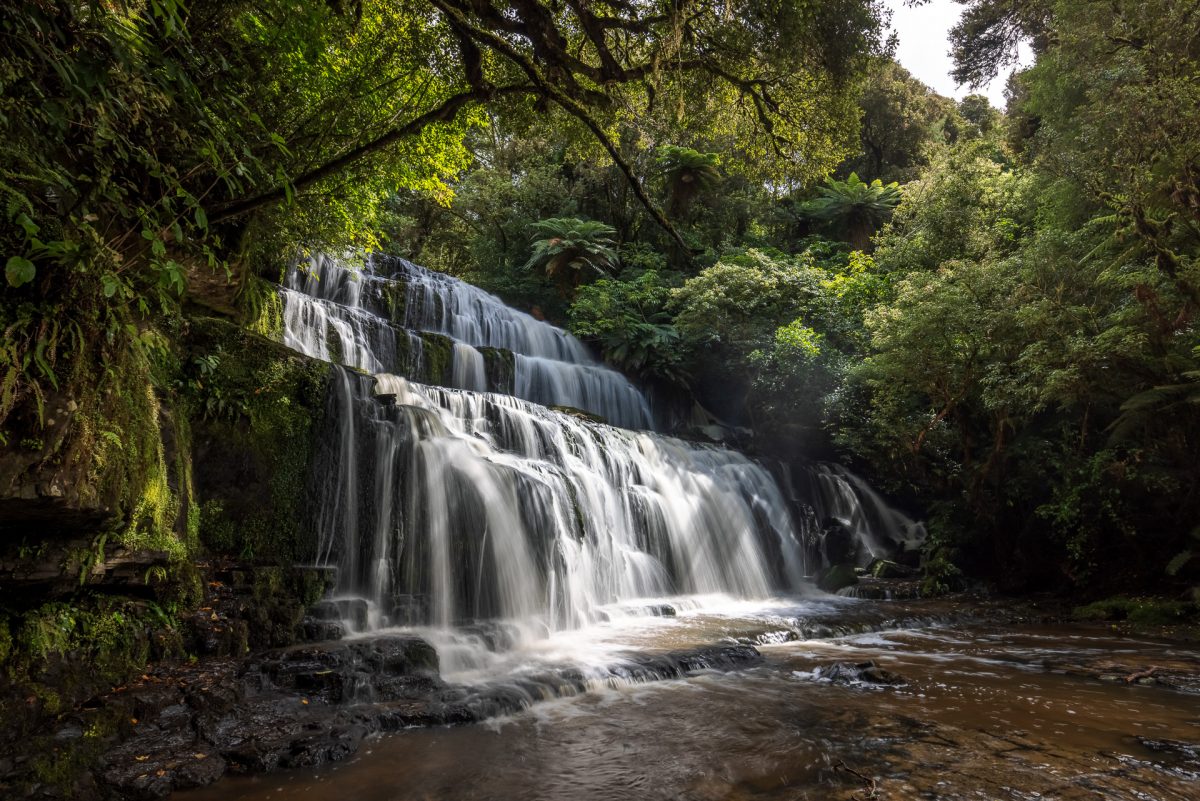
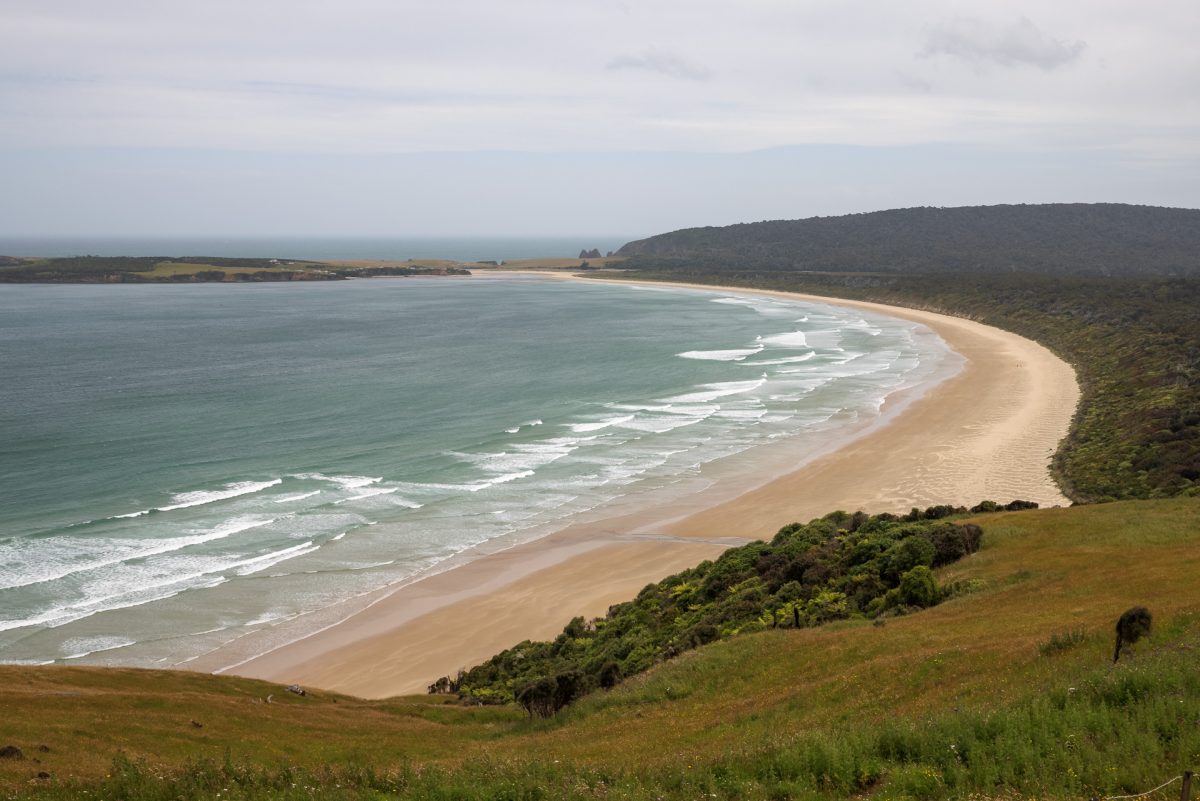
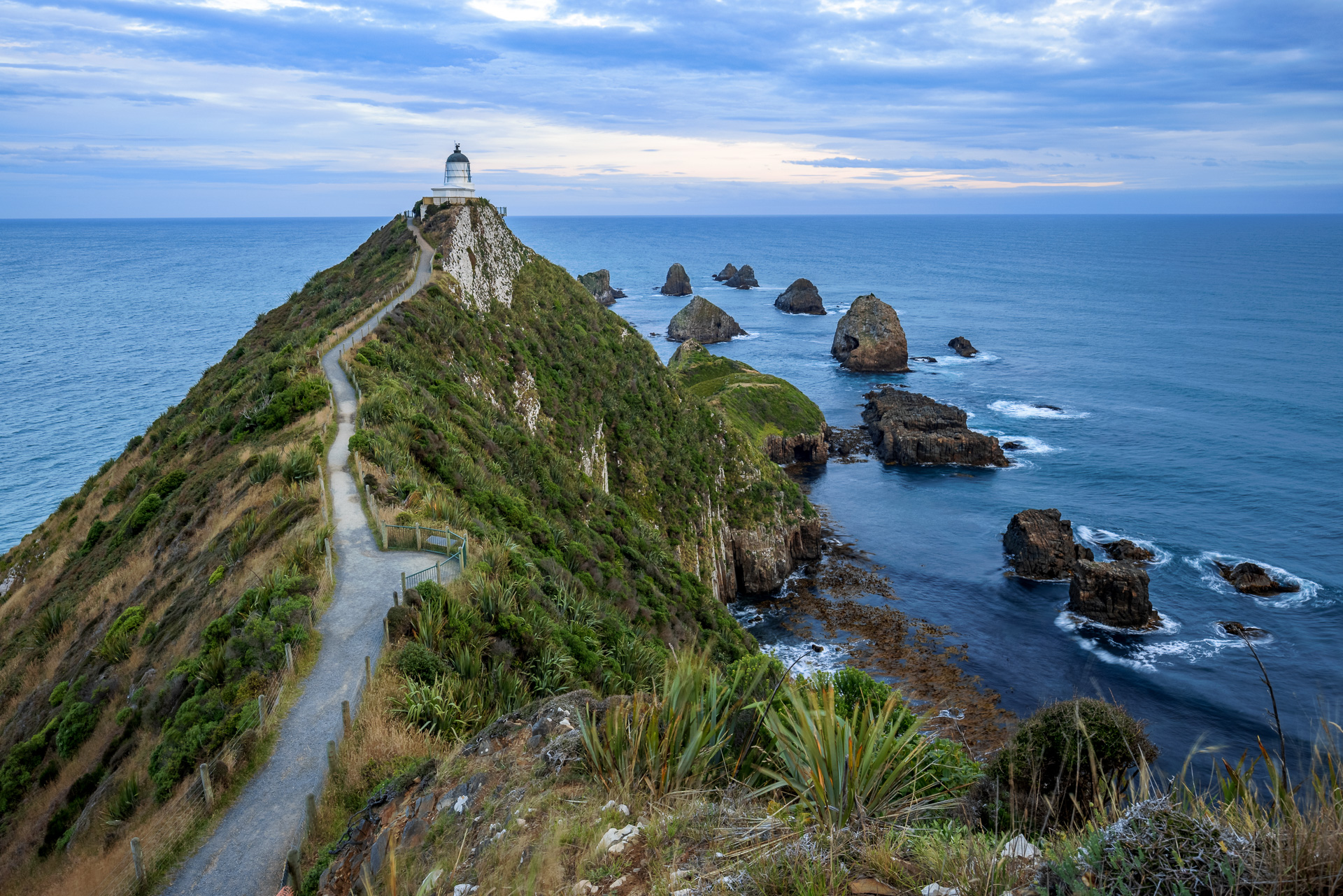
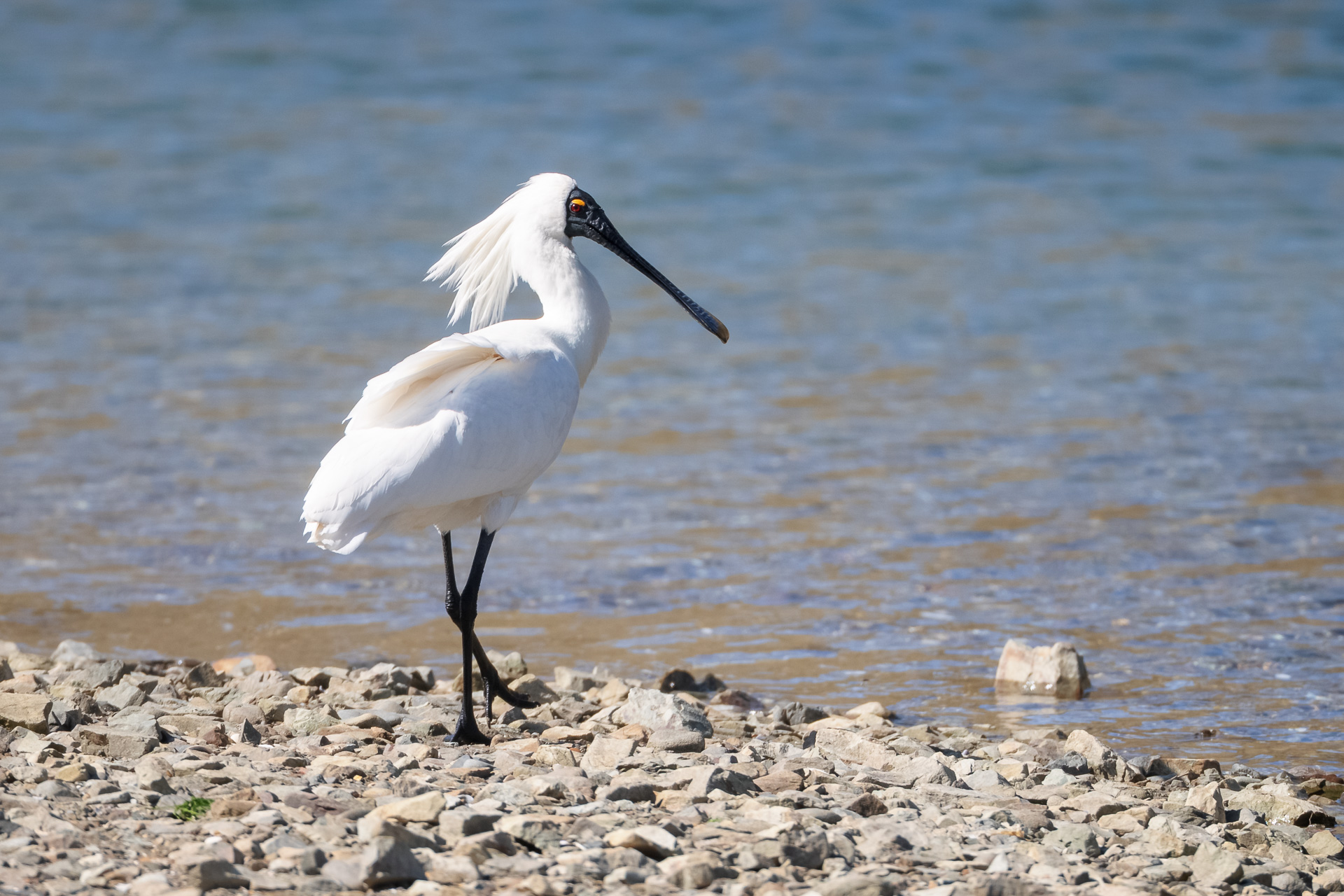
By now the scenic south coast road takes us into the Catlins, an area on the south-east corner of the South Island famous for having a lot of natural wonders. Our first evening is spent near Nugget Point Lighthouse, so named by Captain Cook as he thought the treacherous rocks surrounding the point looked like nuggets of gold. We also found the point is also home to colonies of seals, gannets and royal spoonbills.
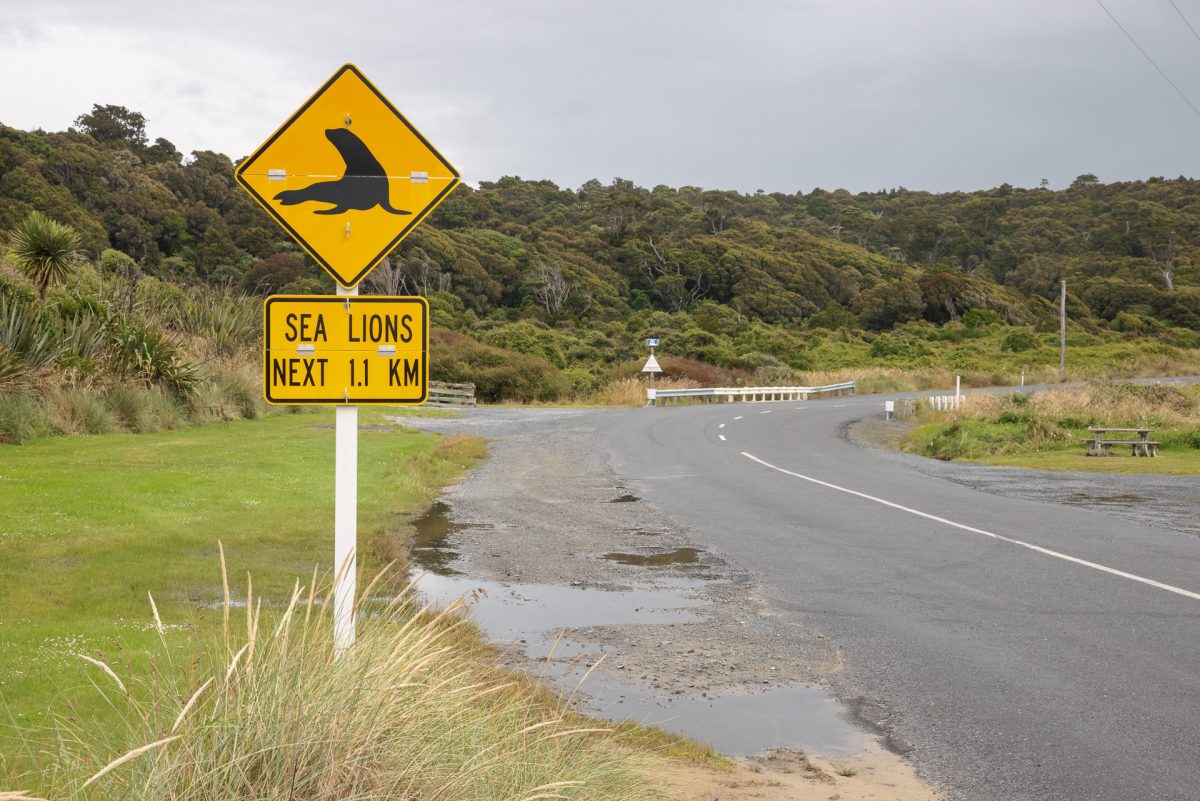
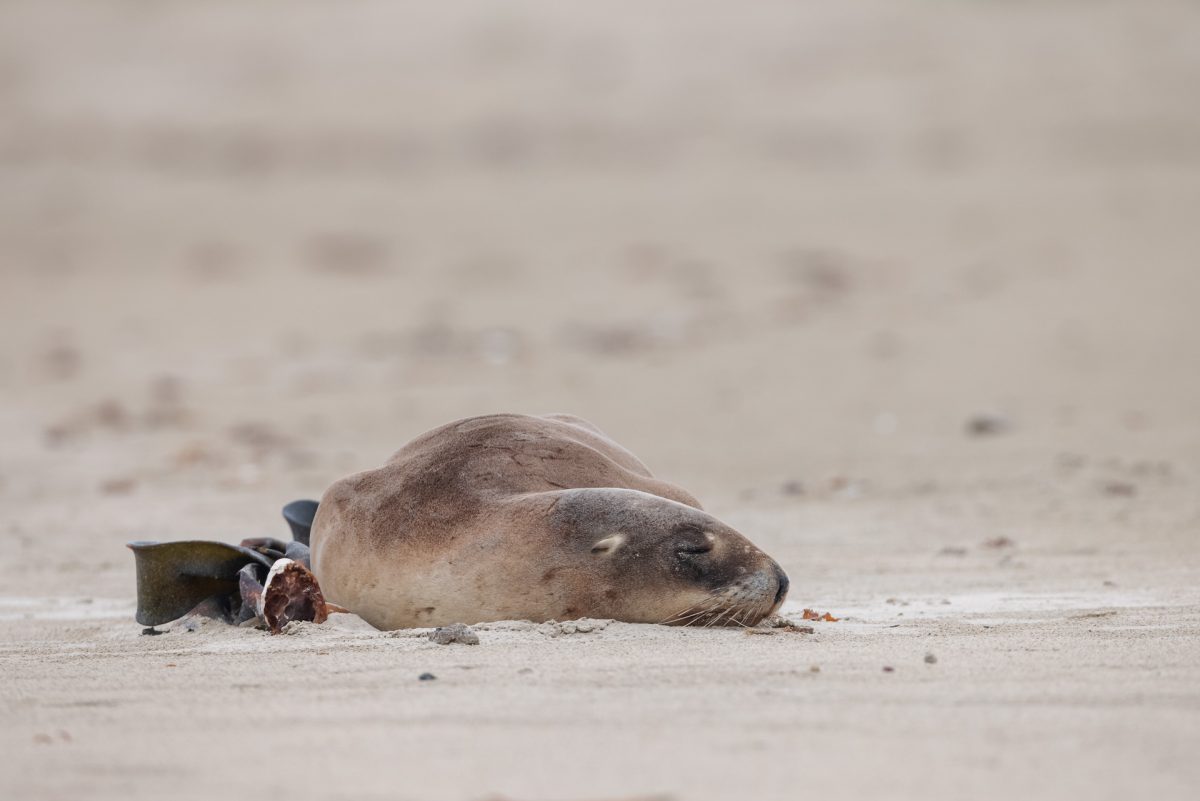

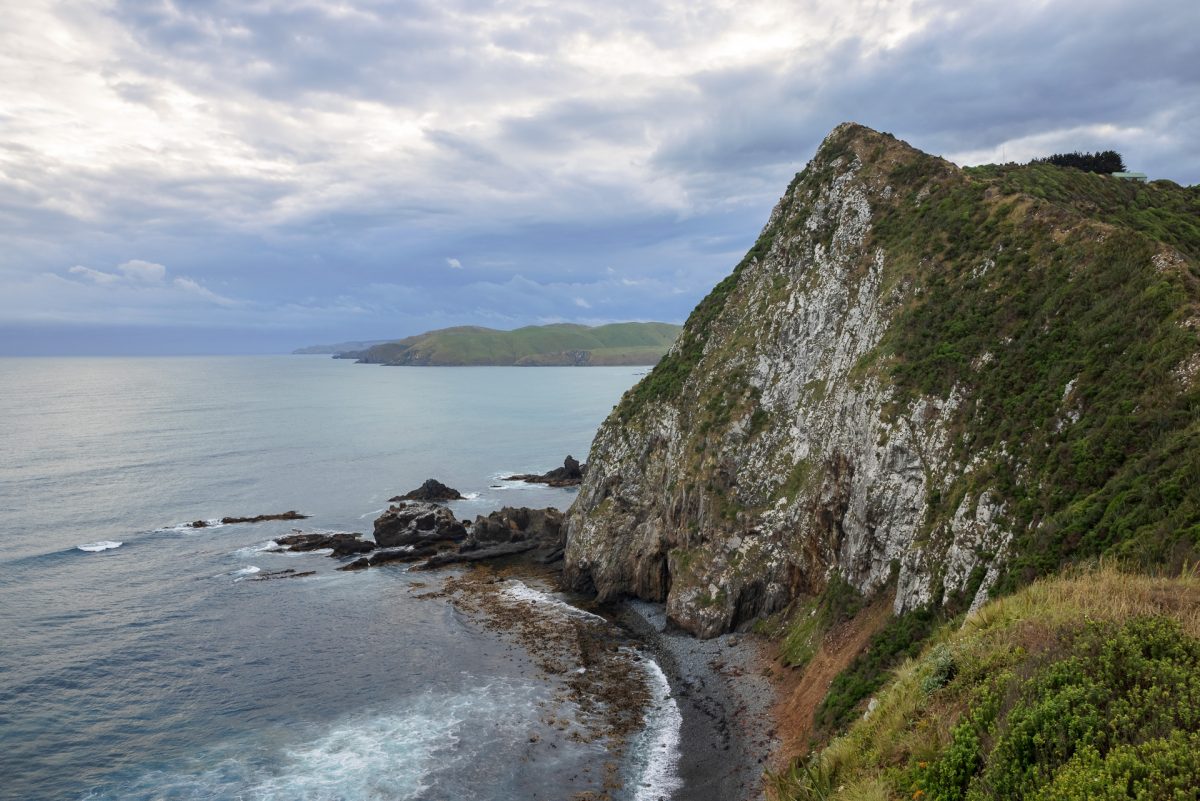
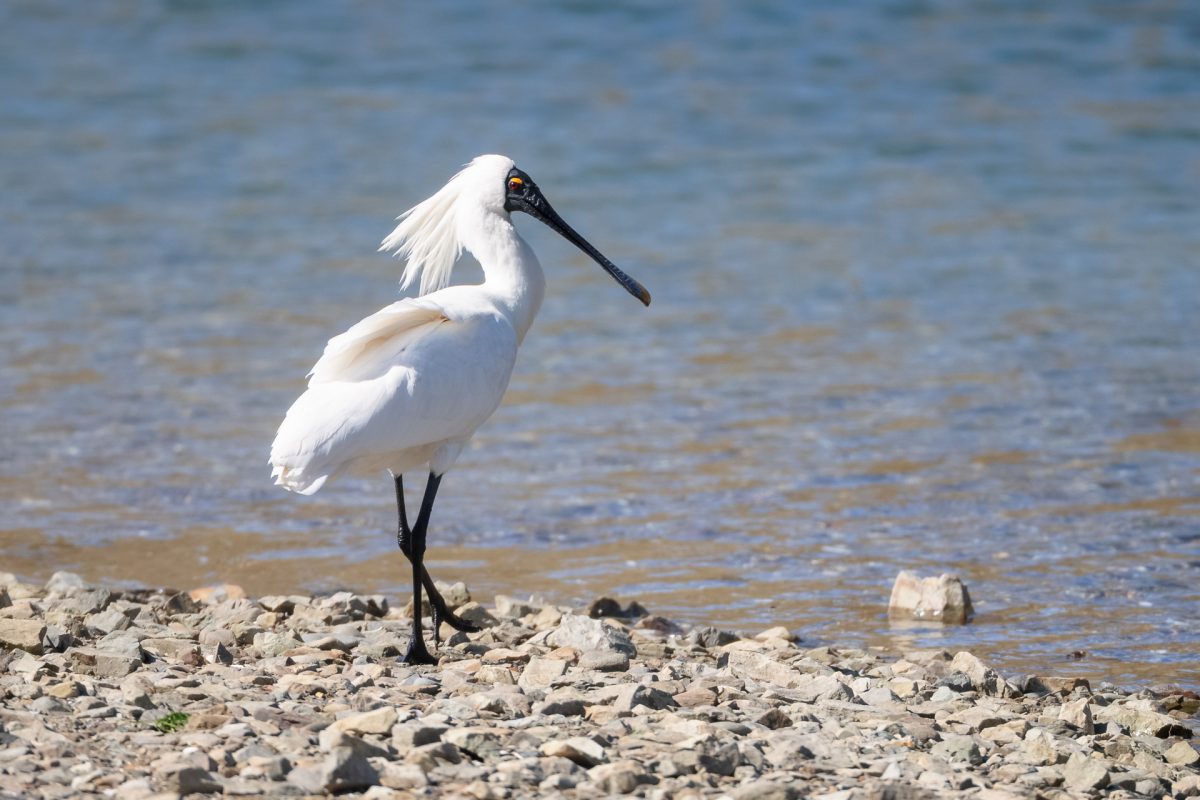
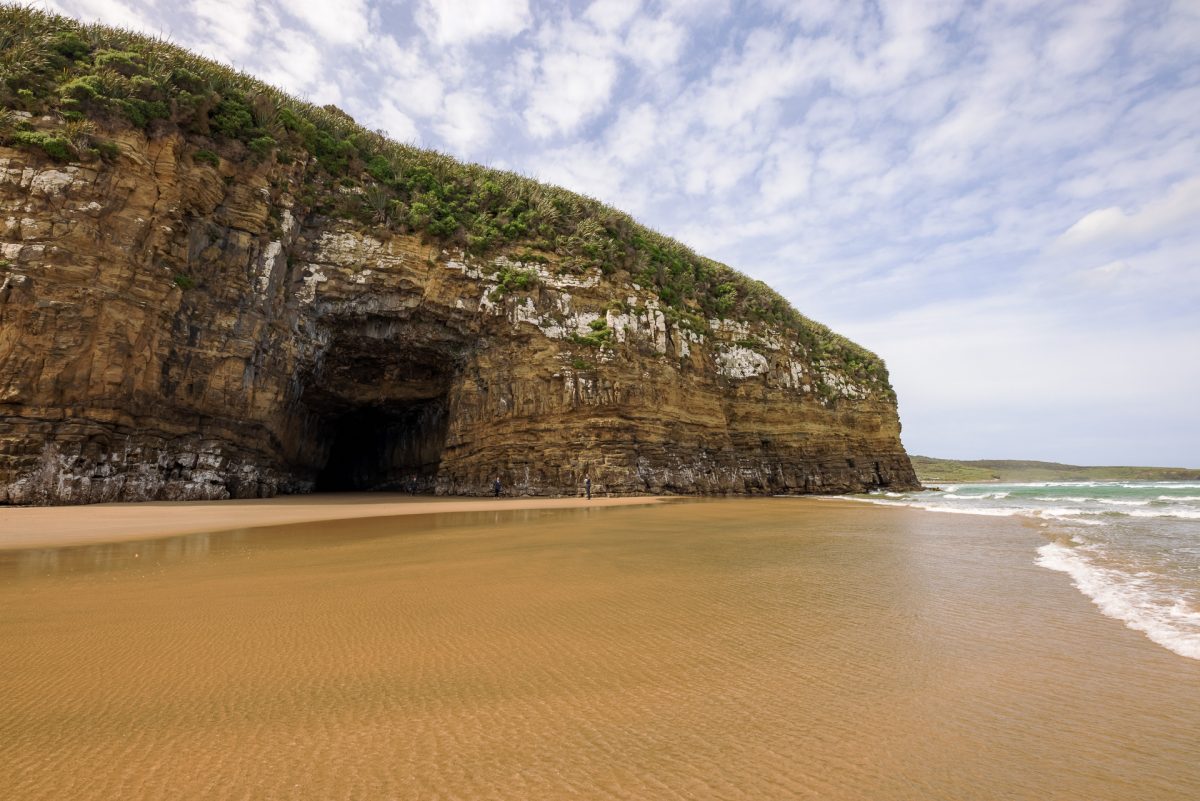
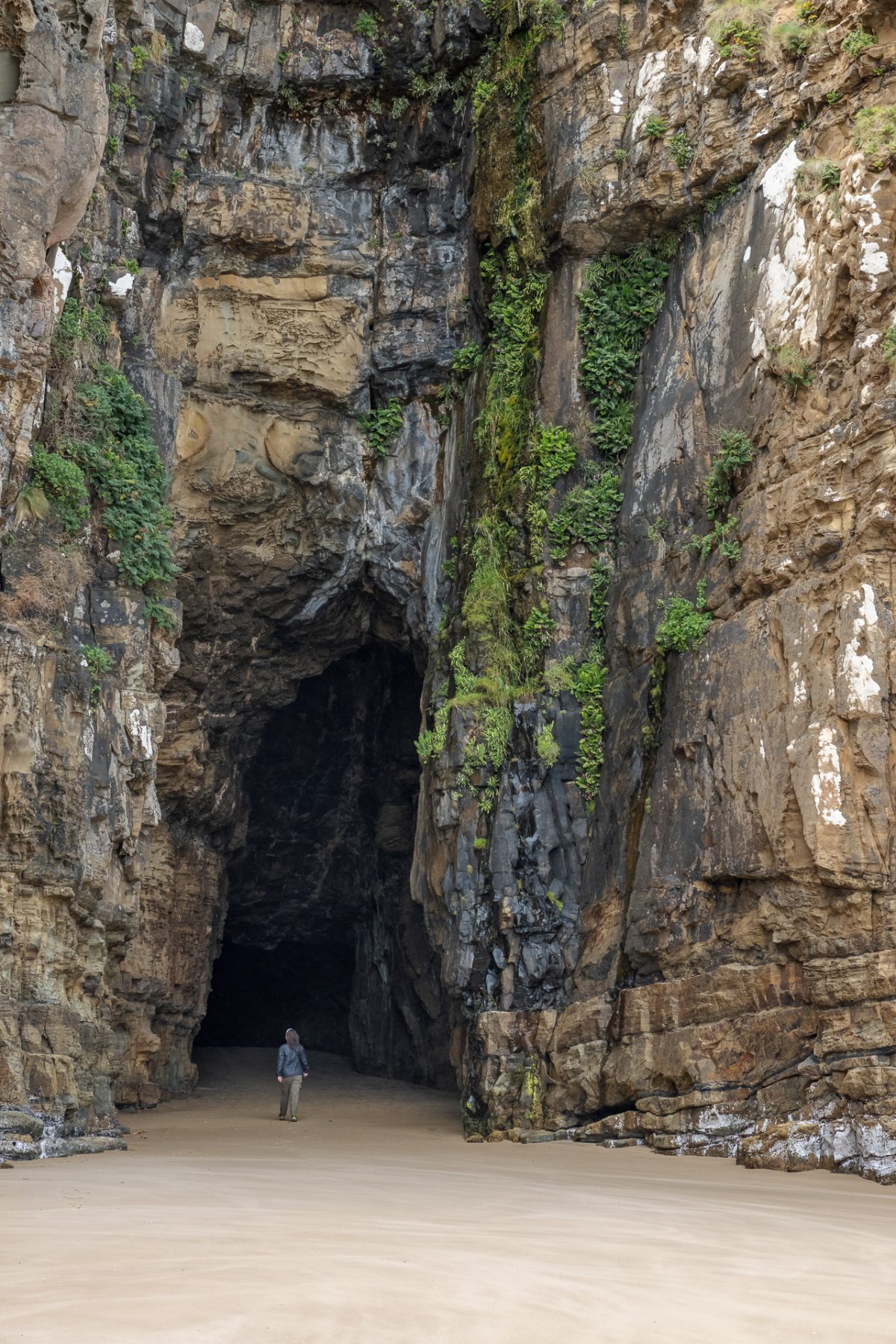
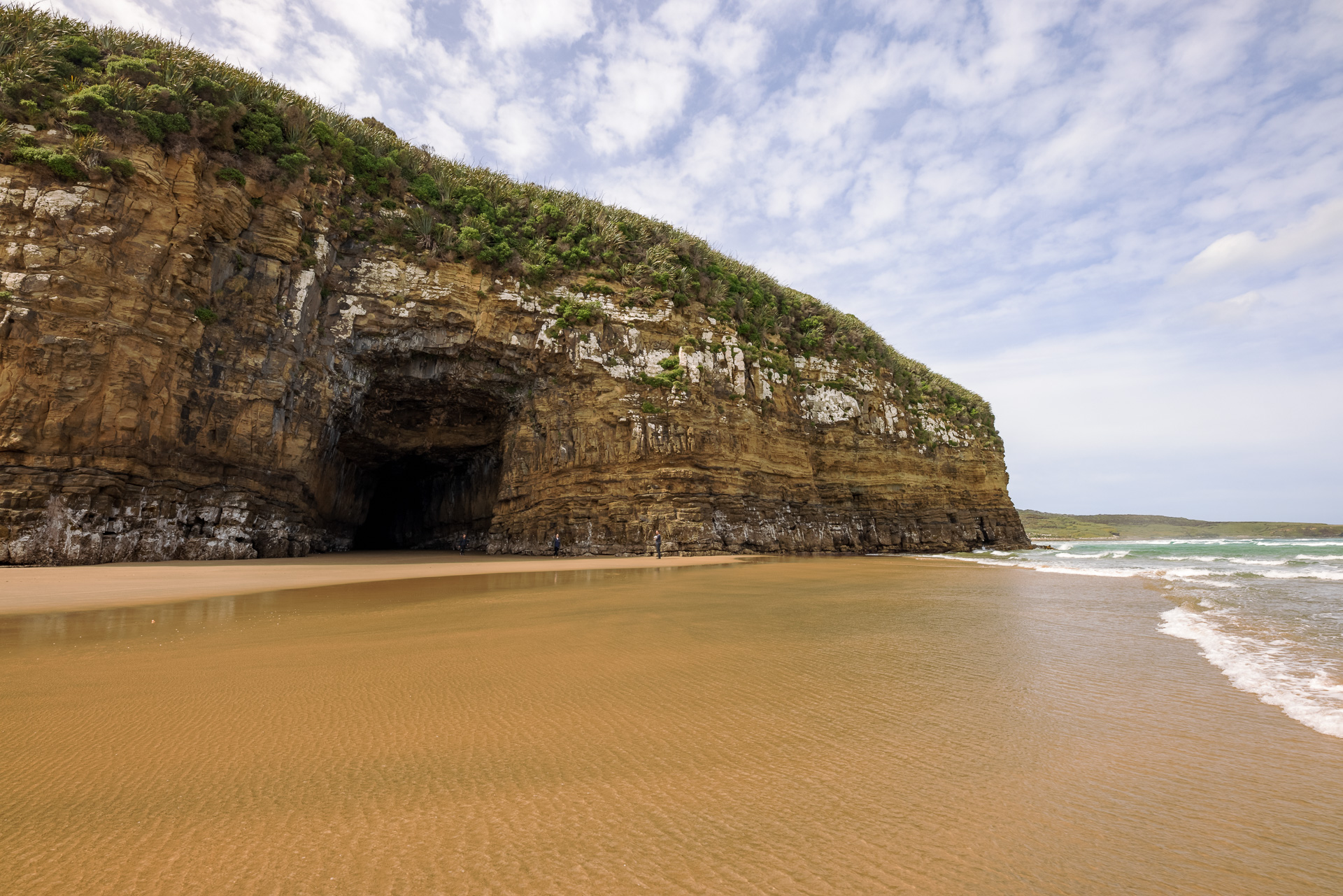
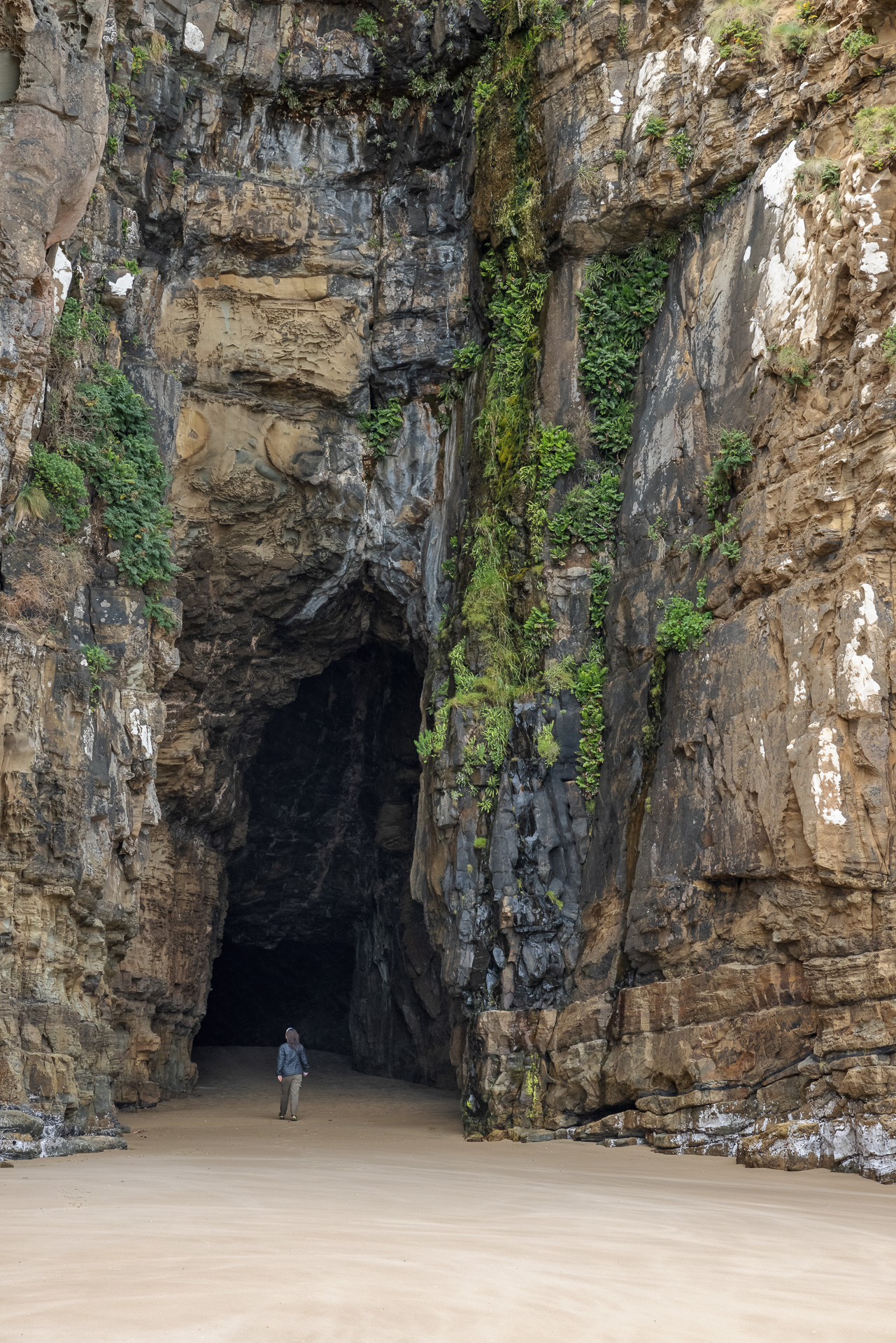
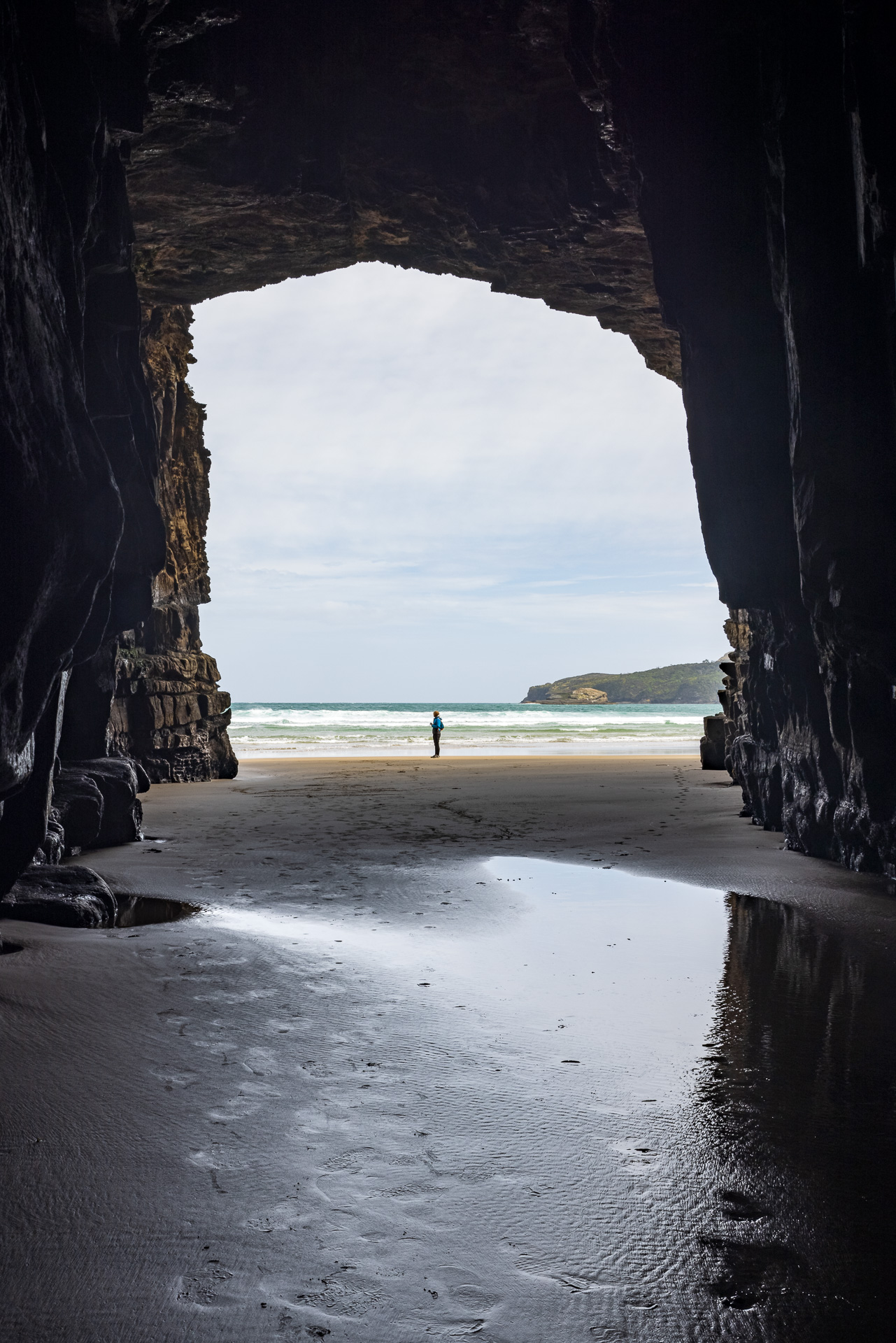
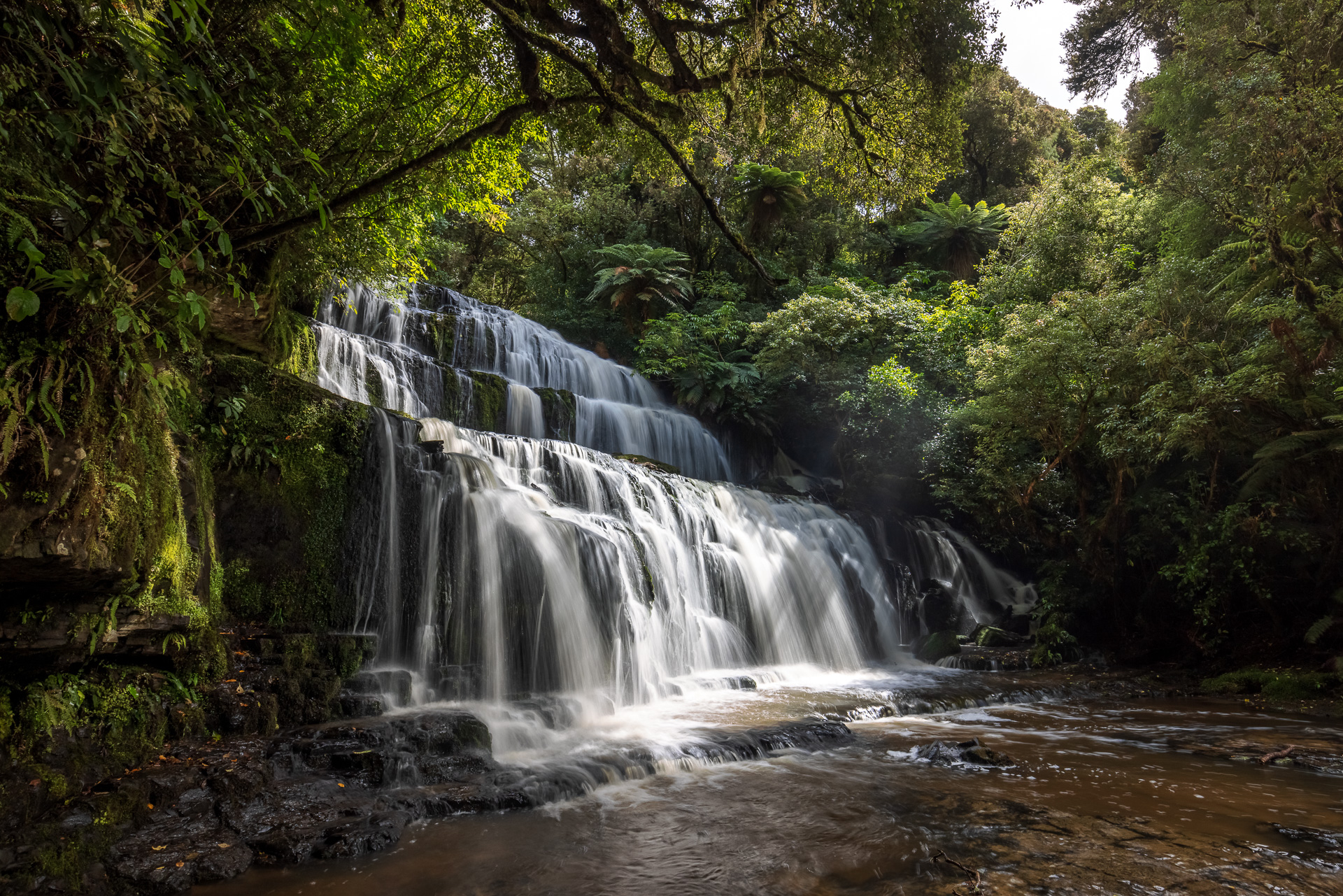
We drive the southern scenic route through the Catlins and are stopping every few kilometres to check out dramatic coastline views, caves, waterfalls and even the odd glorious looking royal spoonbill fishing the river. At low tide, we visited Cathedral Cave, a vast sea cave, once two caves until the back roof collapsed and they become one (200m) long U-shaped cave with 30m high arched ceilings which earned the cave its name.

The Lost Gypsy Gallery, an automata gallery and theatre created by New Zealand artist Blair Somerville and a surprise hit for us in the Catlins. You arrive at a garden with an old bus full of hand-designed treasures, lots of winding toys that do cool things and buttons to push with unexpected outcomes. Outside is a larger paid theatre of life-size design experiences where we spent a full hour winding handles and pushing buttons. To me, the most remarkable is the piano, an orchestra of sound and movement. The Lost Gypsy Gallery is well worth the visit and extremely hard to do it justice in a few words!
Curio Bay
Our last stop on the south coast, famous for its nesting yellow-eyed penguins, fossilized forest and hectors dolphins frequently to be found playing in the surf. We went to the beach early evening, to try and spot the penguins where we met the volunteer a student on her holidays, keeping watch over the beach and educating its visitors about the penguins and their behaviour.
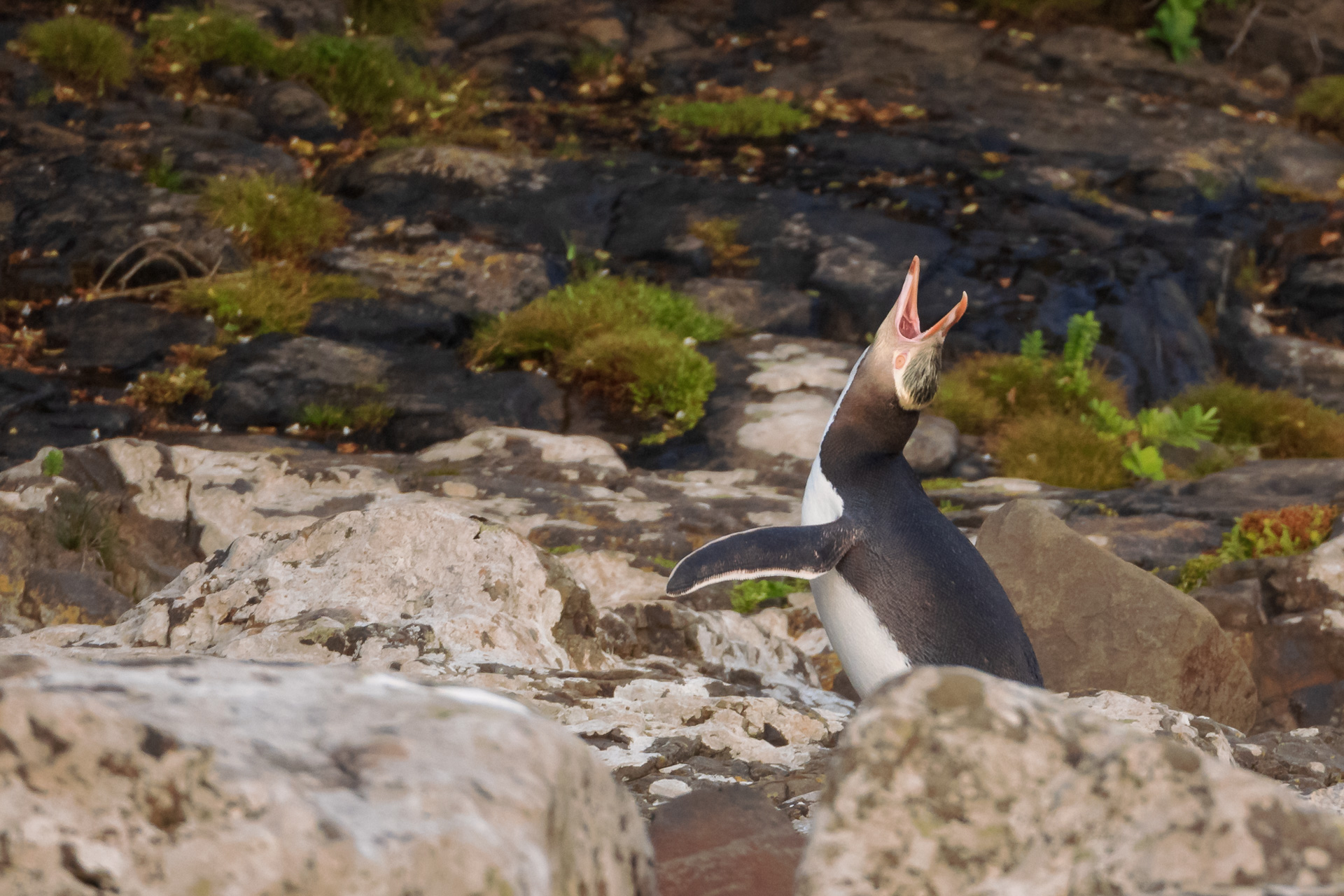
There are only two pairs of penguins and only one chick between them this year; a shocking drop from around thirty nesting pairs last year (2019-20). As penguins tend to return to the same place to nest every year, this likely means that the other 28 pairs have died. One by one, we watched three of them come ashore, and spend time out in the open warming up in the evening sun and preening their feathers. One threw its head back and cried out loudly for its mate to no response, its mate is still out fishing.
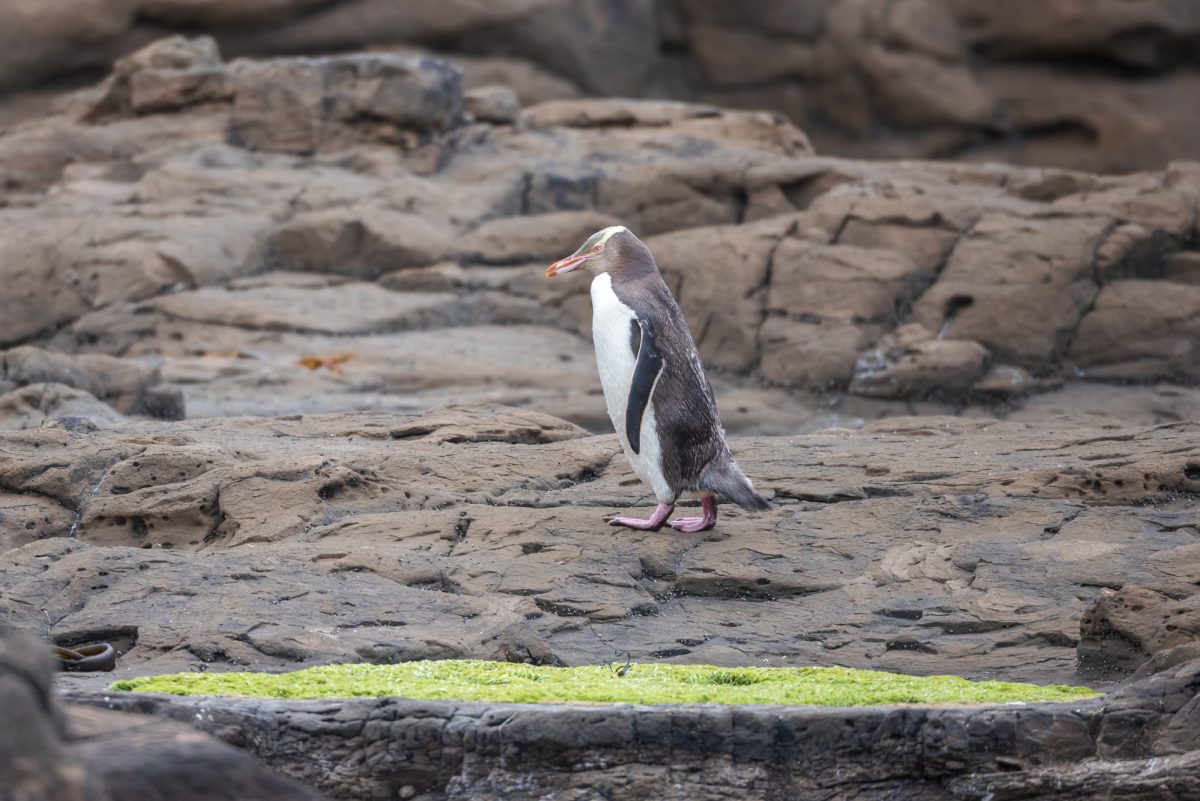

Yellow-eyed penguins are the world’s rarest penguin, endemic to New Zealand and critically endangered. The penguins are notoriously shy, not choosing to hang out with their colony like other penguins, but nesting as a pair, seemingly mating for life. Despite significant conservation efforts, their numbers have dropped in the last 20 years from 600 pairs to 220 pairs on the NZ mainland. There is no known single reason that their numbers are falling but it is thought to be a combination of human impacts, overfishing, loss of habitat, predators and climate change.
We were so lucky to see the yellow-eyed penguins at each stop we made to look for them. Sadly, the chance to find them on the mainland of the South Island seems to be slipping away.





Stunning photos! So pleased that you are enjoying your southern SI travels. You have been lucky with the weather too!! And as I write, Sir Ben may be staying a comeback???
Thank you, Chris is an amazing photographer! We certainly have been very lucky with the weather, only three days when we had to shelter from the famous rain on the West Coast and the Southern Alps